Choosing the right garden fence can feel overwhelming when there are so many options on the market. The fence you pick will affect your garden’s privacy, security, appearance, and how much maintenance you need to do over the years. It also needs to stand up to the Irish weather, which is no small ask.
We have been building and repairing fences across Dundalk and County Louth for over 35 years. In that time, we have worked with every type of fencing you can think of, and we know what holds up well in this part of the country. Here is our honest guide to the most popular garden fence types in Ireland, with practical advice on which one suits different situations.
Things to Consider Before Choosing a Fence
Before you settle on a fence style, it is worth thinking about a few practical questions:
- What is the fence for? Privacy, security, keeping pets in, marking a perimeter, or purely decorative?
- How exposed is your garden? Properties on hilltops or near the coast take more wind than sheltered suburban gardens.
- What is your budget? There is a big price range between a basic lap panel and a premium closeboard fence.
- Do you have planning concerns? Front perimeter fences over 1 metre or side/rear fences over 2 metres may need planning permission.
- How long do you want it to last? Some fence types will give you 10 years, others can last 25 or more with the right posts and treatment.
Once you have a clear picture of your needs, picking the right fence becomes much more straightforward.
The Most Popular Garden Fence Types in Ireland
1. Closeboard Fencing (Featheredge)
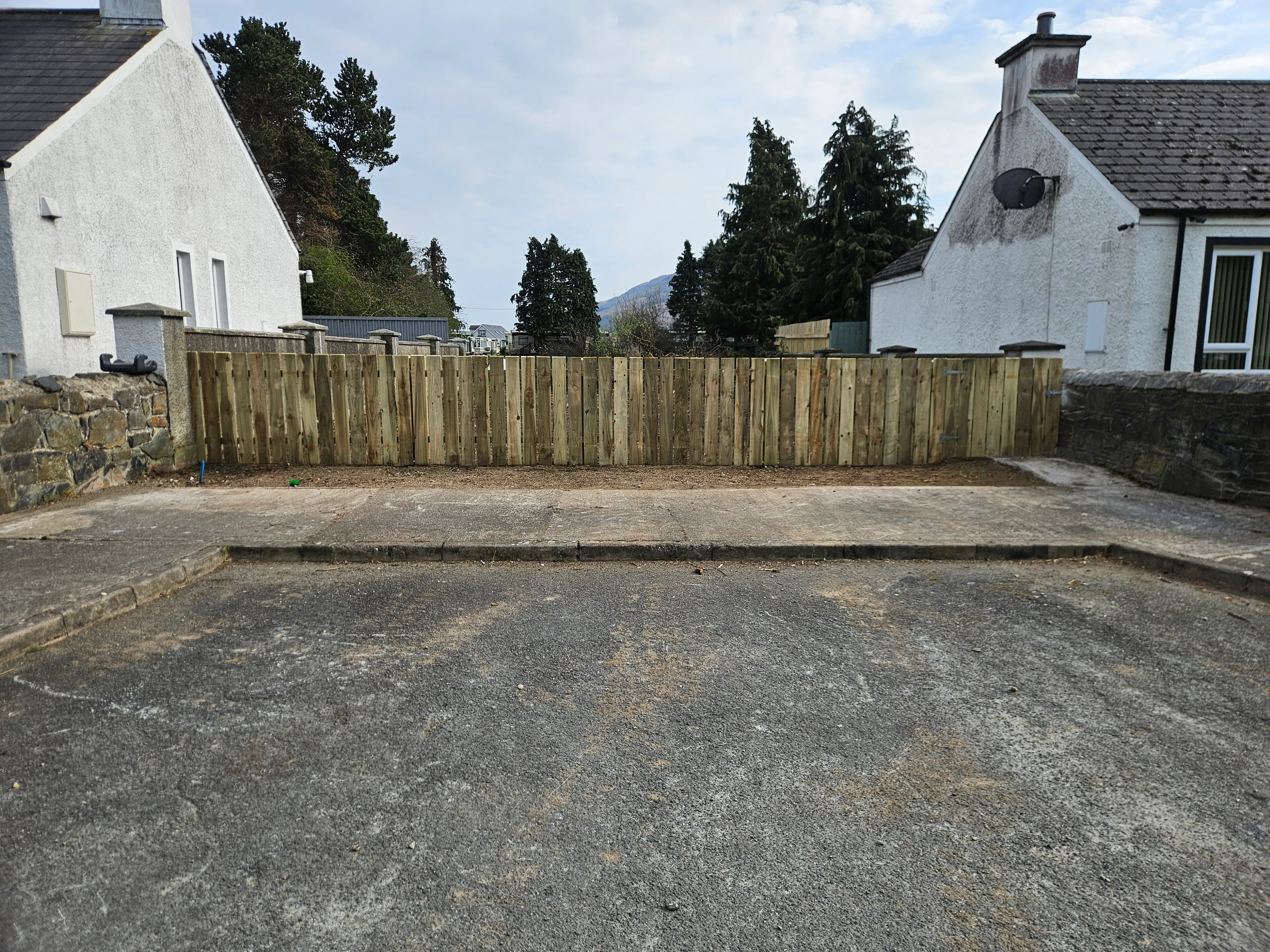
Closeboard fencing is one of the strongest and most durable fence types you can install. It is built on site using individual vertical boards (featheredge boards) that overlap each other, fixed to horizontal rails between posts. Because each board overlaps the next, there are no gaps and the fence provides excellent privacy.
- Privacy: Excellent — no gaps between boards
- Durability: Very high — individual boards can be replaced if damaged
- Wind resistance: Good, though a solid fence does catch more wind than an open design
- Cost: Higher than panel fencing, but the lifespan justifies it
- Best for: Rear gardens, boundaries where privacy is important, exposed sites
One of the big advantages of closeboard fencing is that if a single board gets damaged, you can replace just that board rather than an entire panel. This makes long-term maintenance much more affordable.
2. Lap Panel Fencing
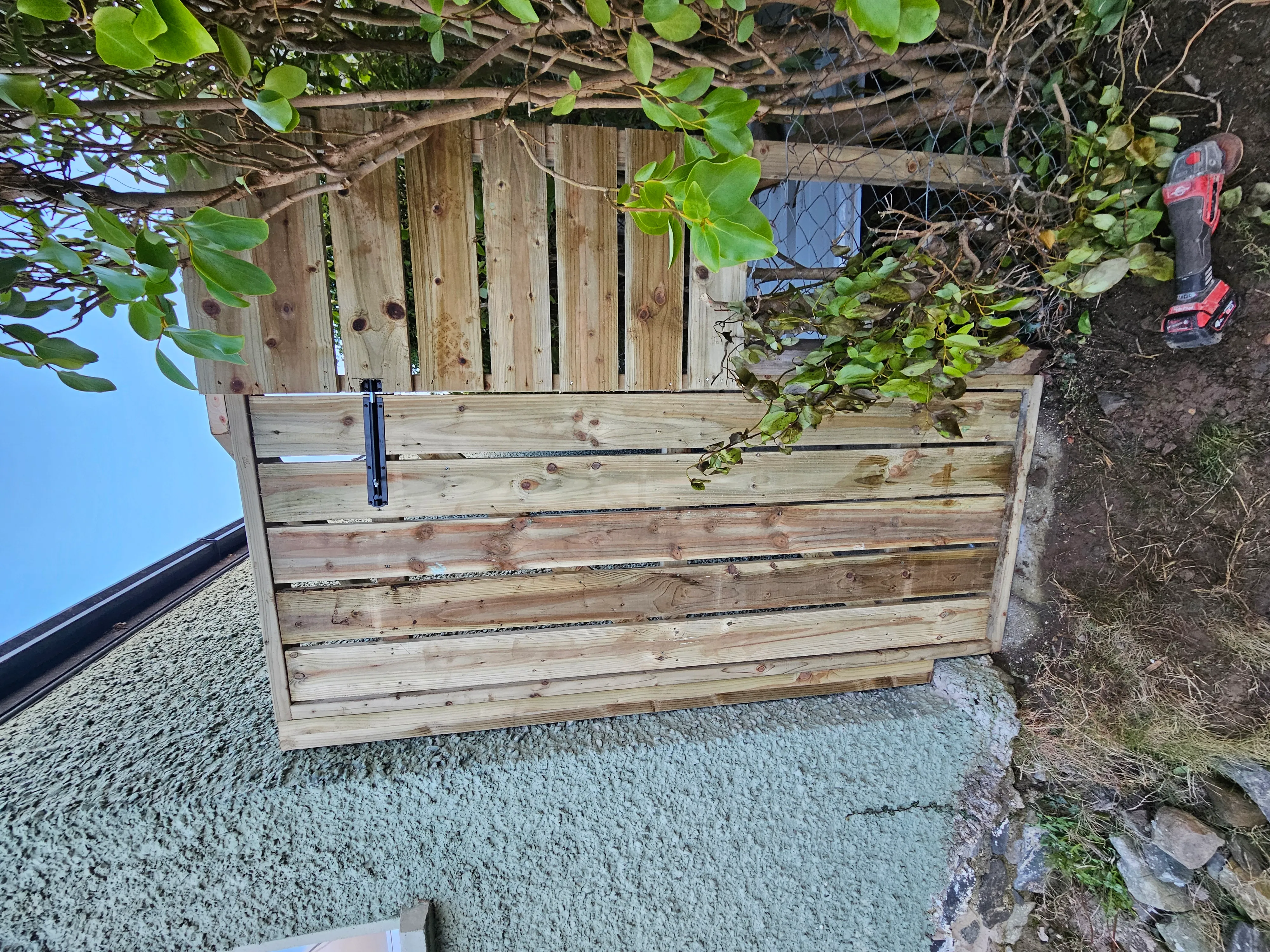
Lap panel fencing is the most common type you will see in Irish housing estates. It uses pre-made panels (usually 6 feet wide) that slot between concrete or timber posts. The panels are made from thin, overlapping horizontal slats.
- Privacy: Good — the overlapping slats block most views
- Durability: Moderate — panels can warp or blow out in strong winds
- Wind resistance: Lower than closeboard, as panels can act like sails
- Cost: Budget-friendly and quick to install
- Best for: Suburban gardens, moderate budgets, straightforward boundaries
Lap panels are affordable and do the job in sheltered gardens. The trade-off is that they are not as robust as closeboard fencing. In a strong Atlantic storm, a lap panel is more likely to fail than a closeboard fence. If you go with lap panels, using concrete posts and gravel boards will significantly extend their life.
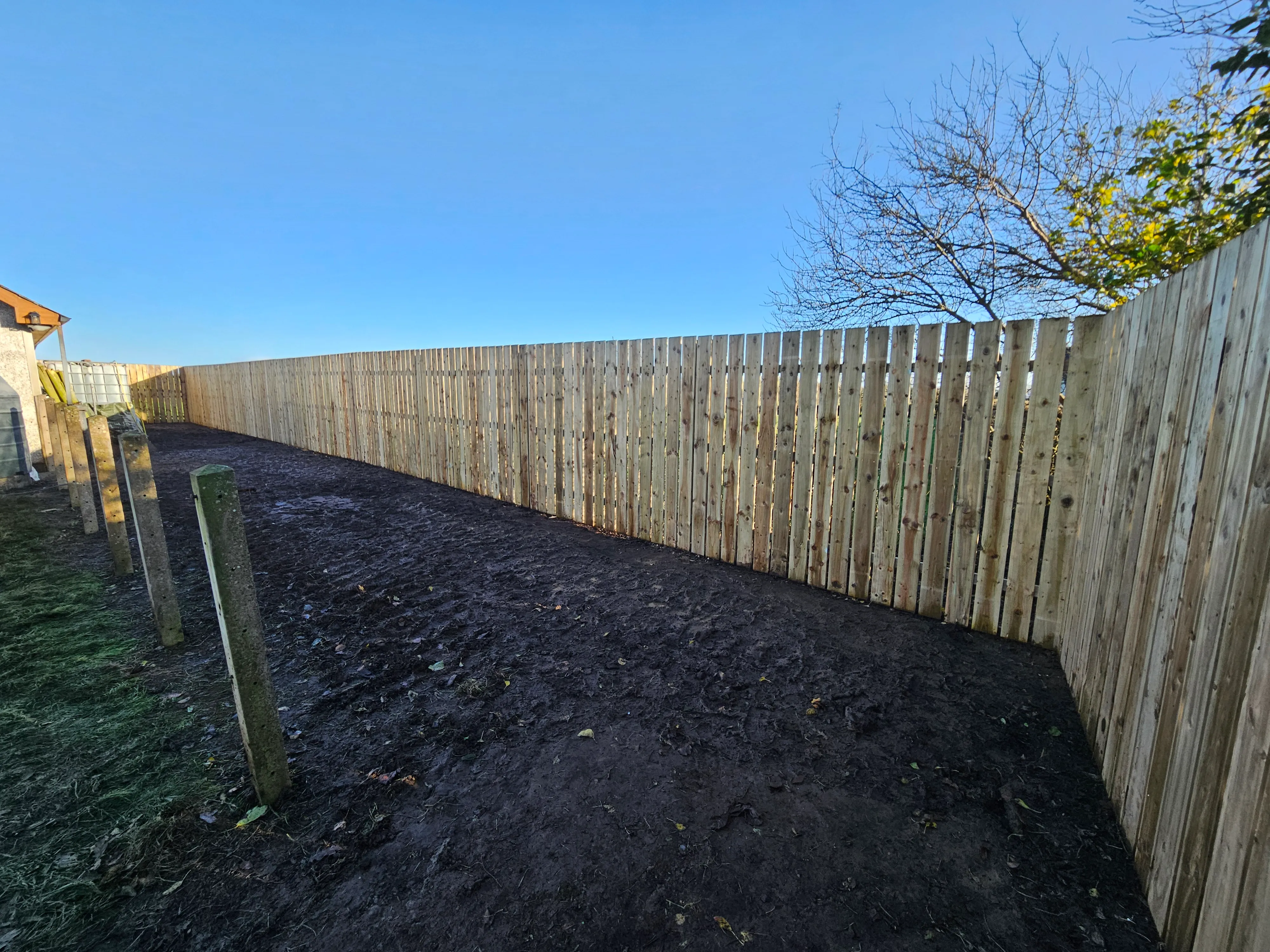
3. Hit-and-Miss Fencing
Hit-and-miss fencing uses alternating boards on either side of the horizontal rails. This creates a fence that provides good privacy from most angles, while still allowing air to pass through. It is an excellent choice for gardens that are exposed to strong winds.
- Privacy: Good from a distance, but not fully solid up close
- Durability: Very good — the open design reduces wind loading
- Wind resistance: Excellent — wind passes through rather than pushing against it
- Cost: Mid-range, similar to closeboard
- Best for: Exposed or coastal gardens, windy hilltop properties
We often recommend hit-and-miss fencing for properties around Dundalk that are exposed to northerly or easterly winds. The fence still looks substantial and gives you a good level of privacy, but it is far less likely to blow down in a storm.
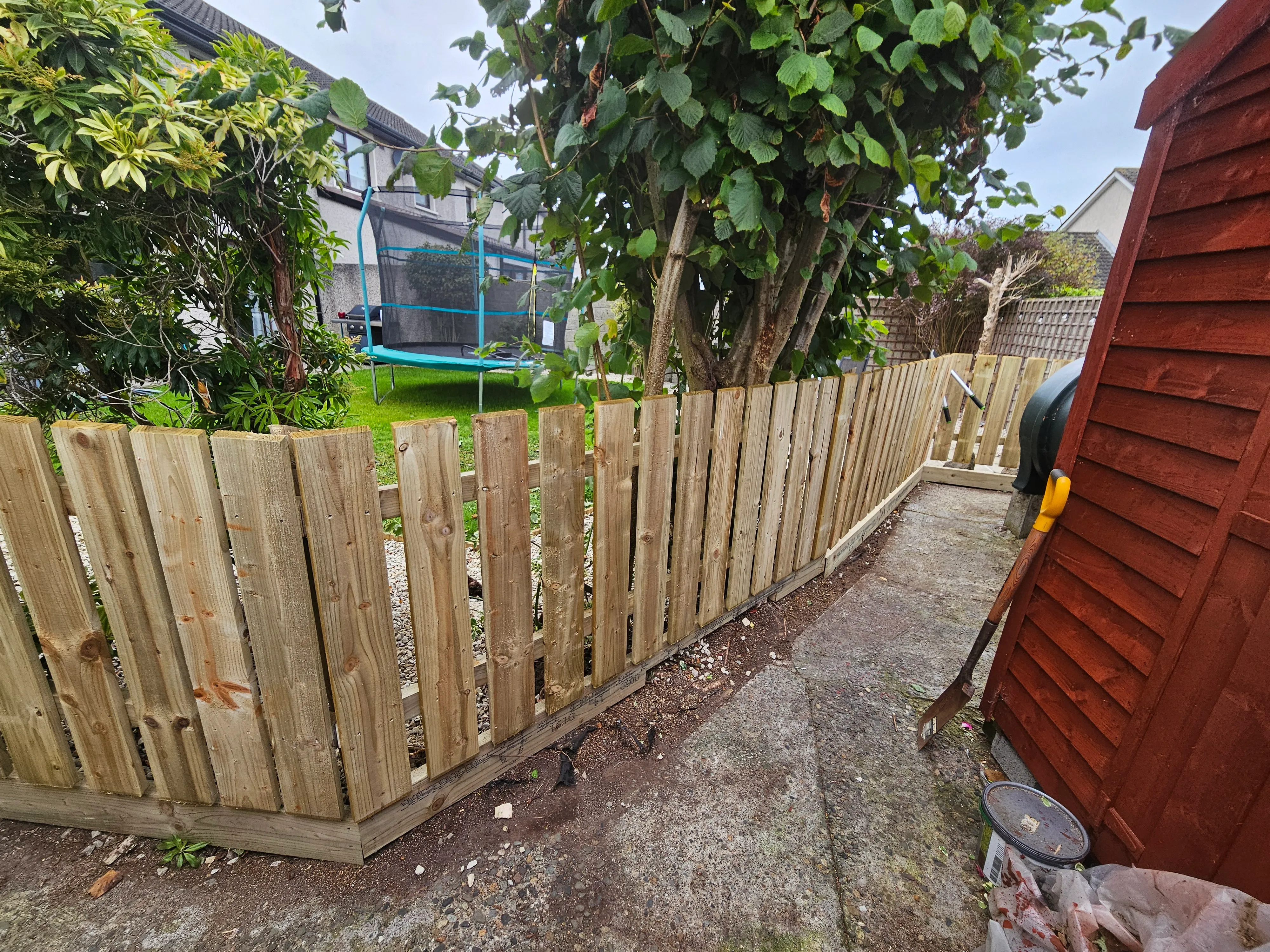
4. Picket Fencing
Picket fencing is a traditional style that works best for front gardens and decorative boundaries. It consists of evenly spaced vertical boards (pickets) fixed to horizontal rails, typically around 3 to 4 feet high. It is not designed for privacy — it is about marking a perimeter and adding kerb appeal.
- Privacy: Minimal — there are gaps between pickets
- Durability: Good, especially if made from treated softwood or hardwood
- Wind resistance: Excellent — wind passes straight through
- Cost: Moderate
- Best for: Front gardens, cottage-style properties, decorative boundaries
Picket fences look particularly well on period homes and cottage-style properties. They can be painted white for a classic look, or stained in a natural timber colour for something more understated. They are also a good option if you want to keep small children or pets within a front garden without blocking the view.
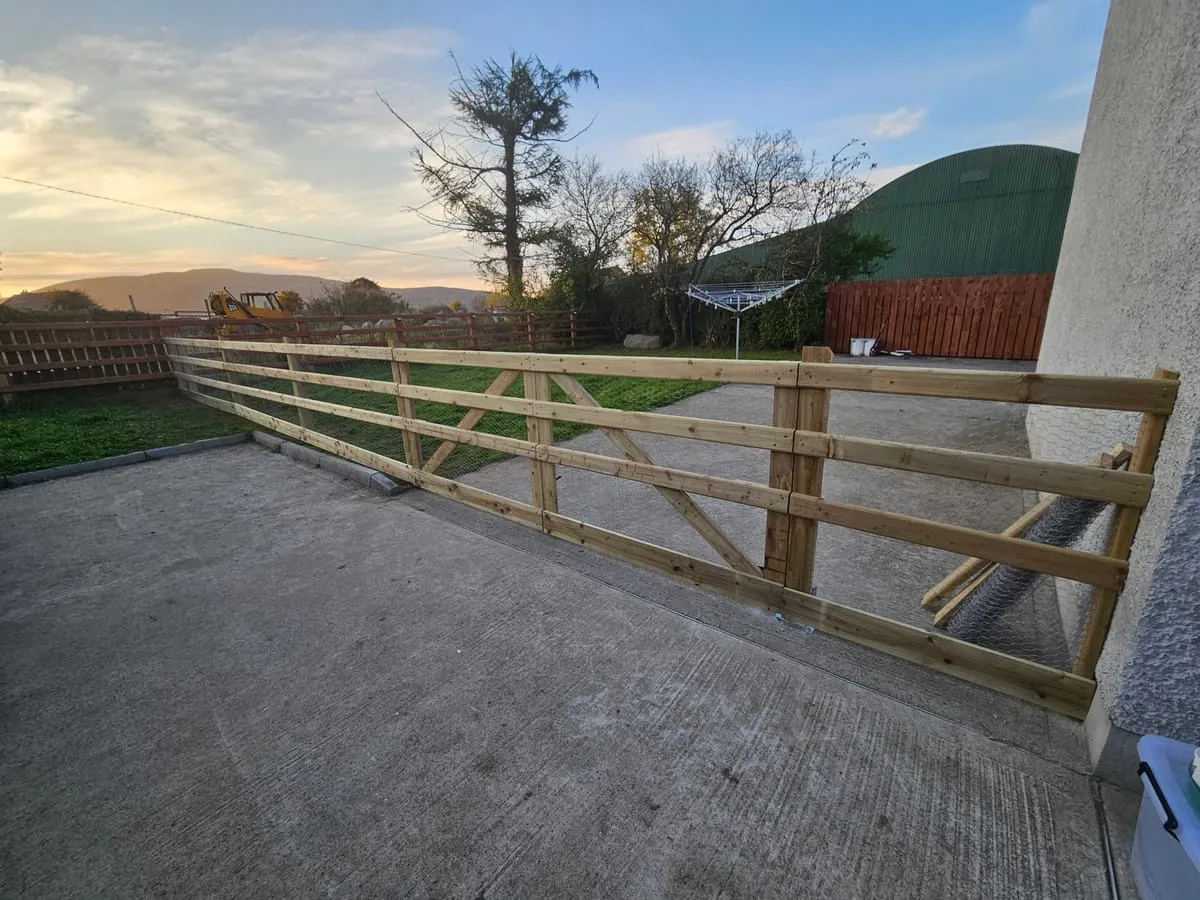
5. Post and Rail Fencing
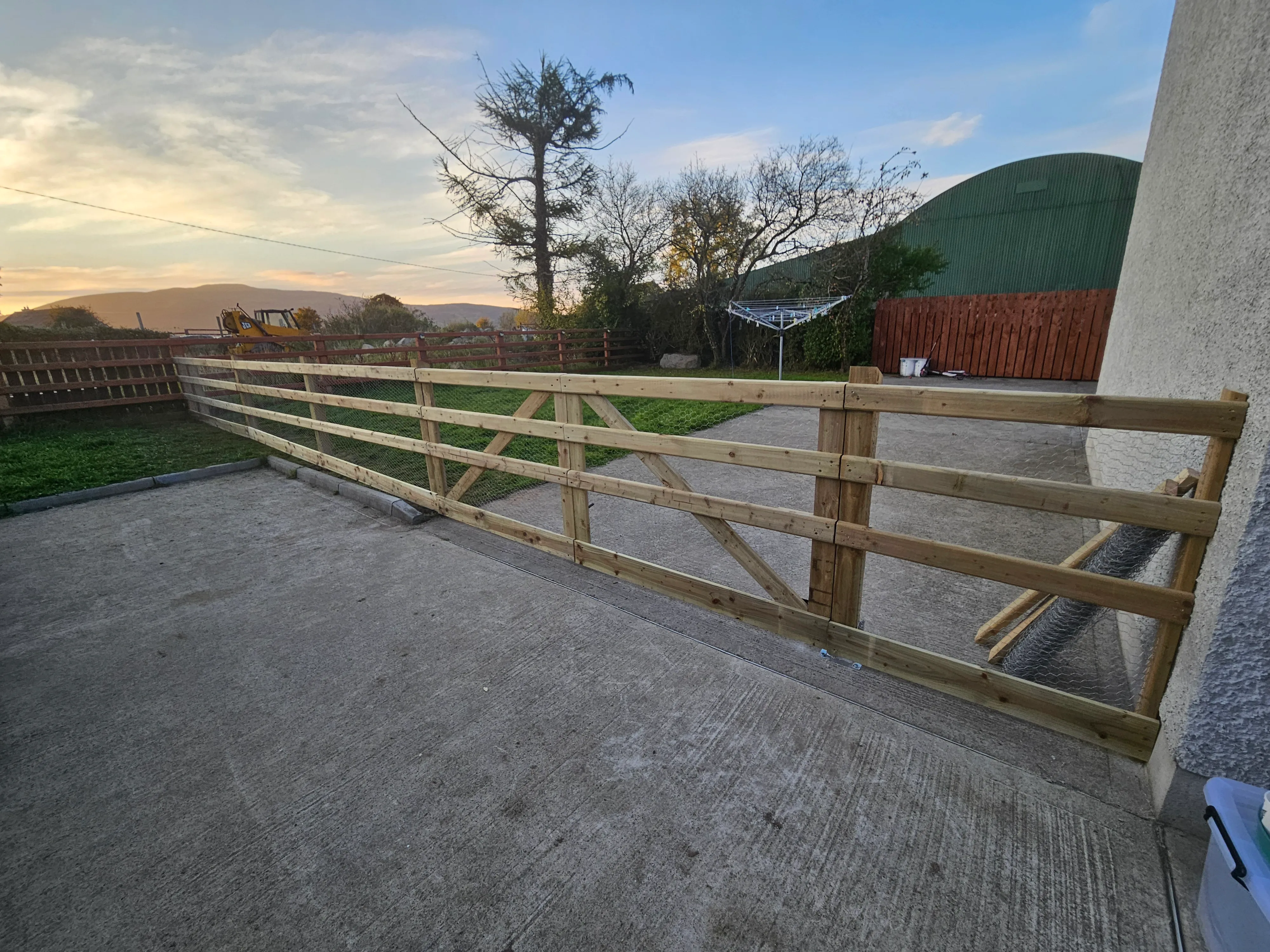
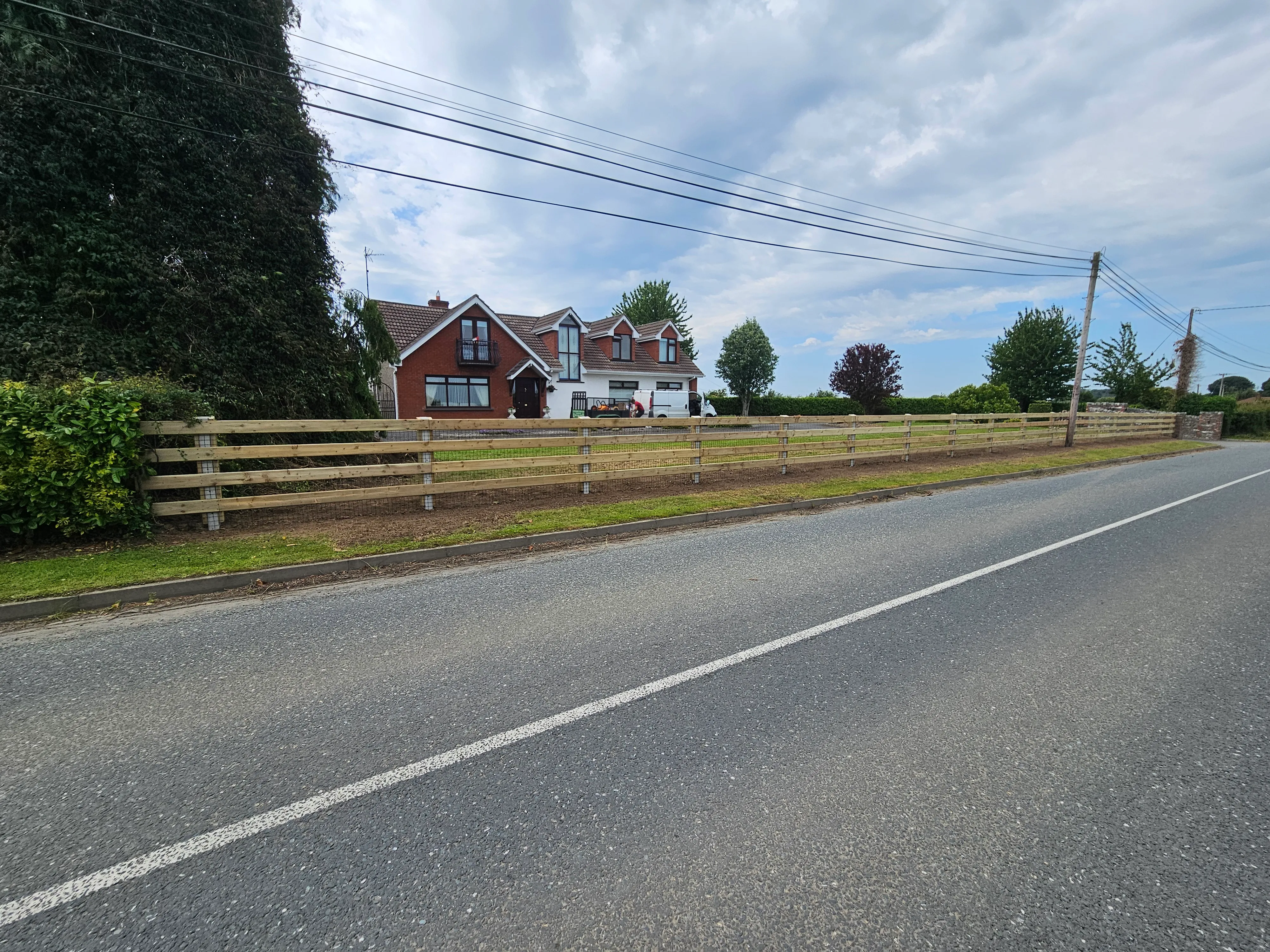
Post and rail fencing is the simplest type — just horizontal rails fixed between posts, with no boards or panels. It is mainly used for agricultural boundaries, large rural gardens, or as a framework for planting a hedge alongside.
- Privacy: None — it is completely open
- Durability: Good, especially with treated timber or creosoted posts
- Wind resistance: Excellent — nothing for the wind to catch
- Cost: Low
- Best for: Rural properties, paddocks, boundaries alongside hedgerows, large gardens
If you have a large garden in the Dundalk or Louth countryside, post and rail fencing can be a practical and affordable way to define boundaries. Many homeowners combine it with hedging plants for a natural-looking perimeter that also provides privacy as the hedge matures.
Which Fence Type Is Right for You?
Here is a quick summary to help you decide:
| Fence Type | Privacy | Wind Resistance | Cost | Lifespan |
|---|---|---|---|---|
| Closeboard | Excellent | Good | Higher | 20-25 years |
| Lap Panel | Good | Lower | Budget | 10-15 years |
| Hit-and-Miss | Good | Excellent | Mid-range | 20-25 years |
| Picket | Low | Excellent | Moderate | 15-20 years |
| Post & Rail | None | Excellent | Low | 15-20 years |
For most suburban rear gardens in Dundalk, closeboard or lap panel fencing will be the right choice. If your property is exposed to wind, hit-and-miss is well worth considering. For front gardens and decorative boundaries, picket fencing adds a lovely touch.
A Note on Posts and Gravel Boards
Whichever fence type you choose, the posts and base are just as important as the panels or boards themselves. We always recommend concrete gravel boards along the bottom to keep the timber off the damp ground, and either concrete posts or properly treated timber posts set in postcrete. This simple step can add years to the life of any fence.
Get the Right Fence for Your Garden
Choosing a fence is a decision you will live with for years, so it is worth getting it right from the start. If you are not sure which type suits your garden, we are happy to call out, take a look at your property, and give you honest advice.
Seamus and Pete have been building fences across Dundalk, Drogheda, and County Louth for over 35 years. We know what works in this climate, and we will recommend the best option for your property and budget — no hard sell, just practical advice.
Give us a call on 085 168 5170 for a free, no-obligation quote. We would love to help you get the fence your garden deserves.