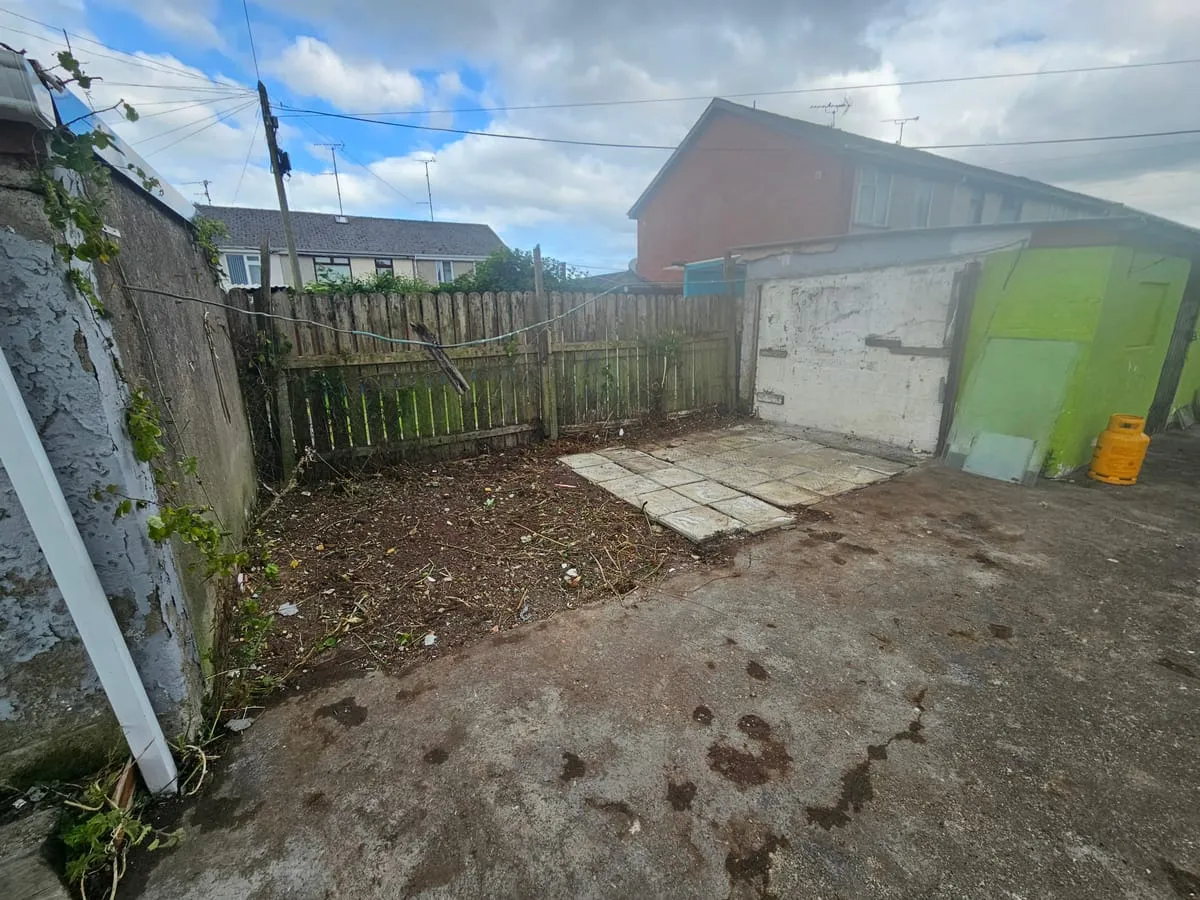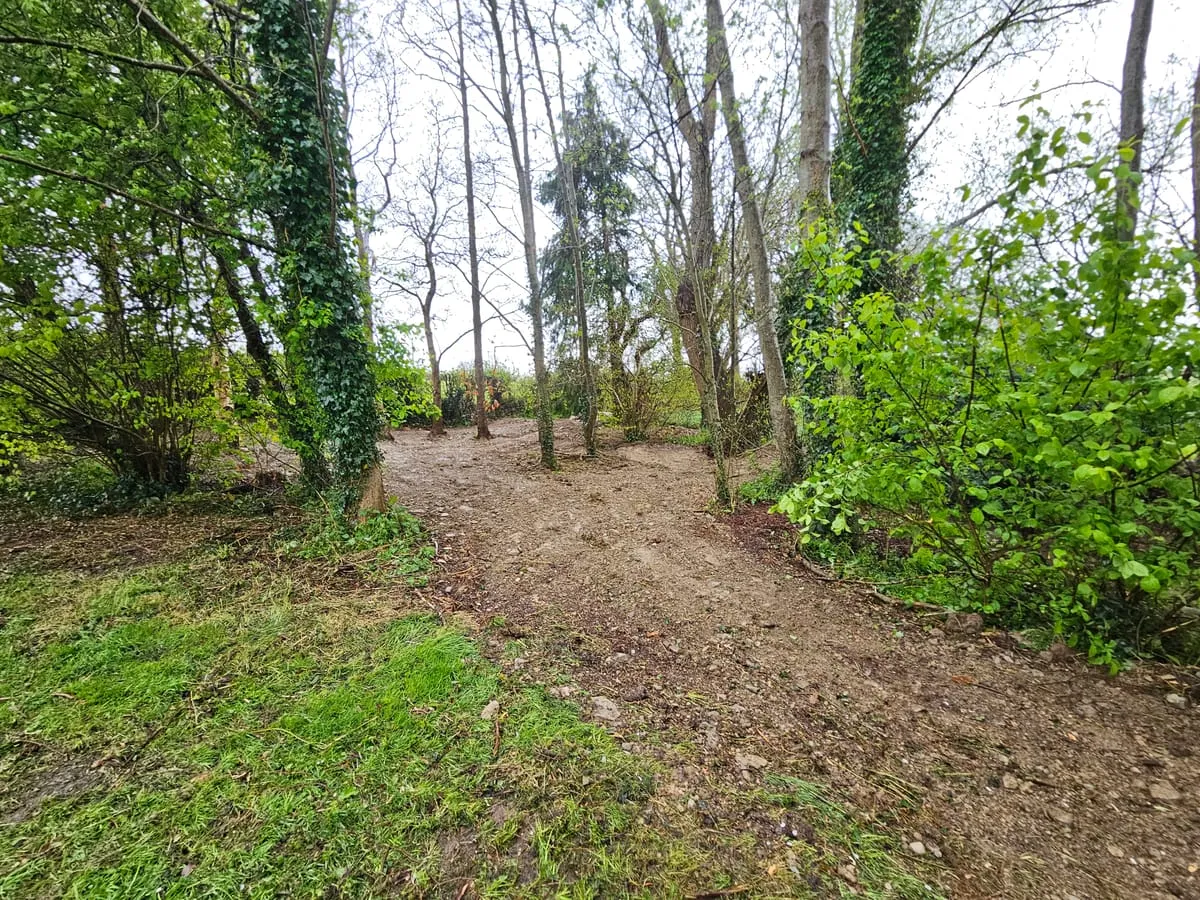
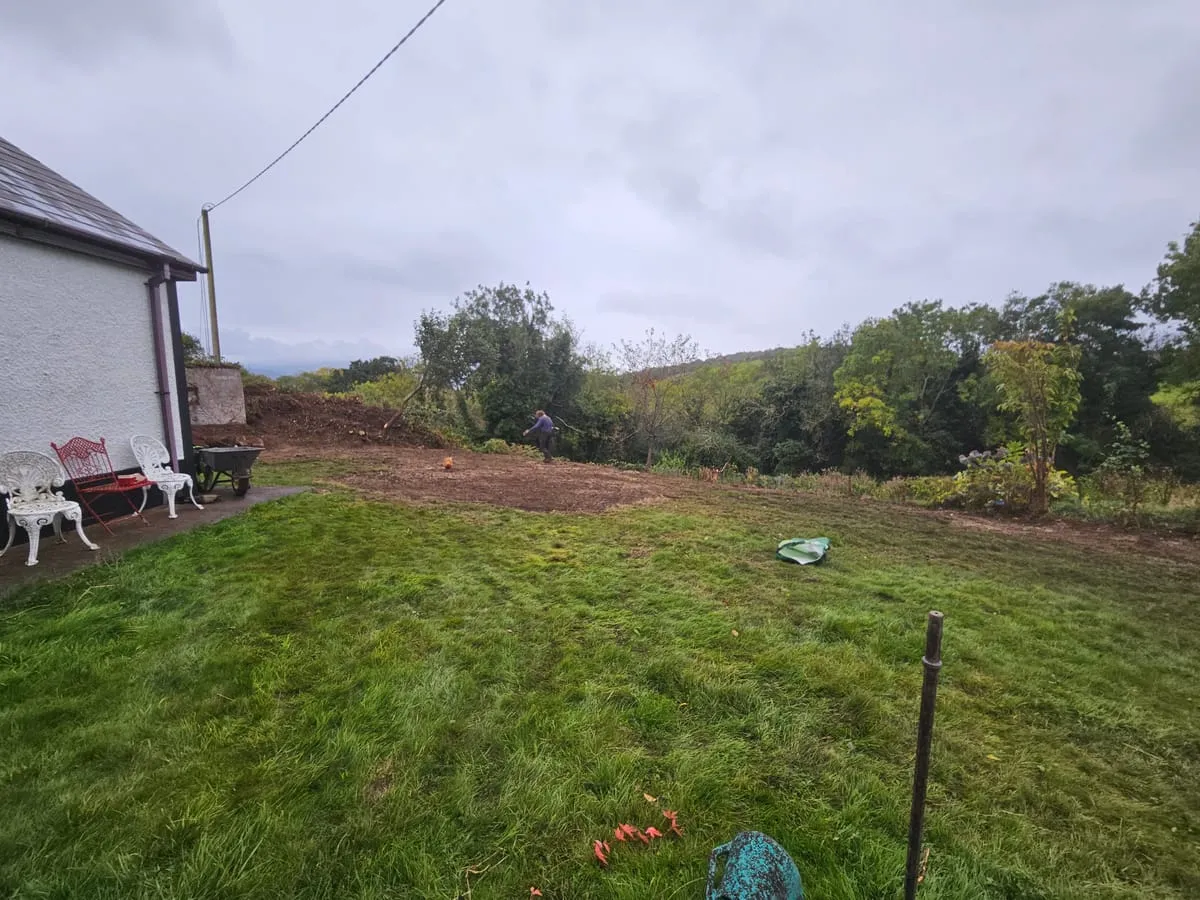
If there is one plant that strikes dread into the heart of every Irish gardener, it is the bramble. Blackberries are lovely in September, but the plant that produces them is an absolute menace when it takes hold of your garden. Brambles grow fast, spread aggressively, and are covered in thorns that seem designed to ruin your clothes and your patience in equal measure.
We have been removing brambles from gardens across Dundalk and County Louth for over 35 years, and they remain one of the most common reasons people contact us for garden clearance. This guide covers everything you need to know about getting rid of them — and keeping them gone.
Why Brambles Are So Hard to Remove
Brambles (Rubus fruticosus) are tough for several very good reasons:
They grow incredibly fast
In the Irish climate, bramble canes can grow up to 5 metres in a single growing season. A small patch in April can become a dense, impenetrable thicket by October.
They spread in multiple ways
Brambles spread both by seed (courtesy of birds eating the berries) and by layering — when the tip of a long cane touches the ground, it roots and forms a new plant. This means a single bramble plant can colonise a large area in just a few years.
Their root system is robust
Bramble roots are thick, woody, and surprisingly deep. Even a small fragment of root left in the ground can regenerate into a new plant. This is why simply cutting them back is never a permanent solution — you have to deal with the roots.
They are physically unpleasant to work with
The thorns are vicious. Leather gloves, long sleeves, eye protection, and sturdy boots are essential. Even with protection, you will collect scratches. It is one of the less glamorous aspects of garden work.
Method 1 — Manual Removal (Digging Out)
Manual removal is the most thorough method and the one we use most often for domestic gardens. It is hard work, but it gives the best long-term results.
Step 1 — Cut the canes back
Using a brush cutter, strimmer, or heavy-duty loppers, cut all the bramble canes to about 150mm (6 inches) above ground level. This removes the bulk of the thorny material and gives you access to the root crowns.
Bag and remove the cut canes as you go. Bramble cuttings do not compost easily and they will root if left in contact with soil, so get them off site.
Step 2 — Dig out the root crowns
Using a sharp spade or mattock, dig around each root crown and lever it out. Bramble root crowns can be the size of a football on established plants, with thick roots spreading outwards.
Follow the main roots as far as you can. In heavy clay soil (common around Dundalk), the roots tend to stay closer to the surface. In lighter, sandier soil, they can go deeper.
Step 3 — Remove all root fragments
This is the tedious part, but it is critical. Go over the cleared ground and pull out every piece of root you can find. Even a 50mm piece of root can regenerate. A garden fork is useful for lifting roots out of loose soil after digging.
Step 4 — Monitor and remove regrowth
Despite your best efforts, some roots will survive. Check the area every few weeks and pull out any new shoots while they are small. Catching regrowth early — when it is just a few inches tall — is much easier than dealing with re-established plants.
Method 2 — Herbicide Treatment
For large areas of bramble, or in situations where digging is not practical (rocky ground, near tree roots, steep banks), herbicide treatment can be effective.
Which herbicide to use
The most commonly used herbicides for bramble control in Ireland are:
- Glyphosate (Roundup and similar products) — a systemic herbicide that is absorbed through the leaves and travels down to the roots. Available for amateur and professional use.
- Triclopyr (SBK Brushwood Killer and similar) — specifically designed for woody weeds like brambles. More targeted than glyphosate and less likely to damage grass.
When to apply
The best time to apply herbicide to brambles is in autumn (September to November), when the plant is actively pulling nutrients down into its root system. The herbicide travels with the nutrient flow, reaching the roots more effectively than at other times of year.
Spring applications can work, but the plant’s upward growth pattern at that time of year means less herbicide reaches the roots.
How to apply
For best results:
- Cut the brambles back to about 300-500mm (1-2 feet) of growth and allow regrowth for 4-6 weeks. Fresh, actively growing leaves absorb herbicide more effectively than old, waxy foliage.
- Apply the herbicide on a calm, dry day when no rain is forecast for at least 6 hours.
- Spray or paint the solution onto the leaves and cut stems thoroughly.
- Allow 3-4 weeks for the herbicide to work its way through the plant.
- Dead growth can then be cleared and the area dug over.
Important considerations
- Glyphosate is non-selective — it will kill any plant it contacts, including grass and garden plants. Apply carefully.
- Herbicides take time to work. You will not see results for 2-3 weeks, and a second application may be needed.
- Always follow the product label instructions for dilution rates and safety precautions.
- There are ongoing discussions in Ireland and the EU about the future availability of glyphosate. If regulations change, alternative products may be needed.
Method 3 — Mechanical Clearance
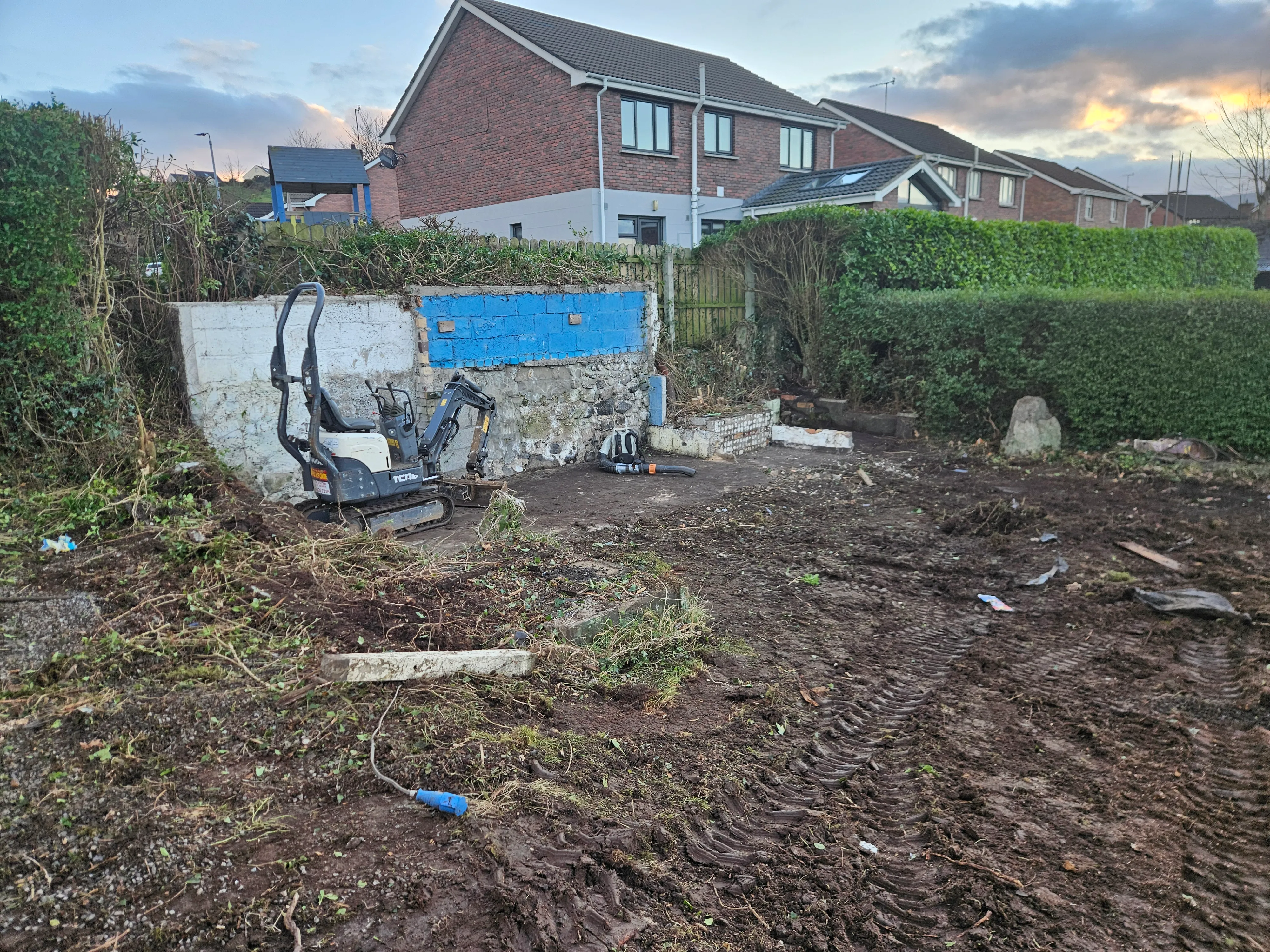
For very large areas or severely overgrown sites, mechanical clearance using a mini digger, excavator, or specialised flail mower is the most efficient option.
How it works
A mini digger fitted with a grubbing bucket can strip brambles — canes, roots, and all — from the ground in a fraction of the time it takes to dig by hand. The excavated material is then sorted, with green waste going to composting and soil being replaced or redistributed.
When mechanical clearance makes sense
- Large areas (over 50 square metres) of dense bramble
- Sites where the ground needs clearing for construction or landscaping anyway
- Properties where speed is important (preparing for sale, development work)
- Ground that is too hard or rocky for effective hand digging
Limitations
- Not suitable for tight spaces or areas near structures and trees
- Disturbs the soil structure more than hand clearance
- Requires good vehicle access to get the digger on site
- More expensive than hand clearance for small areas
Preventing Bramble Regrowth
Getting rid of brambles is one thing. Keeping them gone is another. Here is how to prevent them coming back:
Maintain your boundaries
Most brambles enter gardens from neighbouring land, hedgerows, or waste ground. Regular maintenance of perimeter hedges and fences creates a barrier. Check your boundaries at least twice a year — once in spring and once in late summer.
Use ground cover
Bare soil is an invitation for bramble seeds (and every other weed). Once brambles are cleared, plant the area with dense ground cover, lay turf, or mulch heavily. A thick layer of bark mulch (75-100mm deep) suppresses bramble regrowth and most other weeds.
Lay membrane where appropriate
In areas where you do not want any plant growth — under decking, behind sheds, along perimeter walls — heavy-duty weed membrane topped with gravel or bark prevents brambles from establishing.
Stay vigilant
Check cleared areas regularly during the growing season. A bramble shoot that is pulled out when it is 100mm tall takes two seconds. The same shoot left for three months is a thorny, rooted, 2-metre problem.
Cost of Bramble Removal
The cost depends on the area covered, the density of growth, and the removal method:
| Situation | Method | Typical Cost |
|---|---|---|
| Small patch (under 10m2) | Manual digging | €100 — €250 |
| Medium area (10-30m2) | Manual digging + herbicide | €250 — €600 |
| Large area (30-80m2) | Mechanical + manual | €500 — €1,200 |
| Very large area (80m2+) | Mechanical clearance | €1,000 — €2,500+ |
These prices include clearance, root removal, waste disposal, and a follow-up check. Treatment for regrowth, if needed, is usually included for the first season.
Frequently Asked Questions
Are brambles a protected species in Ireland?
No, brambles are not protected and can be removed at any time of year. However, under the Wildlife Act 1976 (as amended), it is an offence to destroy or damage vegetation (including brambles) in hedgerows or uncultivated land between March 1st and August 31st, as this is the bird nesting season. This applies to hedgerows and wild land — your garden is classified as cultivated land, so this restriction does not apply to garden brambles.
Will brambles come back if I just cut them to the ground?
Almost certainly, yes. Cutting brambles removes the visible growth but leaves the root system intact. New shoots will appear within weeks during the growing season. For permanent removal, the roots must be dug out or killed with herbicide.
Can I compost bramble cuttings?
Bramble canes are slow to decompose and the thorns persist for a long time, making them unpleasant to handle even in compost. More importantly, if any piece of root or cane tip contacts soil, it can regrow. We recommend disposing of bramble waste at a civic amenity site or through a professional removal service rather than composting at home.
How long does it take to completely eradicate brambles?
With thorough root removal, you can eliminate the main plants in a single session. However, dormant root fragments in the soil may send up new shoots for one to two growing seasons afterwards. Regular monitoring and prompt removal of regrowth is needed during this period. After two seasons with no new shoots, you can be confident the brambles are gone.
Battling Brambles? We Can Help
Bramble removal is one of the most common jobs we handle across County Louth, and we have got it down to a fine art. If your garden is being taken over — or if you have been cutting them back for years and they keep coming back — Seamus and Pete can sort it out properly. We dig out the roots, clear the waste, and follow up to make sure they stay gone.
Give us a call on 085 168 5170 for a free quote. We will have those brambles beaten in no time.