If you live in a residential estate in Ireland, you have almost certainly wondered at some point who is supposed to be cutting the grass in the common areas, trimming the perimeter hedges, or dealing with the weeds creeping through the footpaths. It is one of those issues that causes no end of frustration for residents, and the answer is not always as straightforward as you would like.
Here is a practical guide to how common area maintenance works in Irish residential estates, who is responsible, and what you can do if it is not being done properly.
The Short Answer
In most modern estates, the responsibility for maintaining common areas falls to one of three parties:
- The local authority (county council) — if the estate has been taken in charge
- A management company — if the estate has not been taken in charge, or if it is an apartment or mixed-use development
- The developer — if the estate is still under construction or has not yet been completed to a standard suitable for taking in charge
The key question is whether your estate has been “taken in charge” by the local authority.
What Does “Taken in Charge” Mean?
When a residential estate is built, the developer is initially responsible for all the common areas — roads, footpaths, public lighting, green spaces, and drainage. Once the estate is finished and the infrastructure meets the required standards, the local authority can agree to take the estate “in charge.”
Once taken in charge, the local authority (in our area, that is Louth County Council) becomes responsible for maintaining the public infrastructure, including roads, footpaths, public lighting, and often the green common areas.
How to Check if Your Estate Has Been Taken in Charge
You can check with your local authority directly. Louth County Council maintains records of which estates have been taken in charge. You can also check with your management company or residents’ association if one exists.
Estates That Have Been Taken in Charge
If your estate has been taken in charge, the good news is that the local authority is responsible for maintaining public roads, footpaths, street lighting, and public open spaces.
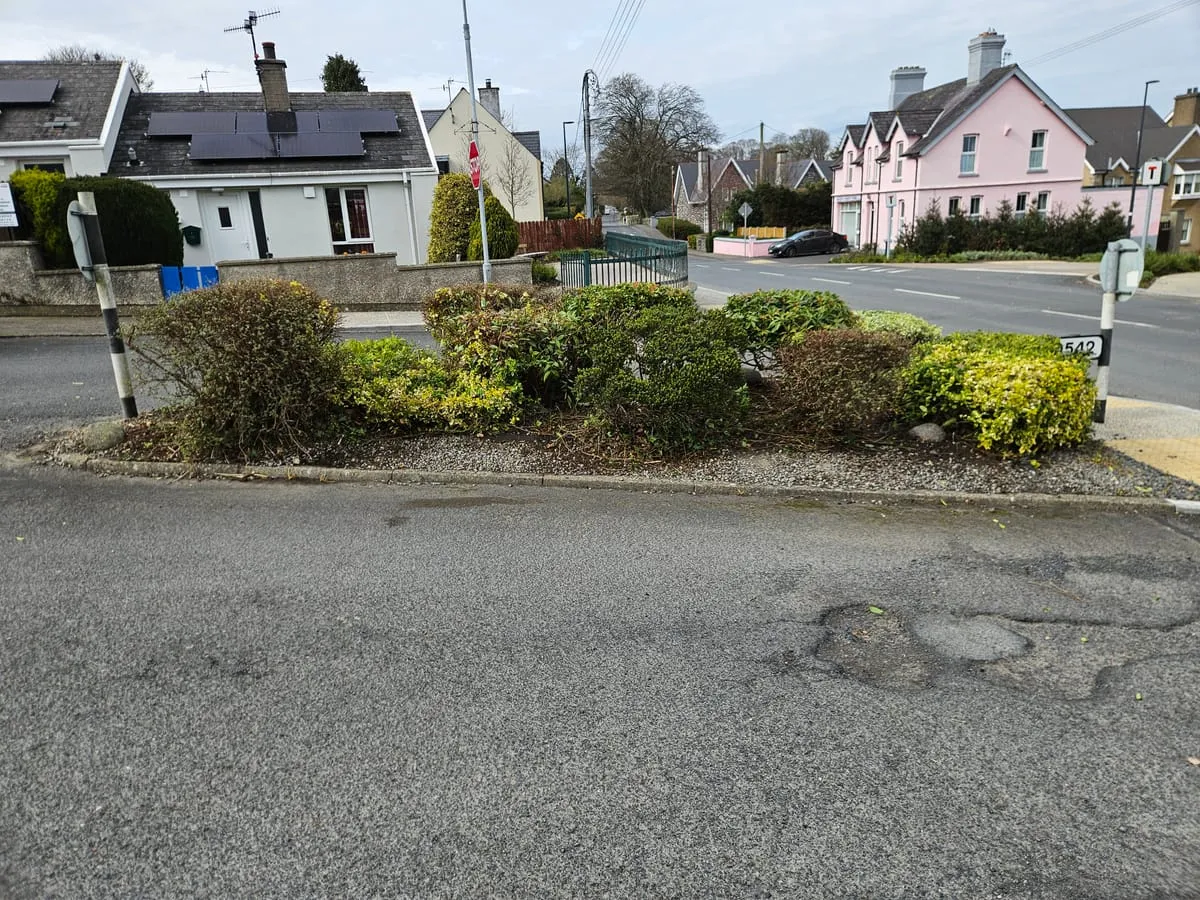
However, the reality is that local authority maintenance of green areas can be quite basic. Councils typically provide grass cutting on a set schedule, but the frequency and standard may not match what residents expect. Hedge trimming, weed control, planting, and general tidying are often minimal.
Supplementing Council Maintenance
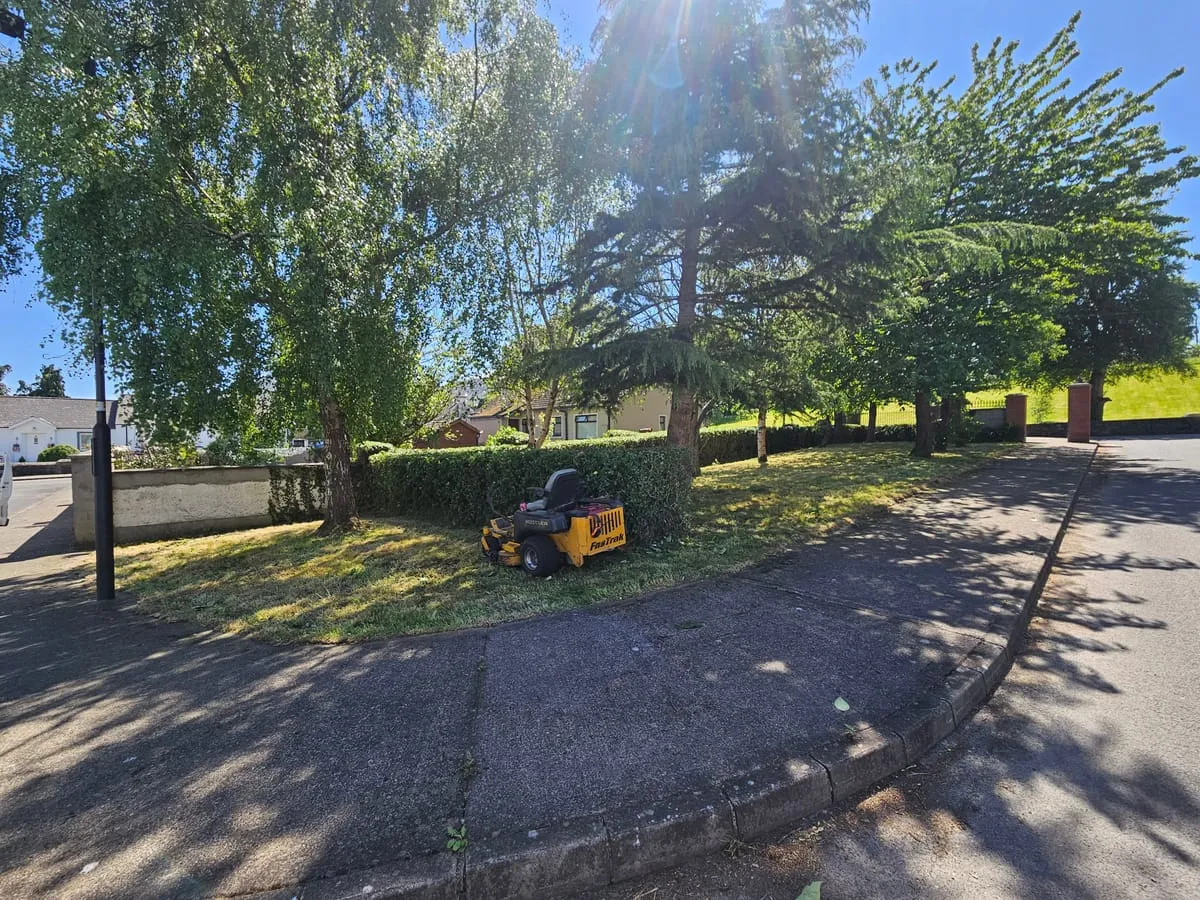
Many residents’ associations in taken-in-charge estates choose to hire a private grounds maintenance company to supplement the council’s work. This might include more frequent grass cutting, hedge trimming, seasonal planting, weed control on paths, and general tidying. It means residents share the cost of a higher standard of care than the council provides on its own.
Estates With Management Companies
For estates that have not been taken in charge — and for apartment developments and mixed-use schemes — a management company is typically responsible for all common area maintenance.
How Management Companies Work
Under the Multi-Unit Developments Act 2011, all multi-unit developments (apartments and estates of houses with shared services) must have an owners’ management company (OMC). The OMC is made up of the property owners, and it is responsible for managing and maintaining the common areas.
The OMC collects an annual service charge from each homeowner to fund this maintenance. The amount varies depending on the estate, but it typically covers:
- Grass cutting and lawn care in common areas
- Hedge and shrub maintenance
- Tree care
- Path and hard surface maintenance
- Lighting and signage
- Insurance for common areas
- Any other shared services
Getting Value for Money
If you are paying a management fee, you have every right to expect a good standard of maintenance. Here is how to make sure you are getting value:
- Attend the AGM — this is where decisions about service contracts and budgets are made
- Review the maintenance contract — understand what is included and what frequency of service you are paying for
- Get competitive quotes — the management company should be getting multiple quotes for grounds maintenance and going with the best value, not just the cheapest
- Set clear standards — define what “well-maintained” means for your estate and hold the maintenance contractor to those standards
Common Problems and How to Solve Them
The Grass Is Only Cut Every Three Weeks
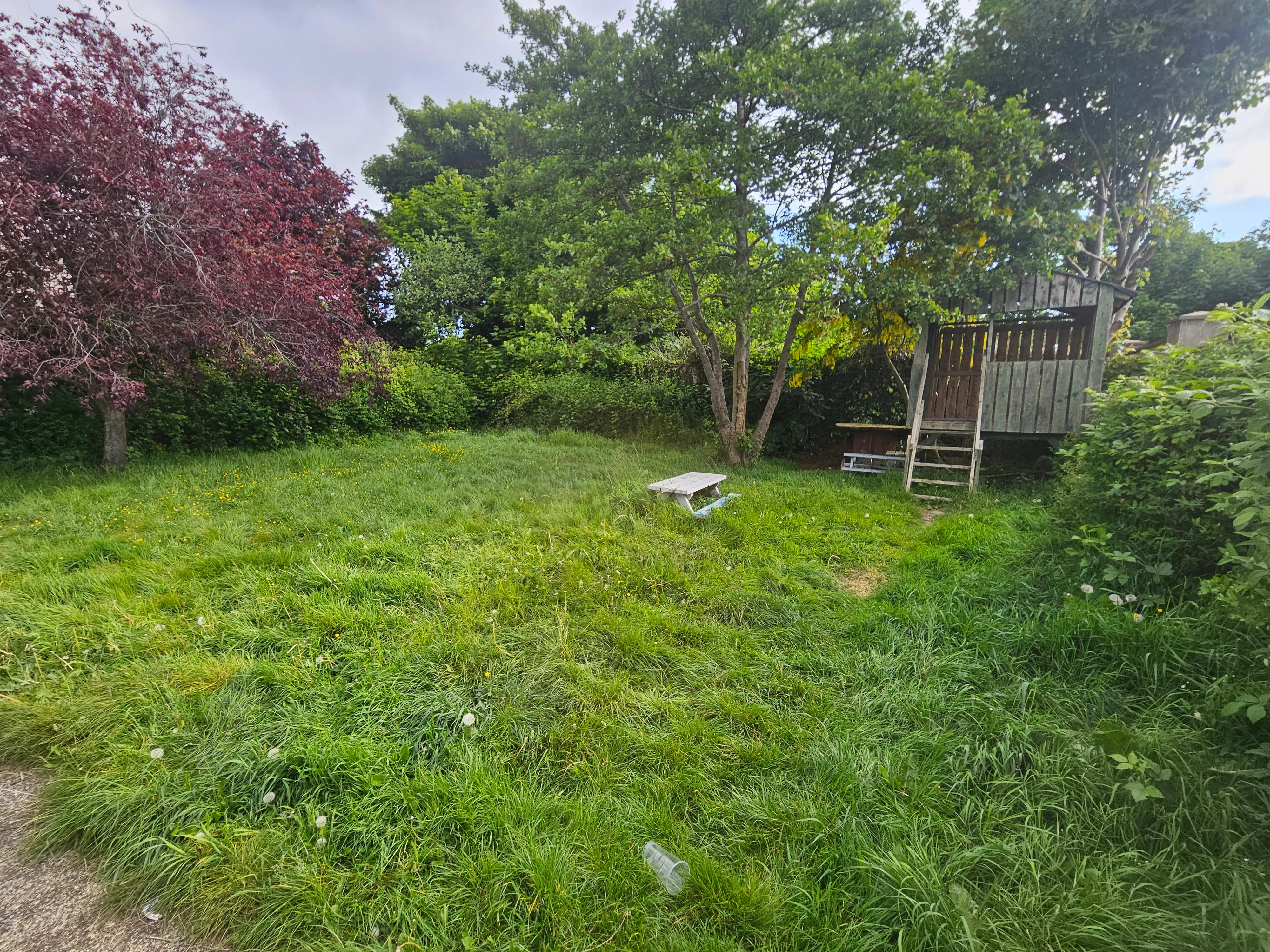
This is one of the most common complaints. During peak growing season, grass in Ireland can need cutting every seven to ten days to look its best. A three-week cycle means the grass is always too long before it gets cut. If your management company or council is not cutting frequently enough, raise the issue formally and request a more frequent schedule.
Hedges Are Out of Control
perimeter hedges that are not trimmed regularly become overgrown and unsightly. They can also encroach on footpaths and create safety issues. Make sure hedge trimming is included in the maintenance contract and that it happens at least twice during the growing season.
Weeds Everywhere
Weeds in paving, kerbs, and gravel areas are one of the first signs that maintenance is falling short. Regular weed treatment should be part of any grounds maintenance plan. If it is not happening, ask why.
Nobody Seems to Be in Charge
In some estates, particularly older ones where the developer has moved on and the estate has not been taken in charge, there can be a vacuum where nobody takes responsibility. If this is your situation, the first step is to establish a residents’ association and begin engaging with the local authority about getting the estate taken in charge.
The Benefits of Professional Grounds Maintenance for Estates
Whether your estate is managed by a council, a management company, or a residents’ association, hiring a professional grounds maintenance company makes a real difference.
Professional maintenance delivers:
- Consistent standards — the grounds look good all the time, not just after the occasional visit
- Proactive care — problems are spotted and addressed before they become eyesores
- Cost efficiency — regular maintenance is always cheaper than letting things deteriorate and then paying for restoration
- Pride in the estate — well-maintained common areas boost property values and make the estate a nicer place to live
We Can Help Your Estate
At Gardening Services Dundalk, Seamus and Pete work with management companies, residents’ associations, and councils across County Louth to maintain residential estate common areas. We provide regular scheduled maintenance tailored to the needs and budget of each estate, from simple grass cutting programmes to comprehensive grounds care packages.
If your estate’s common areas could do with some professional attention, call us on 085 168 5170 for a free quote. We will walk the estate with you, assess what is needed, and put together a plan that works for everyone.