
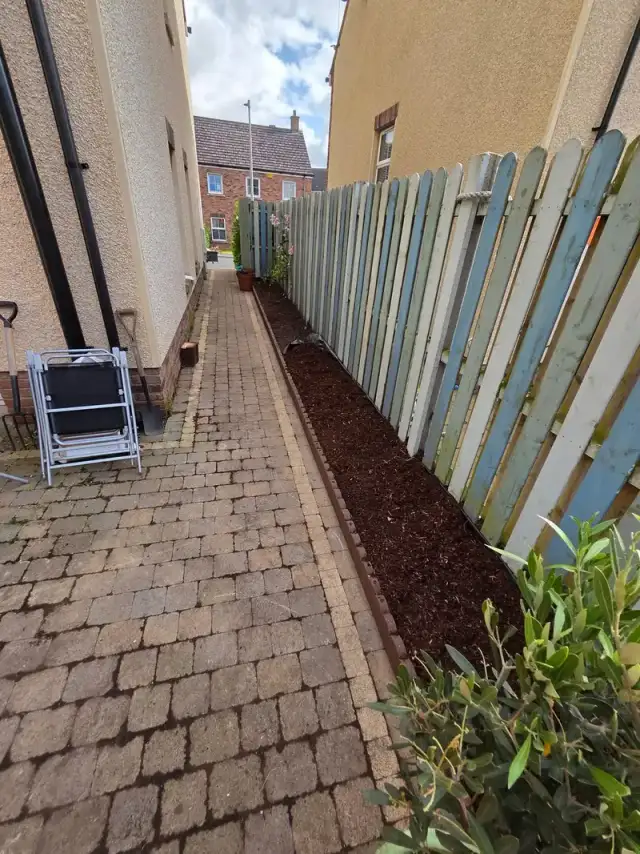
If you have been talking to landscapers or reading about garden design, you have probably come across the terms hard landscaping and soft landscaping. They are straightforward once you know what they mean, but the distinction matters practically because the two types of work are done in a different order, by different people, and budgeted differently.
This guide explains what each term covers, why the order matters, and how the two work together in a finished garden.
Hard Landscaping: The Framework
Hard landscaping refers to all the fixed, structural, non-living elements of a garden. Think of it as the skeleton and surfaces of the outdoor space:
- Patios and paving
- Paths and walkways
- Driveways
- Retaining walls and boundary walls
- Steps
- Raised beds (the structure, not the planting)
- Decking
- Fencing and garden gates
- Drainage channels and soakaways
- Pergolas and garden structures
- Edging and kerbing
Hard landscaping defines the layout and flow of a garden. Once it is installed, it largely determines where soft landscaping goes. Changing it later is expensive and disruptive, which is why it is done first.
Soft Landscaping: The Living Layer
Soft landscaping refers to all the living, organic elements of a garden:
- Lawns (turf or seed)
- Planted beds and borders
- Trees and shrubs
- Hedging
- Climbers and wall plants
- Bulbs and perennials
- Wildflower areas
- Vegetable and fruit gardens
- Compost areas
Soft landscaping fills in around the hard framework, softens edges, adds colour and texture, and changes through the seasons. It is generally more forgiving to adjust than hard landscaping. If a planting choice does not work, you can move or replace it. You cannot easily move a patio.
Why the Order Matters
Hard landscaping comes first, always. The reasons are practical:
Machinery access. Laying a patio, building a retaining wall, or installing drainage requires heavy materials and often machinery. Once a lawn is established and planting beds are filled, accessing the garden for this kind of work becomes much more damaging and difficult.
Levels and drainage. Hard landscaping determines the finished ground levels. Soft landscaping must be designed around those levels. You cannot sensibly plan a lawn or planting scheme until you know exactly where the patio sits, where the paths run, and how water drains across the garden.
Soil disruption. Any significant digging or groundwork will damage an established lawn and disturb planting. Doing soft landscaping before hard landscaping is done means redoing it.
The typical sequence on a full garden project:
- Clear and prepare the site
- Install drainage if required
- Hard landscaping (paving, walls, fencing, decking)
- Bring in topsoil and grade lawn areas
- Soft landscaping (lawn, planting, hedging)
Cost Implications
Hard landscaping is generally more expensive per element than soft landscaping because it involves more materials, more labour, and more specialist skills. A 25m² patio costs significantly more than the same area of lawn. A timber fence costs more per metre than a hedge, though the hedge continues to grow and will eventually cost more to maintain.
For most full garden projects in County Louth, hard landscaping makes up roughly 60 to 70% of the total cost. Soft landscaping tends to have more scope for cost management through plant selection and DIY involvement.
In Irish Conditions: What to Prioritise
In the Irish climate, particularly in County Louth where rainfall is generous and soils tend to be heavy, drainage is the unseen hard landscaping element that matters most. A garden that drains well will support better soft landscaping than one that waterlogged. Lawns on poorly drained ground in County Louth go boggy in winter, compact under foot traffic, and develop moss. Addressing drainage as part of hard landscaping is the best investment you can make in the performance of the soft landscaping that follows.
Planting choices also need to reflect the climate. Soft landscaping in Irish gardens benefits from a backbone of tough, reliable species that can handle wet winters and variable summers rather than plants that look good in a Chelsea Flower Show but struggle in a Dundalk garden.
Getting Both Right Together
The best garden projects are the ones where hard and soft landscaping are planned together from the start. The patio informs where the main planting bed sits. The retaining wall creates a raised bed opportunity. The fence line suggests where a hedge or screen planting would fill the gap between one property and the next.
If you are planning a garden project, it is worth thinking through the whole picture before committing to individual elements. Changes to hard landscaping after soft landscaping is established are expensive. Planning both together from the outset saves money and produces a better result.
At Gardening Services Dundalk, we handle both hard and soft landscaping across County Louth, so projects do not have to be split between multiple contractors. Contact us here for a free consultation and quote.
For more detail on specific elements: patio costs and materials, garden landscaping costs, retaining wall ideas, and our full garden landscaping service page.