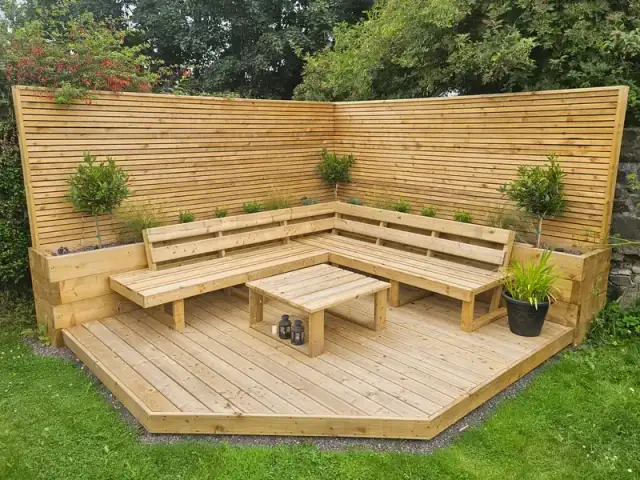
Irish decking gets dirty fast. The combination of damp winters, frequent rainfall, and the shade that many garden decks sit in creates ideal conditions for algae, moss, and black mould to establish on the surface. Left untreated, these do not just look bad: they make decking slippery and accelerate the breakdown of the wood or composite material underneath.
Cleaning decking is not complicated, but the approach that works for timber is different from the approach that works for composite. Using the wrong products or technique on the wrong material can cause unnecessary damage.
How Often Should You Clean Your Decking?
In Ireland, once a year is the minimum. Twice a year, once in spring and once in autumn, is better. Spring cleaning removes the algae and moss that builds up through the wet winter months. Autumn cleaning removes organic debris (leaves, berries, garden waste) before it has a chance to sit on the surface through winter and stain it.
The right time for a proper spring clean is April or May, when temperatures are warm enough that any applied treatment will dry and cure properly. Cleaning in cold, damp conditions is less effective because the products do not work well below about 10 degrees Celsius.
Cleaning Timber Decking
Step 1: Remove loose debris. Sweep the decking thoroughly with a stiff broom. Pay attention to the gaps between boards, which collect leaves, grit, and organic matter. A gap tool or thin screwdriver clears these out effectively.
Step 2: Wet the surface. Apply water with a garden hose to dampen the surface before applying cleaner. This helps the cleaning product penetrate rather than sitting on top.
Step 3: Apply a decking cleaner. There are several Irish brands and widely available products designed for outdoor timber. Apply according to the manufacturer’s instructions, typically spreading across the surface with a brush or roller and leaving to dwell for 10 to 15 minutes. Do not let it dry on the surface.
Step 4: Scrub. Work along the grain of the timber with a stiff-bristled brush. Scrubbing across the grain can raise the fibres on the surface and leave it rougher than before.
Step 5: Rinse thoroughly. Rinse all cleaner residue off with a garden hose or pressure washer on a low setting. A pressure washer on a high setting can damage softwood decking, raising the grain and eroding the softer wood between knots. If you use a pressure washer, keep it at least 300mm from the surface and use a fan rather than a pencil jet.
Step 6: Allow to dry fully. Timber must be dry before any treatment or oil is applied. In Ireland, this typically means two to three dry days after cleaning. Treating damp timber traps moisture beneath the treatment and can cause it to fail prematurely.
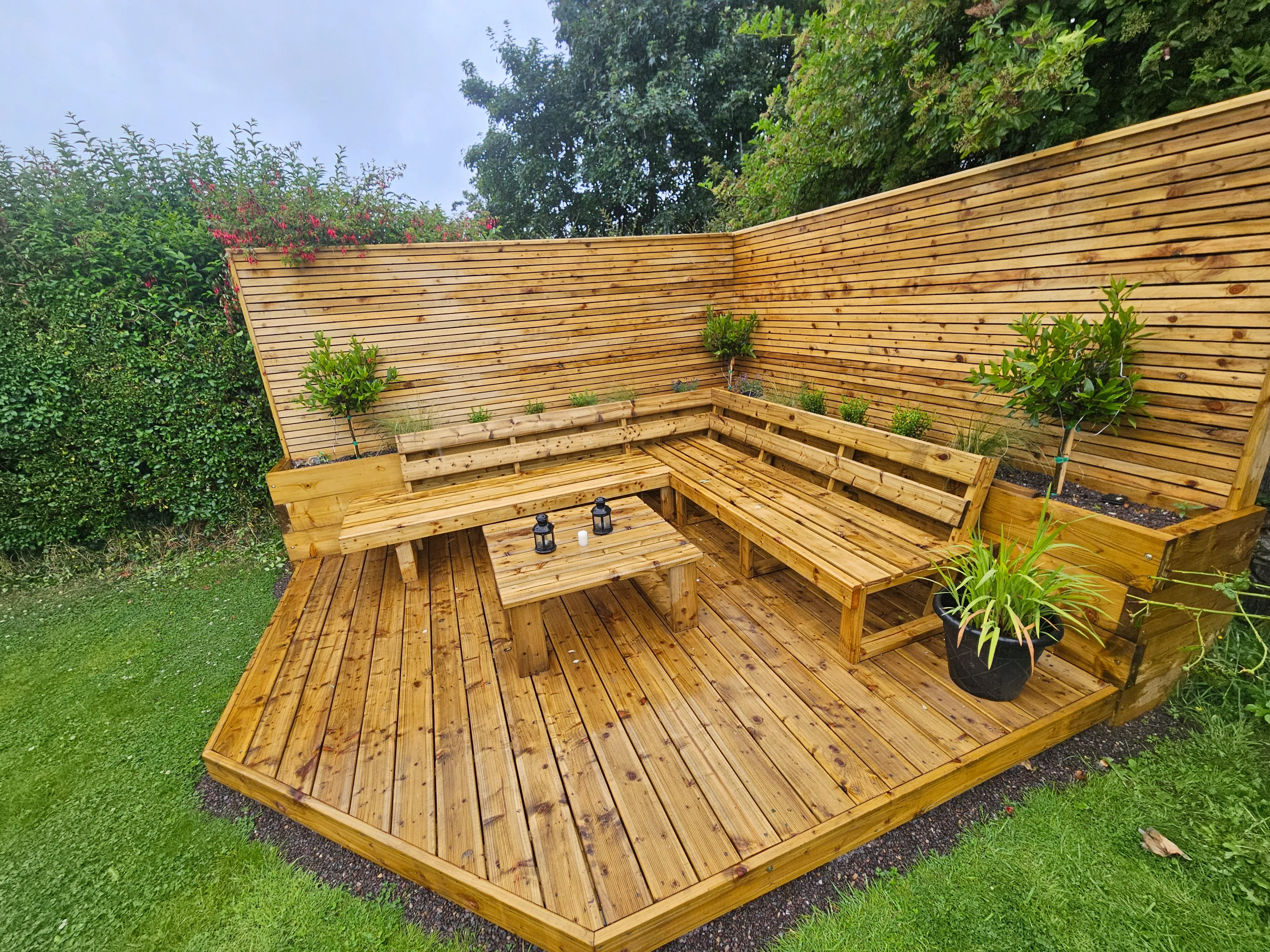
Step 7: Apply oil or treatment. A good quality decking oil applied annually maintains the moisture resistance of the timber and protects it against UV fading and mould regrowth. Work along the grain. Most decking oils are best applied in two thin coats rather than one heavy coat.
For professional decking installation in County Louth, we can advise on the specific treatment product that suits the timber species used on your deck.
Cleaning Composite Decking
Composite decking is significantly easier to maintain than timber. It does not need oiling or staining. But it is not completely maintenance-free.
In shaded or damp locations, composite decking can develop a surface film of algae or moss. Most of this can be removed with a stiff brush and warm soapy water. For more stubborn algae growth, a composite deck cleaner, available from most DIY stores, is effective.
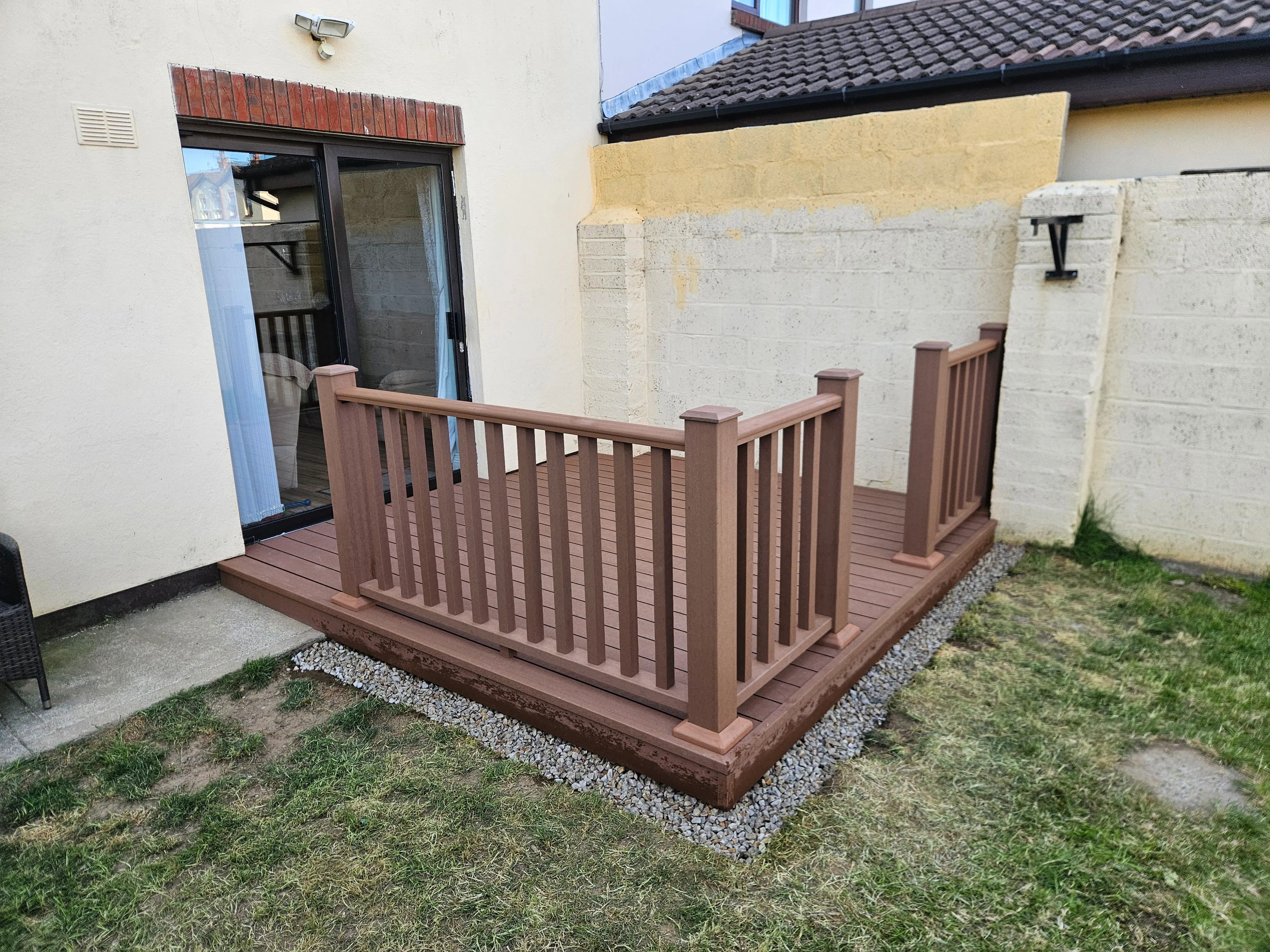
The main thing to avoid with composite decking is abrasive cleaners or scourers, which can scratch the surface finish. A pressure washer can be used on composite, but again at a sensible distance and on a fan setting rather than a narrow jet.
Unlike timber, composite does not need to be dry before any follow-up treatment because no treatment is needed. Once clean and dry, composite decking is ready to use.
Dealing with Specific Stains
Moss and algae: The most common problem. A dedicated deck cleaner or a dilute solution of sodium hypochlorite (outdoor bleach) applied and left to work for 20 to 30 minutes before scrubbing and rinsing is effective. Repeat applications may be needed for heavy growth.
Black mould: Black spots rather than a general green film are typically mould rather than algae. The same approach works: deck cleaner, dwell time, scrub, rinse. For timber decking, follow up with a mould-resistant decking oil.
Rust stains: These come from metal furniture or fixings left on the surface. A dedicated rust remover or a paste of oxalic acid and water removes most rust stains without damaging the decking surface.
Grease and food stains: Hot water, washing-up liquid, and a stiff brush handles most food and grease staining. For heavier grease, a dedicated degreaser applied before scrubbing is more effective.
Preventing Problems Between Cleans
A few simple habits extend the time between necessary full cleans significantly. Keep organic debris cleared from the deck surface and gaps between boards. Move furniture periodically to allow the surface underneath to dry and prevent permanent marks. Ensure any pots or planters are raised on feet rather than sitting directly on the decking, as the permanent damp underneath causes staining and accelerates surface degradation.
Frequently Asked Questions
Can I use a pressure washer on my decking?
Yes, but with care. Keep the pressure washer at least 300mm from the surface, use a wide fan nozzle rather than a narrow jet, and keep the pressure below about 1,500 PSI for softwood timber. Too much pressure too close to the surface damages the grain of timber decking and can void warranties on composite products.
How often should I oil timber decking in Ireland?
Once a year is standard for most treated softwood decking in Irish conditions. If the surface is not absorbing water and beading it off, it needs oiling. If water soaks in immediately, the treatment has worn off and re-oiling is overdue.
Why does decking go green in Ireland?
The combination of moisture, shade, and organic debris creates ideal conditions for algae growth. North-facing decks, decks under trees, and decks in enclosed spaces are particularly susceptible. Regular cleaning and the application of a treatment with a mould and algae inhibitor significantly reduces regrowth between cleans.
For new decking installation or advice on decking materials across Dundalk, Ardee, Blackrock, Carlingford, Omeath, and all of County Louth, contact Seamus and Pete for a free, no-obligation quote.