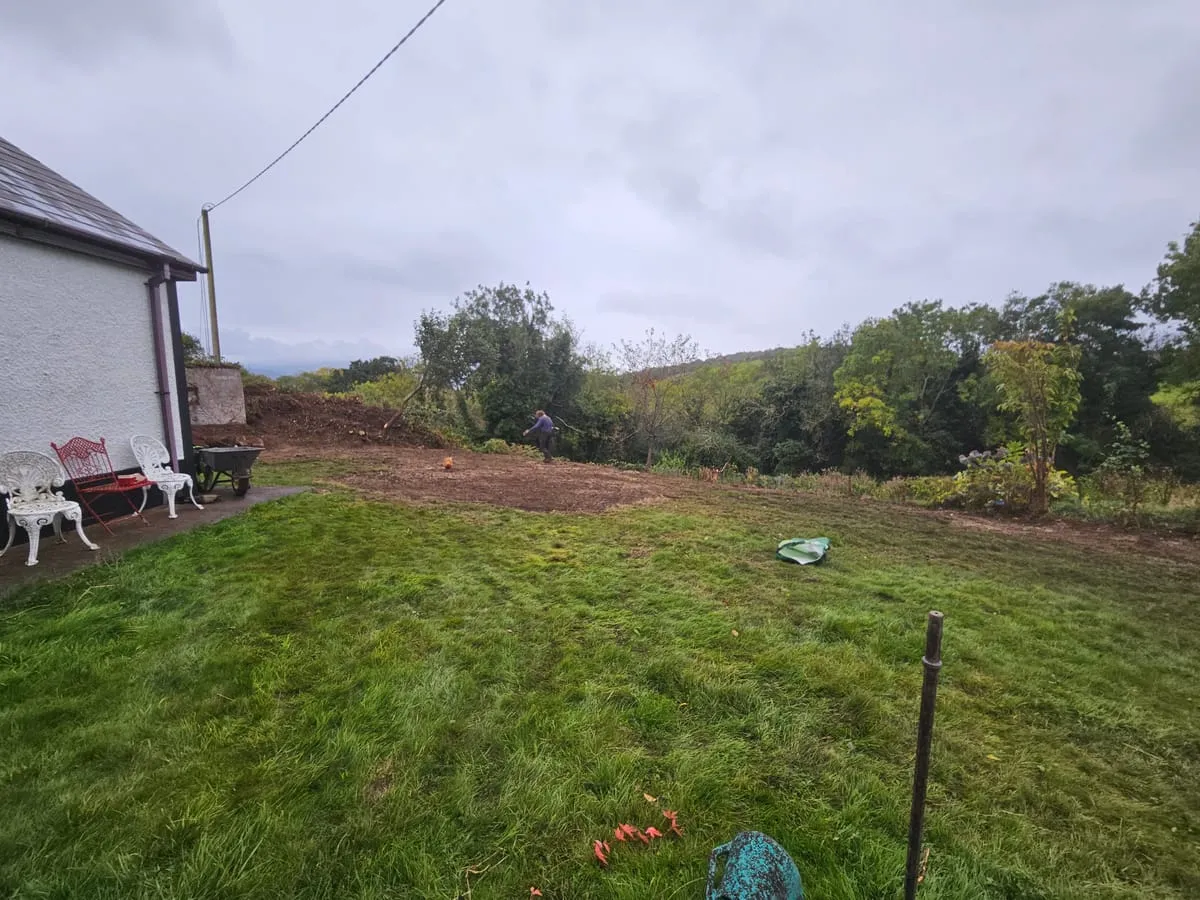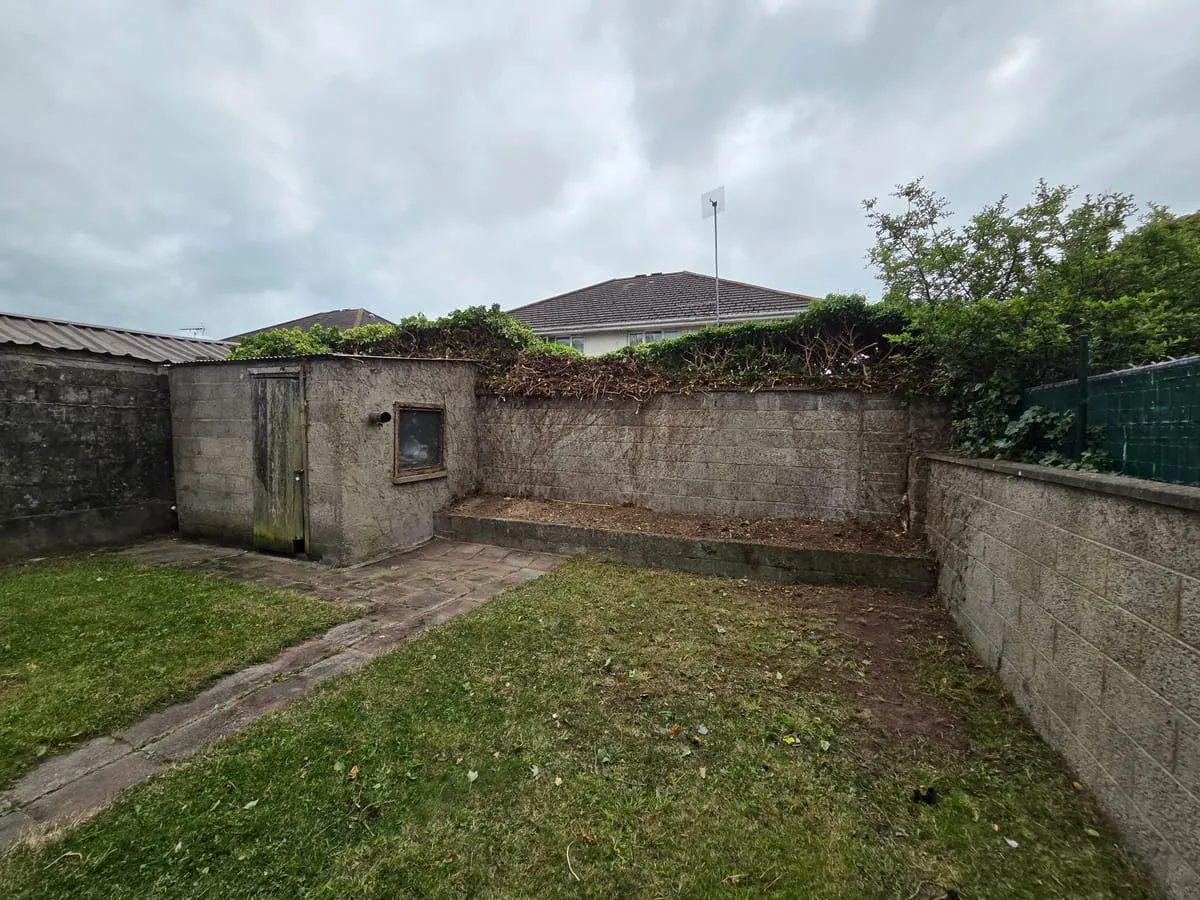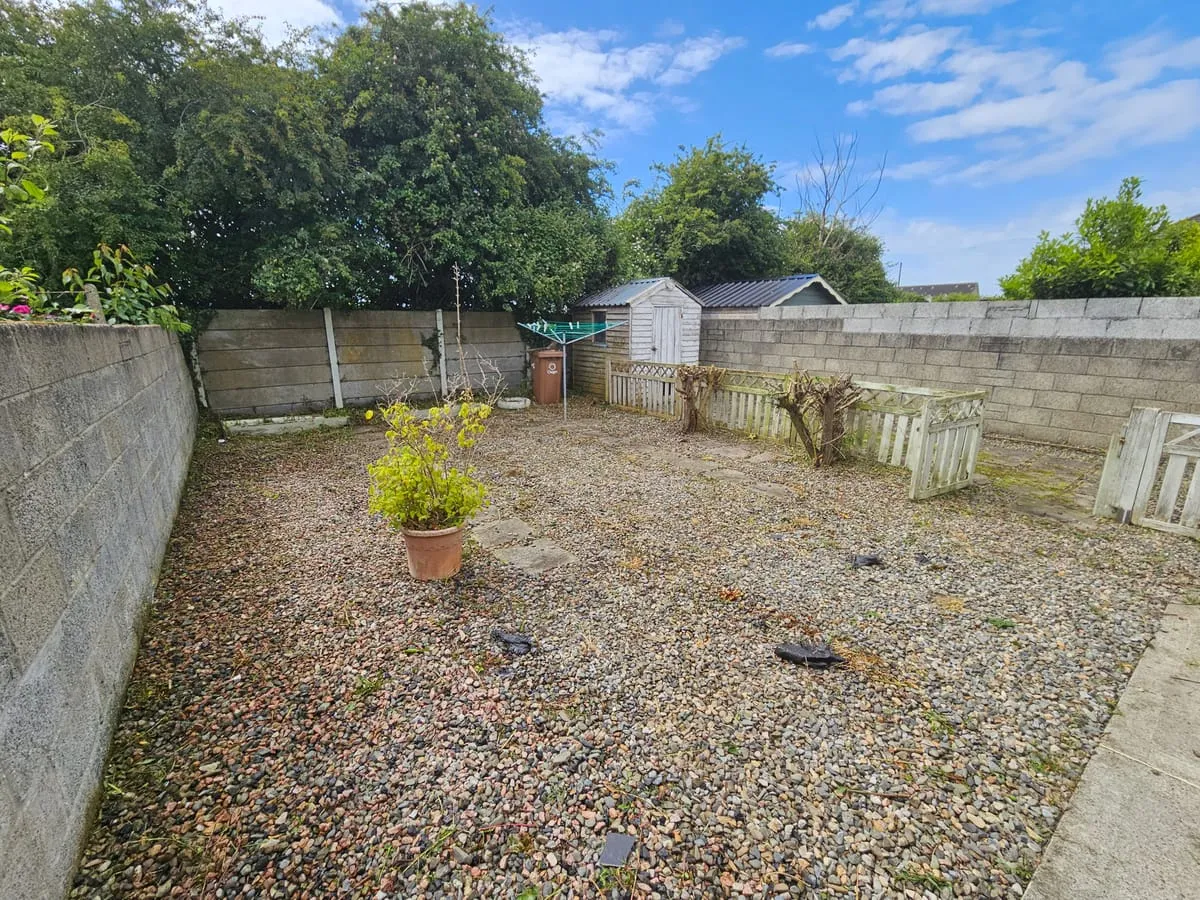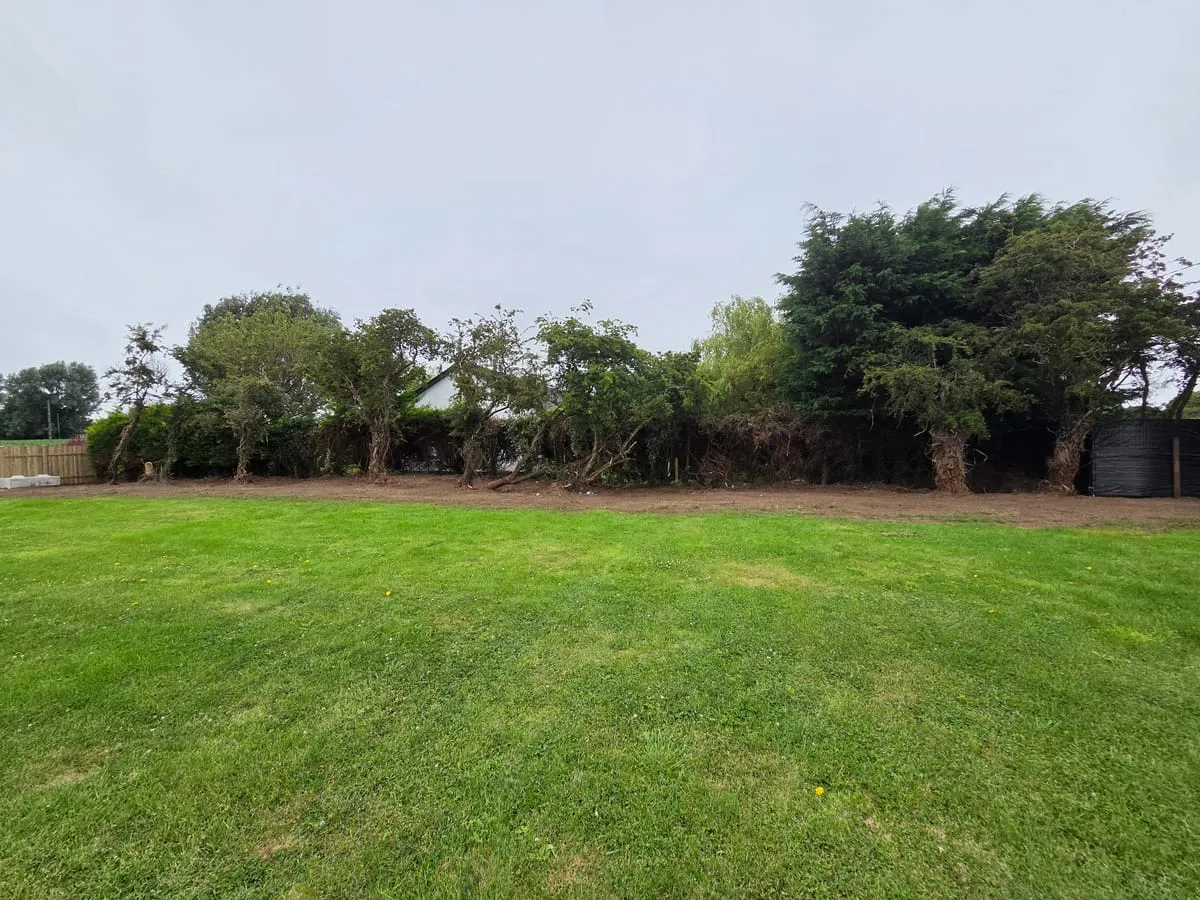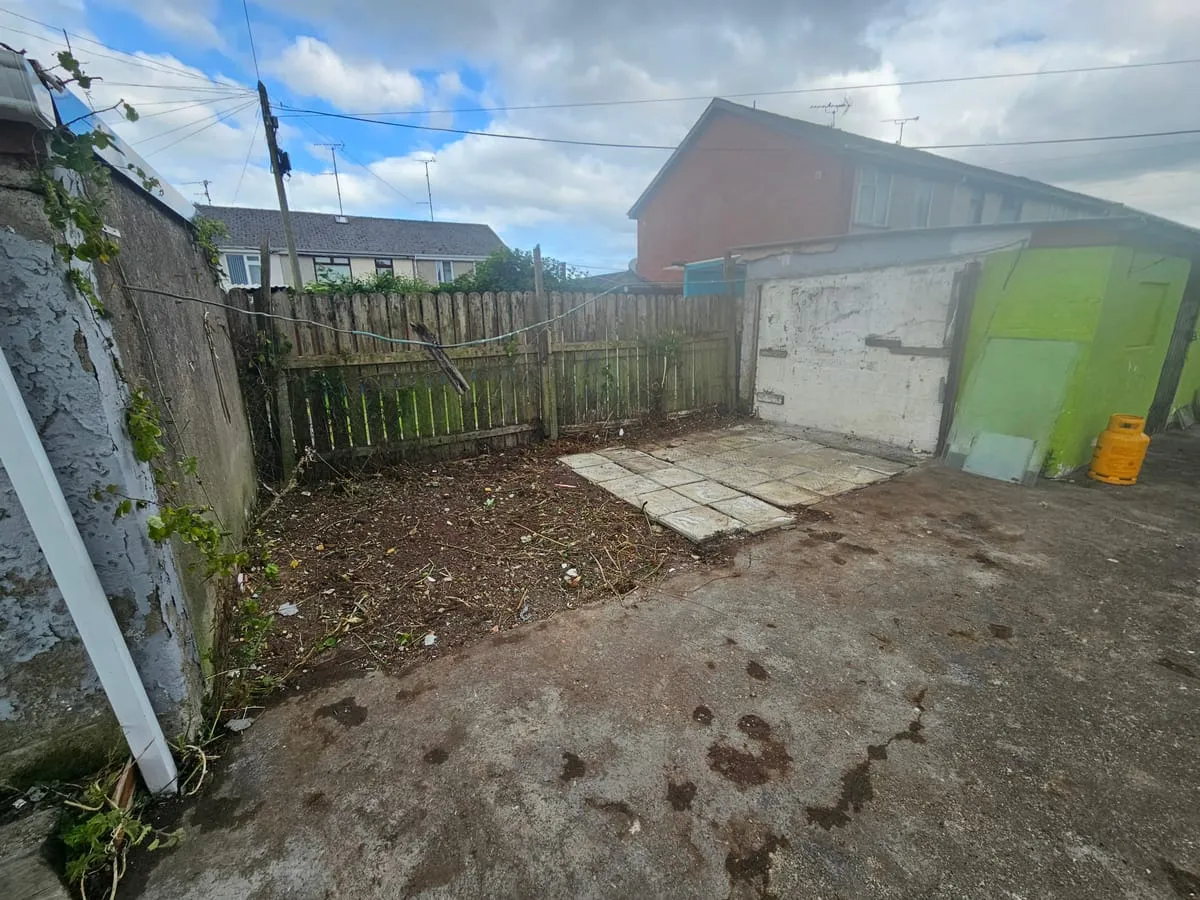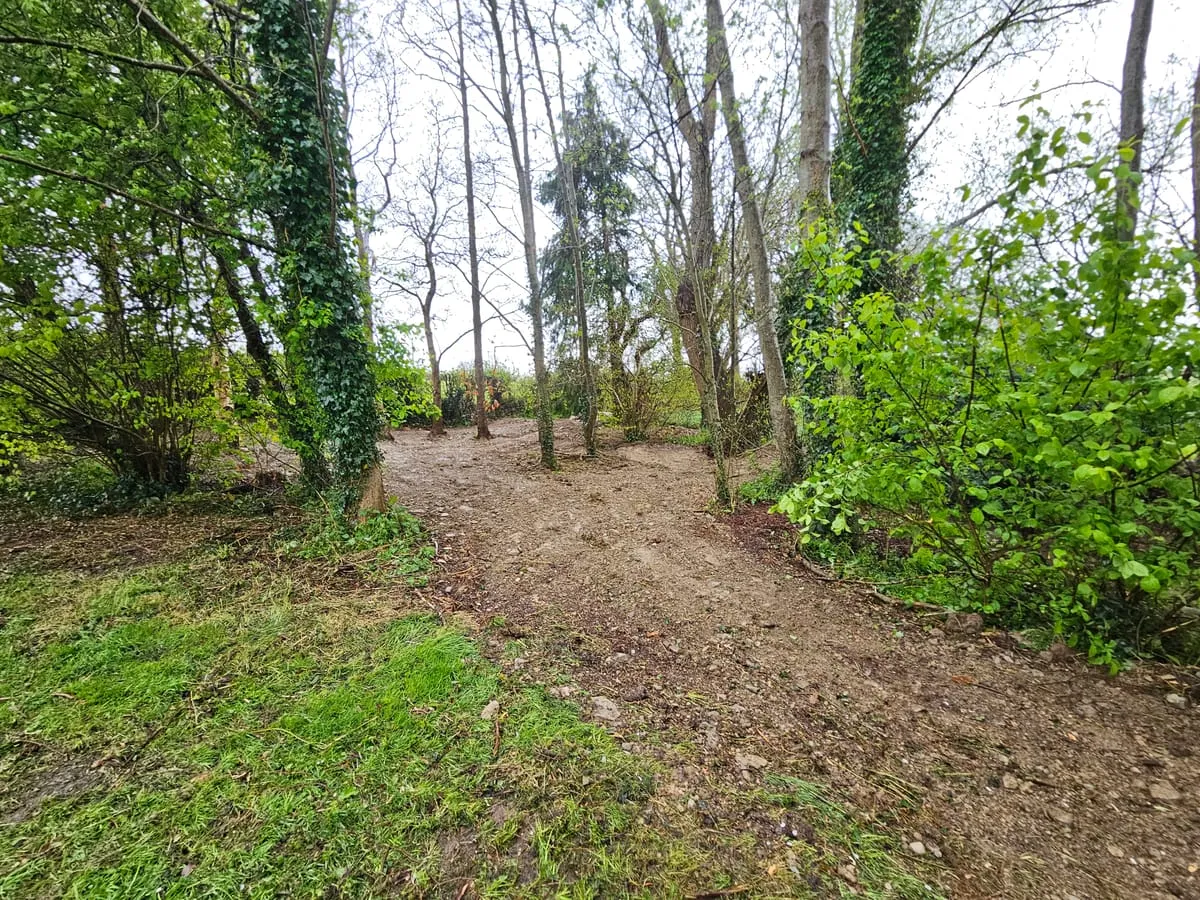
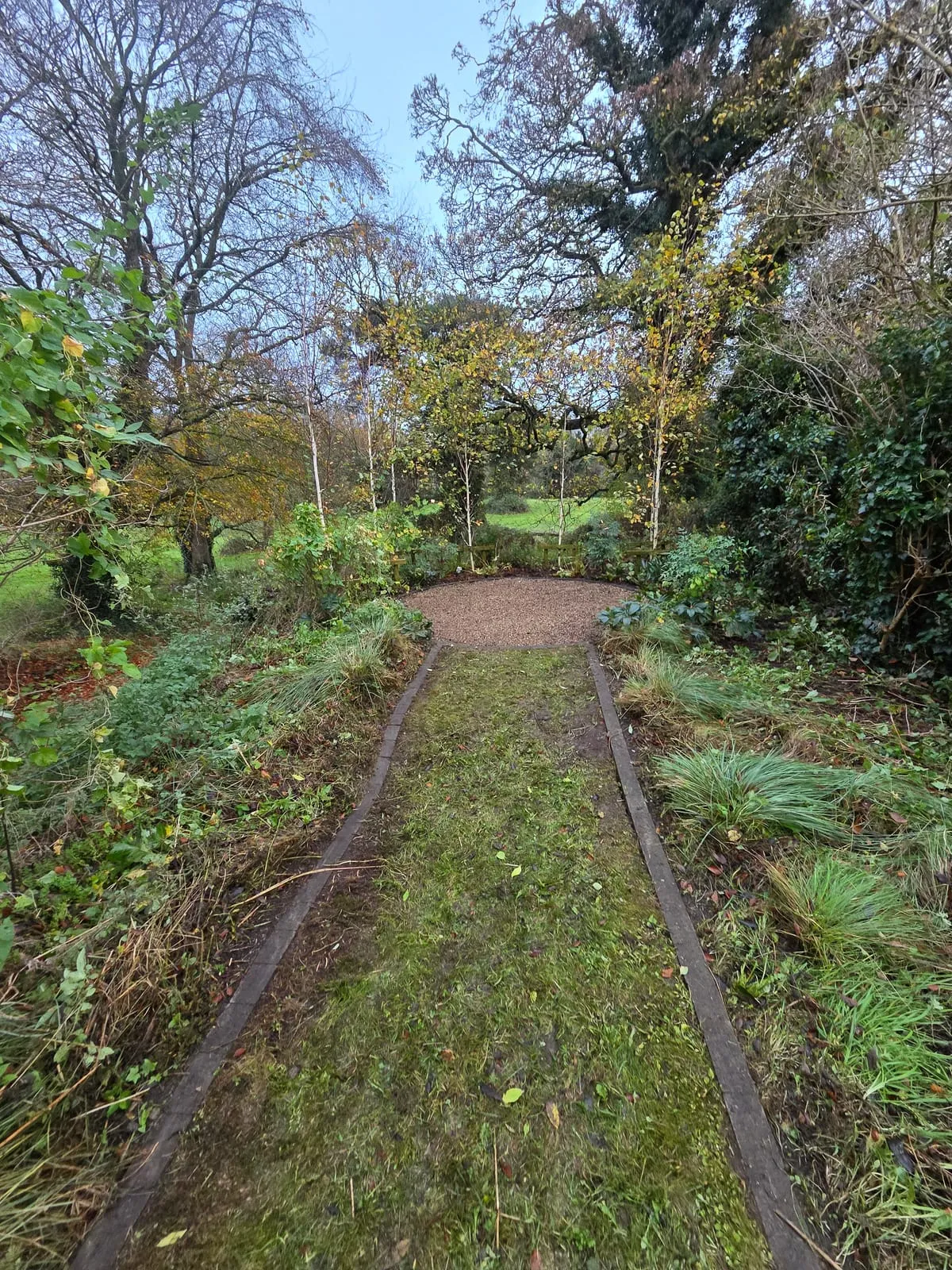
Garden rubbish comes in all shapes and sizes. It is not just grass clippings and leaves — once you start a proper clearance or renovation, you can end up with everything from old timber fencing and concrete rubble to broken plant pots, buried plastic, and mountains of green waste. And getting rid of it all legally in Ireland is not always as straightforward as you might think.
Having cleared overgrown gardens across Dundalk and County Louth for over 35 years, we have seen every type of garden rubbish imaginable. This guide covers every type of garden waste you are likely to encounter and the proper way to dispose of each one.
Types of Garden Rubbish and How to Dispose of Each
Green waste (organic material)
This is the most common type of garden rubbish — grass clippings, hedge trimmings, weeds, leaves, branches, flowers, and plant material. It is also the easiest to deal with.
Disposal options:
- Brown bin — for small, regular amounts. Available fortnightly in most of County Louth
- Home composting — ideal for small quantities of soft green waste. Avoid composting seeding weeds, diseased material, or bramble roots
- Civic amenity sites — most accept green waste free of charge or for a small fee. Whiteriver in Collon is the main site serving the Dundalk area
- Professional collection — some licensed waste collectors offer garden waste pickup services
Timber and wood
Old fencing, shed materials, trellis, pergola timber, and wooden raised beds are common in garden clearances. How you dispose of wood depends on whether it has been treated.
Untreated timber:
- Can be burned in a home fireplace or wood burner (once dry)
- Accepted at civic amenity sites in the timber recycling area
- Can be chipped and used as mulch
Treated or painted timber:
- Must go to a civic amenity site or licensed waste facility
- Cannot be burned at home — treated timber releases toxic chemicals when burnt
- Most skip hire companies accept it, though some charge extra
Concrete, rubble, and stone
Old patio slabs, concrete paths, broken blocks, and stone are heavy materials that need specific handling.
Disposal options:
- Civic amenity sites — most accept clean rubble and concrete, though there may be limits on quantity
- Skip hire — rubble skips or mixed waste skips. Note that rubble is heavy and you will fill a skip much faster by weight than by volume
- Professional removal — a licensed waste collector can load and remove rubble
- Reuse — clean broken concrete can sometimes be reused as hardcore for new paths, bases, or drainage
Soil and clay
Surplus soil from digging, levelling, or removing raised beds is surprisingly difficult to dispose of. It is heavy, takes up a lot of space, and many disposal routes have restrictions on it.
Disposal options:
- Reuse on site — the best option if possible. Use surplus soil to level low spots, build up beds, or fill behind retaining walls
- Offer it locally — clean topsoil is often wanted by other gardeners. Local community groups and online marketplaces are worth trying
- Skip hire — some companies accept clean soil, though it is usually charged at a premium due to the weight
- Licensed waste facility — for contaminated or poor-quality soil
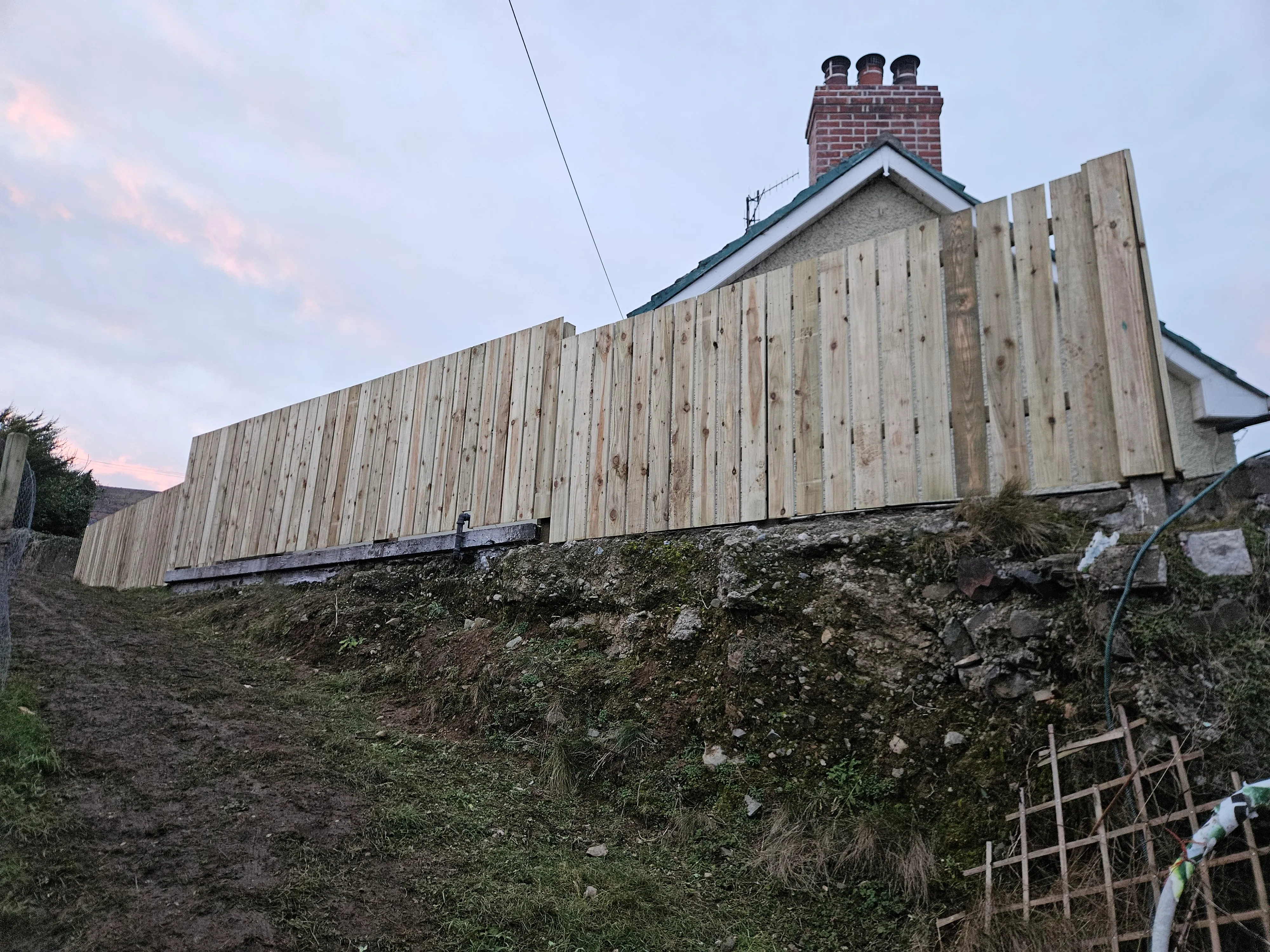
Old fencing and metalwork
Garden fencing, metal posts, wire fencing, old gates, and other metalwork all need proper disposal.
Disposal options:
- Scrap metal — metal posts, wire fencing, and gates can often be taken to a scrap metal dealer. Some will even collect for free if there is enough of it
- Civic amenity sites — accept metals in the designated recycling area
- Professional removal — a licensed waste collector can handle metal and fencing removal
- Timber fencing — see the timber section above
Plastic and artificial materials
Old plant pots, landscape membrane, plastic edging, artificial grass, and other synthetic materials crop up in most garden clearances.
Disposal options:
- Recycling — clean, rigid plastic pots can go in your green bin. Some garden centres have pot recycling schemes
- Civic amenity sites — accept most rigid plastics
- General waste — landscape membrane, artificial grass, and other non-recyclable plastics go in the general waste stream
- Professional removal — a licensed waste collector can separate and dispose of plastics appropriately
Garden machinery and furniture
Broken lawnmowers, old garden furniture, barbecues, and other items often turn up during clearances.
Disposal options:
- WEEE recycling — electrical items like lawnmowers and electric hedge trimmers can be recycled through WEEE collection points or civic amenity sites
- Scrap metal — metal furniture and barbecues can go to a scrap dealer
- General waste — plastic furniture in poor condition goes to general waste
- Charity shops — if items are still usable, consider donating rather than disposing
The Legal Situation in Ireland
What the law says
Under the Waste Management Acts 1996-2012, everyone has a “duty of care” to dispose of waste responsibly. This applies to household waste, garden waste, and any waste arising from work on your property.
The key rules:
- All waste must go to an authorised facility — whether that is a civic amenity site, licensed waste collector, or approved recycling centre
- Illegal dumping carries significant fines — up to €5,000 on summary conviction, and up to €15 million and/or imprisonment for conviction on indictment
- You are responsible for your waste — even if you hire someone to take it away. If they dump it illegally, you could be liable
Burning restrictions
You can burn dry, untreated garden waste on your own property in rural areas, subject to conditions. In urban areas (which includes most of Dundalk town), burning is effectively prohibited under the Air Pollution Act. There is also a seasonal ban on burning vegetation from March 1st to August 31st under the Wildlife Act, designed to protect nesting birds.
Hiring waste collectors
If you hire someone to remove garden rubbish for you, make sure they are a licensed waste collector. Ask for their waste collection permit number — any legitimate operator will have one. If you hand your waste to an unlicensed operator and it ends up dumped in a field, you could face enforcement action from the council.

Tips for Managing Garden Rubbish Efficiently
Sort as you go
The biggest mistake people make during a clearance is throwing everything into one pile. Sorting waste as you produce it — green waste, timber, rubble, metals, plastics — saves enormous time and money at the disposal end.
Reduce the volume
Green waste can be reduced dramatically by chipping branches and woody material. A hired chipper or a professional service with a chipper on site can turn a trailer load of branches into a few bags of woodchip that can be used as mulch.
Think about reuse
Before sending everything to the recycling centre, consider what could be reused:
- Stone and rubble — hardcore for paths and bases
- Good timber — fence repairs, raised beds, firewood
- Topsoil — levelling and planting
- Woodchip — mulch for beds and paths
Plan for waste before you start
If you are planning a clearance, think about waste removal before you begin. There is nothing worse than having a garden full of bagged rubbish with nowhere to put it. Book your skip, arrange your vehicle, or contact a licensed waste collector to handle removal.
Frequently Asked Questions
Can I put garden soil in my brown bin?
No. The brown bin is for organic waste only — food scraps, grass clippings, leaves, and soft plant material. Soil, stones, and clay should not go in the brown bin. They contaminate the composting process and can result in your bin not being collected.
How much does it cost to dispose of garden rubbish?
It depends on the type and volume. Civic amenity sites are free or low-cost for householders with small loads. Skip hire ranges from €150 for a mini skip to €600+ for a large skip. Professional garden waste collection as part of a clearance service is usually the best value for significant volumes, typically starting from €100 to €150 per load.
What should I do with garden chemicals and pesticides?
Old weedkiller, pesticides, fertiliser, and other garden chemicals should never go in your household bins or down the drain. Bring them to your local civic amenity site and hand them in at the hazardous waste area. Most sites accept household quantities of garden chemicals at no extra charge.
Can I hire someone to just take away garden rubbish without doing the clearance?
Yes, some waste collection companies offer garden waste collection without the clearance work. You bag or pile the waste, and they load and remove it. Prices typically start from around €80 to €150 per load, depending on the volume and type of waste.
Need Your Garden Cleared?
If you have an overgrown garden that needs cutting back and clearing, Seamus and Pete can help. We clear overgrown gardens, cut back brambles and scrub, remove trees and hedging, and leave the site clean and tidy. Over 35 years in the business means we know how to tackle even the most neglected gardens efficiently. If you need waste collected and taken away afterwards, we can advise on the best local options for disposal.
Call us on 085 168 5170 for a free quote on garden clearance.