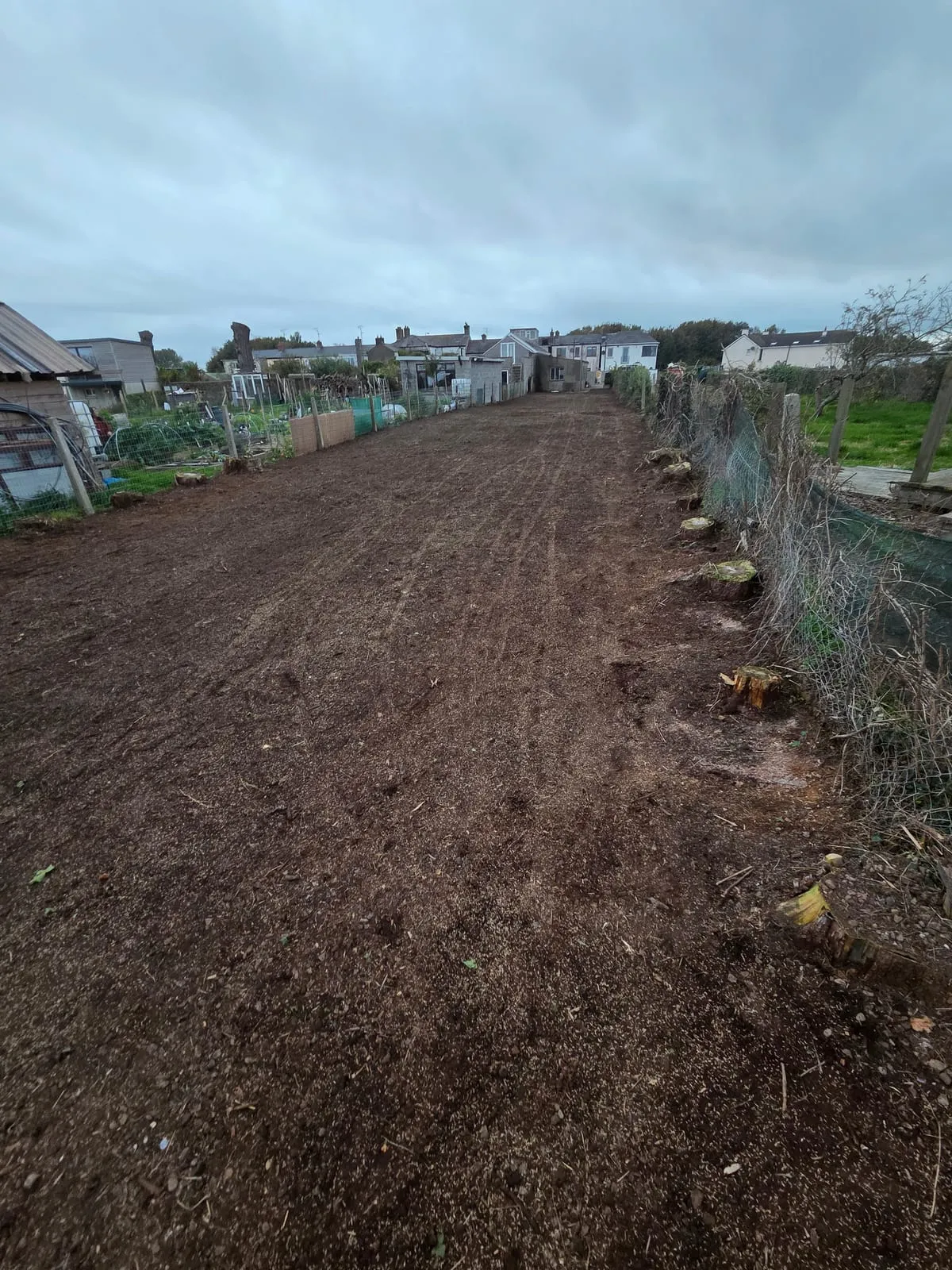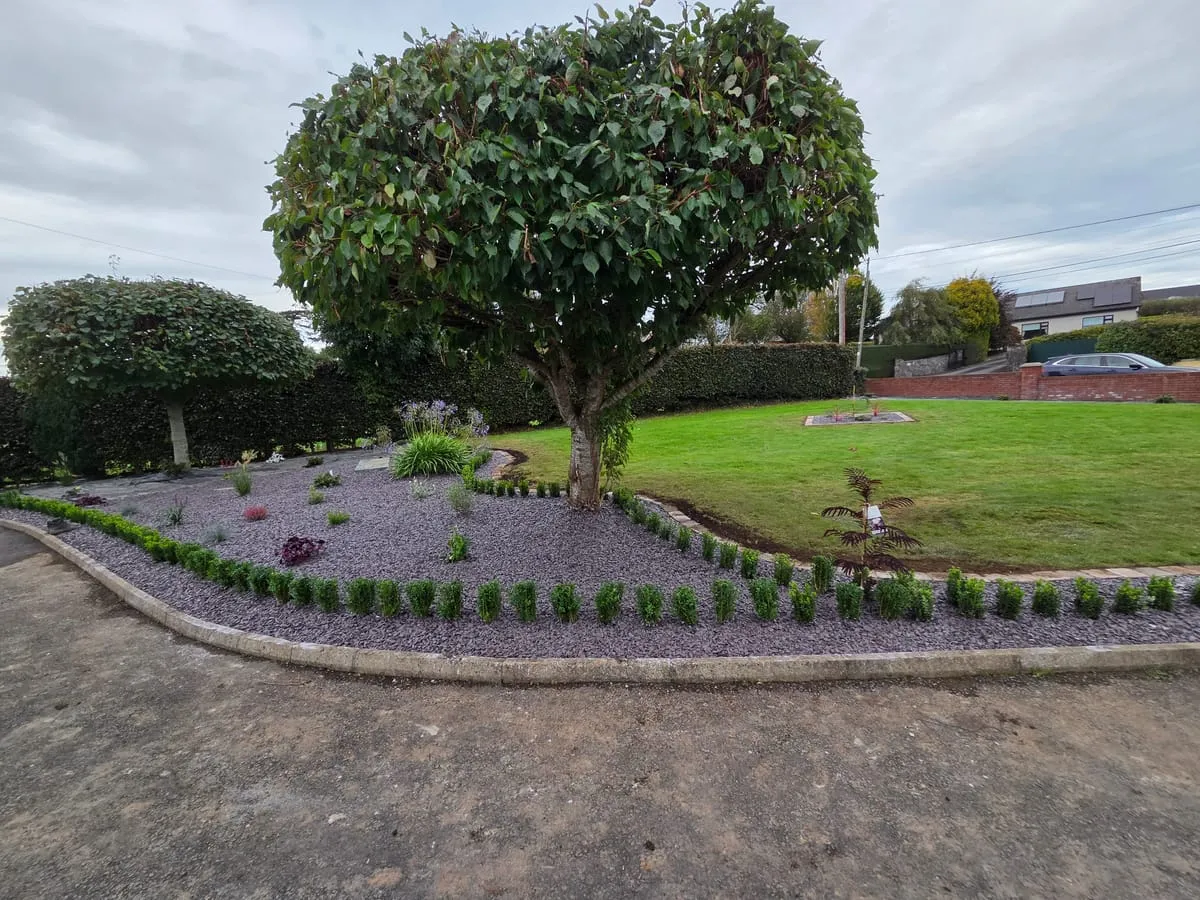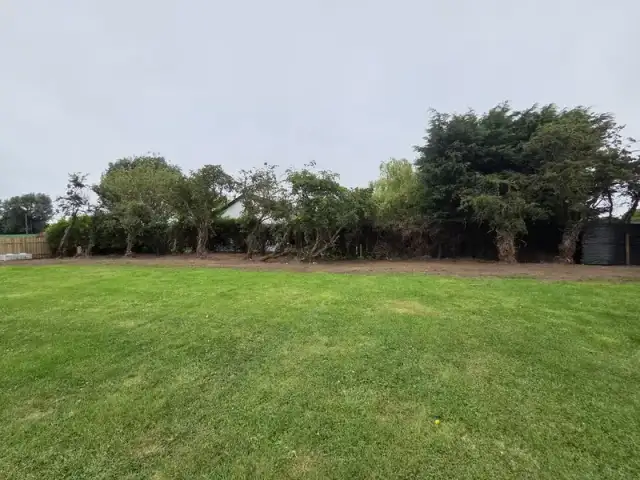
If your lawn is looking tired, patchy, mossy, or just refusing to thicken up no matter how much you feed or water it, scarifying is probably the answer. It’s one of those jobs that looks brutal when you’re doing it — the lawn will look worse before it looks better — but the results over the following weeks make it well worth the effort. After 35 years of looking after lawns across Dundalk and County Louth, scarifying is one of the most reliably transformative things we do.
Here’s everything you need to know to do it right.
What Is Scarifying and Why Does It Matter?
Scarifying is the process of removing thatch from your lawn. Thatch is the spongy layer of dead grass stems, moss, and organic debris that builds up between the soil surface and the living grass blades. A thin layer of thatch is harmless — it can even help retain a little moisture. But once it builds past about half a centimetre thick, it starts causing real problems.
Thick thatch stops water from reaching the roots properly. Fertiliser applied to a thatchy lawn often never gets to where it’s needed — the thatch absorbs it first. Moss thrives in thatchy, damp conditions. And compacted soil beneath a thick thatch layer reduces the air circulation that grass roots need.
The result is a lawn that looks poor, responds badly to treatment, and steadily deteriorates year on year. Scarifying cuts vertically through the thatch layer and physically pulls it out, giving the grass a clear path to air, water, and nutrients again.
When to Scarify Your Lawn in Ireland
Timing matters. Scarifying puts the lawn under stress, so you need conditions that allow it to recover quickly.
March and September are the two best months for Irish lawns. Both sit at the edge of the growing season — grass is actively growing and recovering well, temperatures are mild, and the Irish climate cooperates with regular moisture. Peter Dowdall of the Irish Examiner consistently recommends March and September as the primary scarifying window, and that matches our experience across Louth.
Spring (March–April) is ideal for lawns with heavy moss or thatch buildup over winter. The grass is coming into its growing season and will fill in bare areas relatively quickly. Don’t wait until May or beyond — if temperatures rise and rainfall drops, a freshly scarified lawn can struggle.
Autumn (September–October) suits lawns that need renovation after a dry summer. The cooler, wetter conditions that follow are perfect for overseeding any bare patches that scarification reveals.
Avoid: midsummer, any period of drought, and times when the soil is waterlogged. Scarifying in cold, wet conditions in November or December will damage the lawn without giving it any chance to recover before winter.
How to Scarify Your Lawn
Step 1 — Mow first
Cut the lawn shorter than usual a few days before scarifying. This makes the process more effective and reduces the volume of material you’re pulling out.
Step 2 — Choose your tool
For a small lawn, a spring-tined rake works — it’s hard physical labour, but it does the job. For anything over 50–60 square metres, a powered scarifier makes much more practical sense. You can hire one from most tool hire companies in Dundalk for a day. Electric models are fine for most home lawns; petrol scarifiers are better for larger, heavily thatched areas.
Step 3 — Set the depth correctly
Start on a light setting, especially if this is your first time scarifying the lawn or it’s been a few years. Going too deep in one pass causes unnecessary damage. Work in one direction across the lawn, then again at 90 degrees for thorough coverage.
Step 4 — Remove all the thatch
Rake up and remove everything that comes out. Don’t leave it lying on the lawn — it will just re-settle. The volume of material can be surprising; this is normal. It can go to compost if it’s mostly organic, or to green waste collection if there’s a lot of moss in it.
Step 5 — Overseed and fertilise
Your lawn will look rough after scarifying — thin, patchy in places, slightly torn. This is temporary. Apply a quality grass seed to any bare areas, then follow up with a lawn fertiliser suited to the time of year. In autumn, a winteriser feed high in potassium helps strengthen the grass before dormancy. In spring, a nitrogen-rich feed encourages vigorous regrowth.
Step 6 — Water if needed
If the weather is dry after scarifying, water the lawn lightly every two to three days for the first fortnight. Consistent moisture is essential for seed germination and recovery.
How Often Should You Scarify?
For a typical Irish lawn that’s reasonably well maintained, a thorough scarification once a year in either spring or autumn is sufficient. If your lawn has significant moss, compaction issues, or hasn’t been touched in a few years, you may want to do it twice in year one — spring and autumn — then drop back to once a year.
Allett Ireland recommends light scarification monthly during the mowing season for lawns with cylinder mowers and high-end turf. For ordinary residential lawns, this level of frequency isn’t necessary or practical.
Signs Your Lawn Needs Scarifying Now
- You can push your finger into the lawn surface and feel a spongy, compacted layer above the soil
- Moss is spreading and returning quickly after moss treatment
- Fertiliser has little visible effect despite being applied correctly
- The lawn looks dull and yellow during the growing season
- Water sits on the surface after rain rather than draining through
Common Mistakes When Scarifying
Scarifying is straightforward, but there are a few mistakes we see regularly that cost people time and set back their lawn’s recovery.
Going too deep on the first pass. If the lawn hasn’t been scarified in years and the thatch layer is thick, it’s tempting to set the blades as low as possible and try to remove everything in one go. This tears out too much living grass along with the thatch and leaves the lawn with very little to recover from. Two or three passes at progressively deeper settings gives a much better result.
Scarifying at the wrong time of year. We get calls every July from people who scarified during a dry spell and now have a lawn that looks like bare earth. In Ireland, the key months are March to mid-April in spring and September to early October in autumn. Outside those windows, the grass either isn’t growing actively enough to recover, or conditions are too wet and cold to allow new growth.
Skipping the aftercare. Scarifying on its own doesn’t improve the lawn. It creates the conditions for improvement. If you don’t follow up with overseeding, feeding, and watering where needed, the bare patches left by scarifying will fill with weeds and moss rather than new grass. The aftercare is at least as important as the scarification itself.
Not removing the debris. Leaving pulled-up thatch sitting on the lawn defeats the purpose. It mats down and blocks the very access to soil, water, and light that you’ve just created. Rake it all up and dispose of it the same day if possible.
Scarifying a waterlogged lawn. If the soil is sodden, the scarifier blades will gouge into soft ground and damage the root structure. Wait for a few days of drier weather so the surface is firm enough to work on without sinking.
When to Call a Professional
If your lawn hasn’t been scarified in several years and has developed deep thatch or significant moss coverage, a single DIY pass with a hired scarifier may not be enough. Heavily neglected lawns sometimes benefit from a more intensive treatment including hollow-tine aeration and top-dressing in addition to scarification.
Once you’ve scarified, lawn edging after scarifying is the next step to give the whole lawn a clean, finished look. And if you’d rather leave it to us, our lawn care service in Co. Louth covers scarifying, aeration, overseeding, and top-dressing as a combined programme.
Get in touch for a free lawn assessment if you’d like advice on what your lawn actually needs.
Frequently Asked Questions
When is the best time to scarify a lawn in Ireland?
March and September are the two recommended months for Irish lawns. Both sit within the growing season, allowing the lawn to recover quickly. Avoid scarifying in midsummer, winter, or during periods of drought.
What does scarifying do to a lawn?
Scarifying removes thatch — the layer of dead grass stems, moss, and organic debris that builds up between the soil surface and the green growth above. Removing it allows water, air, and nutrients to reach the roots properly, which leads to healthier, denser grass growth.
Will my lawn look bad after scarifying?
Yes, temporarily. Scarifying is aggressive and the lawn will look thin and rough for two to four weeks. This is normal. Provided it was done at the right time of year and you follow up with overseeding and fertilising, it should look noticeably better within a month.
How often should I scarify my lawn?
Once a year in spring or autumn is sufficient for most Irish lawns. Lawns with significant thatch or moss may benefit from two sessions in the first year, then reverting to annual maintenance.
Can I scarify a new lawn?
Wait at least two to three years before scarifying a newly seeded or laid lawn. Scarifying too early risks damaging the root structure before it’s properly established. A gentle raking to remove surface debris is fine on newer lawns without going to full scarification depth.
Is scarifying the same as raking?
Not quite. A spring-tine rake will pull out surface moss and some loose thatch, but it doesn’t cut into the thatch layer the way a powered scarifier does. Raking is useful for light maintenance between scarifications, but if thatch has built up beyond a few millimetres, a proper scarifier with vertical blades is needed to make a real difference.
Should I aerate or scarify first?
Scarify first, then aerate. Scarifying removes the thatch layer from the surface, and aerating afterwards allows air, water, and nutrients to penetrate deeper into the soil beneath. Doing both in the same session, followed by overseeding and feeding, is the most effective lawn renovation approach for tired Irish lawns.
How long does it take a lawn to recover after scarifying?
In Irish conditions with decent moisture and temperatures above 8 to 10 degrees, you should see visible recovery within two to three weeks. Full recovery with new grass filling bare patches typically takes four to six weeks. Autumn scarification often recovers faster than spring because the soil is still warm from summer while the cooler air and regular rainfall create ideal growing conditions.