Choosing the right decking material is one of the most important decisions you will make when planning an outdoor living space in Ireland. Our climate throws everything at garden structures: heavy rainfall, frost, persistent dampness and the occasional burst of glorious sunshine. The material you pick needs to handle all of that while still looking well and staying safe underfoot.
After more than 35 years of building decks across Dundalk and County Louth, we have seen how different materials perform over the long term. In this guide we will walk through the main options available to Irish homeowners so you can make an informed choice that suits your garden, your budget and your lifestyle.
Timber Decking: The Classic Choice
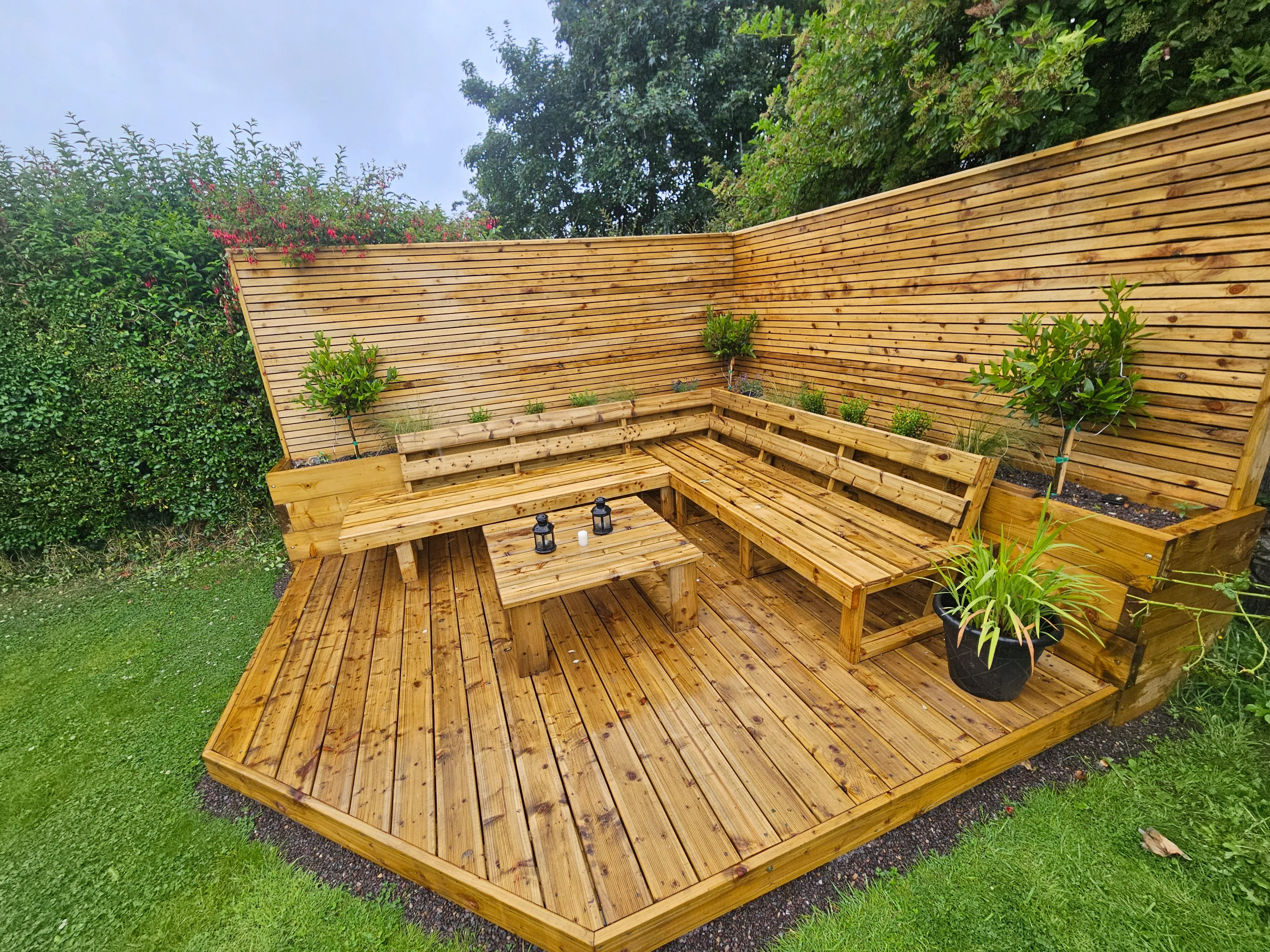
Timber remains the most popular decking material in Ireland, and for good reason. It has a natural warmth and character that is difficult to replicate with man-made alternatives. There are several types of timber commonly used for decking here, each with its own strengths.
Pressure-Treated Softwood
This is the most affordable timber option and the one you will find in most Irish garden centres and timber yards. The wood, usually Scandinavian pine or spruce, is treated with preservatives under pressure to resist rot and insect attack.
Pros:
- The lowest upfront cost of any decking material
- Readily available from Irish suppliers
- Easy to cut, shape and work with on site
- Can be stained or painted to suit your style
Cons:
- Requires annual maintenance including cleaning, sanding and re-staining
- Can become slippery with algae growth in damp Irish conditions
- Susceptible to warping, splitting and cupping over time
- Typical lifespan of 10 to 15 years with proper care
Hardwood Timber
Hardwoods such as iroko, ipe and balau offer a significant step up in durability and appearance. These dense tropical timbers are naturally resistant to rot and can last decades with minimal upkeep.
Pros:
- Exceptionally durable and naturally rot-resistant
- Beautiful grain patterns and rich colour
- Can last 25 years or more
- Less prone to warping than softwood
Cons:
- Considerably more expensive, often three to four times the cost of softwood
- Heavier and harder to work with during installation
- May require specialist fixings
- Sourcing sustainably certified hardwood can be challenging
Thermally Modified Timber
A newer option gaining popularity in Ireland is thermally modified timber. The wood is heated to high temperatures in a controlled environment, which changes its cellular structure to improve durability and dimensional stability.
Pros:
- More dimensionally stable than untreated timber
- Good resistance to rot and fungal decay
- Retains a natural wood look and feel
- Chemical-free treatment process
Cons:
- More expensive than standard pressure-treated softwood
- Can be more brittle than untreated timber
- Still requires some ongoing maintenance
- Less widely stocked than conventional options
Composite Decking: Low Maintenance Living
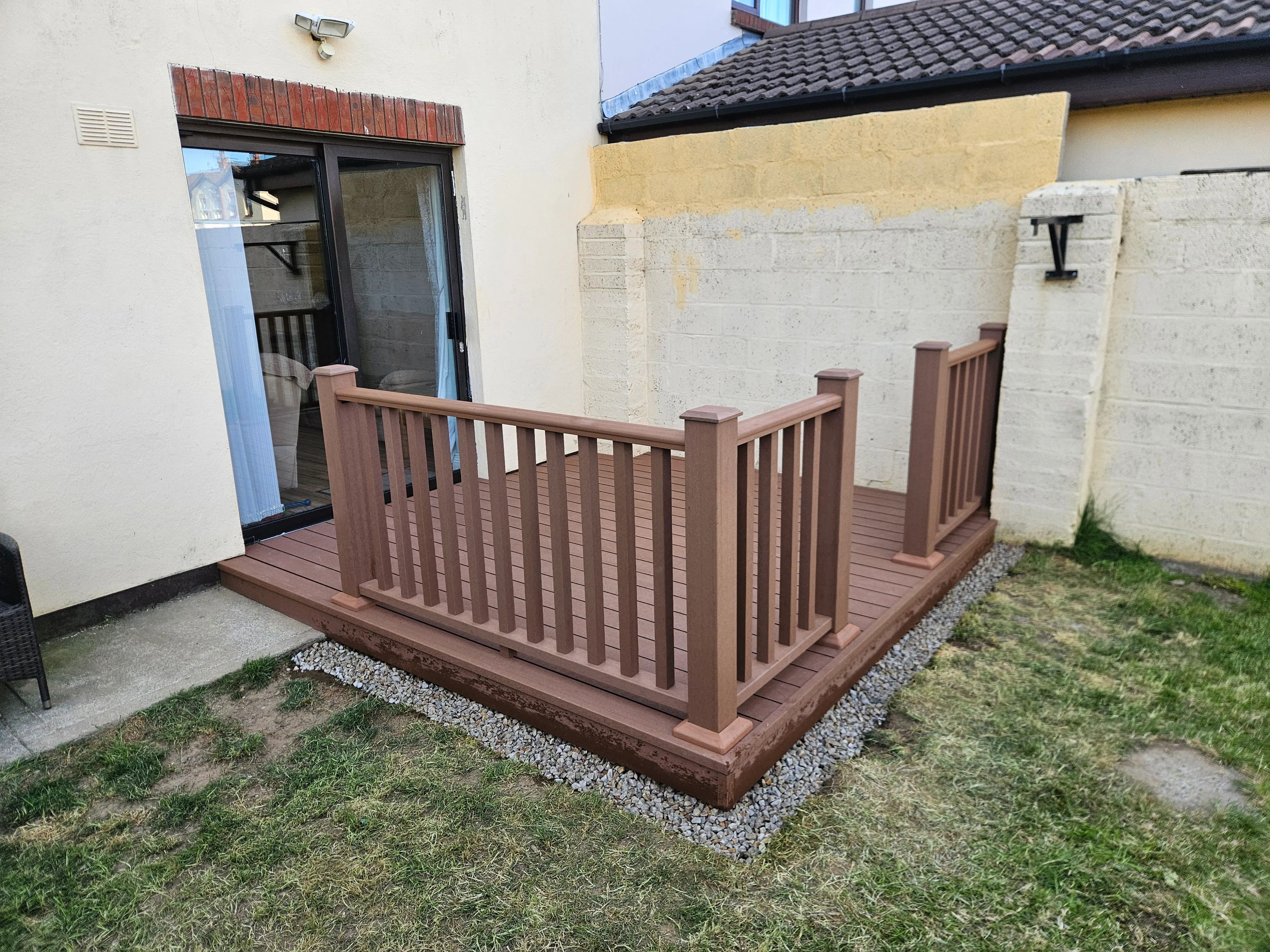
Composite decking has seen a surge in popularity across Ireland over the past decade. Made from a blend of wood fibres and recycled plastic polymers, composite boards aim to deliver the look of timber without the ongoing maintenance demands.
What to Expect from Composite
Pros:
- Very low maintenance with no need for annual staining or sealing
- Resistant to rot, mould and insect damage
- Does not splinter, making it safer for bare feet
- Available in a wide range of colours and wood-grain finishes
- Many brands offer 25-year warranties
Cons:
- Higher upfront cost than pressure-treated softwood
- Can feel less natural underfoot compared to real timber
- Darker colours may absorb heat and feel warm in direct sun
- Cheaper composite boards can look artificial and may fade unevenly
- Cannot be sanded or refinished if damaged
Capped vs Uncapped Composite
When shopping for composite decking, you will encounter both capped and uncapped options. Capped composite boards have a protective polymer shell around all four sides, which provides superior protection against moisture, staining and fading. Uncapped boards are more affordable but lack this outer layer, making them more vulnerable to the damp Irish climate.
For gardens in County Louth and the northeast, where rainfall is frequent and conditions can be persistently damp, we strongly recommend opting for capped composite if your budget allows. The difference in long-term performance is significant.
WPC and PVC Decking: The Fully Synthetic Options
Wood-plastic composite (WPC) and fully PVC decking boards sit at the synthetic end of the spectrum. These materials contain little or no natural wood fibre.
Pros:
- Completely impervious to moisture and rot
- Zero timber content means no risk of splintering
- Extremely low maintenance
- Consistent colour and finish across every board
Cons:
- The most expensive option per square metre
- Can look and feel noticeably artificial
- May become slippery when wet unless textured
- Limited ability to repair individual boards
- Expansion and contraction in temperature changes can be an issue
Which Material Suits Irish Weather Best?
Ireland’s climate is the single biggest factor that should guide your material choice. Here is how we would summarise the key considerations for homeowners in Dundalk and the surrounding areas.
Rainfall and Dampness
Our average annual rainfall in County Louth sits around 800mm, and the air humidity rarely drops below 75 per cent. This persistent moisture is the number one enemy of outdoor timber. Softwood decking in particular needs diligent maintenance to prevent algae growth and premature rotting. Composite and WPC materials have a clear advantage in this regard.
Frost and Temperature Swings
While we do not experience extreme cold, frost is common from November through to March. Timber handles frost reasonably well, but repeated freeze-thaw cycles can accelerate cracking in boards that have absorbed moisture. Composite materials are generally more resilient to frost damage.
Wind and Coastal Exposure
If your property is exposed to strong winds or is near the coast, salt spray and wind-driven rain become additional factors. Hardwood timbers and capped composite boards tend to cope best in these conditions.
Cost Comparison for a Typical Irish Deck
To give you a rough idea of costs, here is what you might expect for a standard 15 square metre deck installed in the Dundalk area, including materials, subframe and labour:
- Pressure-treated softwood: EUR 2,500 to EUR 4,000
- Thermally modified timber: EUR 4,000 to EUR 6,000
- Hardwood timber: EUR 5,000 to EUR 8,000
- Capped composite: EUR 4,500 to EUR 7,000
- Premium WPC or PVC: EUR 6,000 to EUR 9,000
These figures are indicative and will vary depending on the complexity of the design, site access, ground conditions and any additional features such as steps, railings or built-in seating.
Making Your Decision: A Practical Checklist
When choosing your decking material, ask yourself these questions:
- What is my realistic maintenance commitment? If you are happy to spend a weekend each spring cleaning, sanding and oiling your deck, timber can be a brilliant and cost-effective choice. If you would rather enjoy your garden without that annual task, composite is worth the extra investment.
- How long do I plan to stay in this home? For a long-term family home, investing in hardwood or quality composite makes sense. If you are planning to sell within a few years, pressure-treated softwood may offer the best return.
- What does the rest of my garden look like? A natural timber deck can complement planting schemes and traditional garden designs beautifully. Composite decking in contemporary grey or charcoal tones tends to suit more modern outdoor spaces.
- Do I have children or pets? The splinter-free surface of composite decking is a genuine safety advantage for families with young children. It is also easier to clean up after pets.
Let Seamus and Pete Help You Choose
With over 35 years of experience building and maintaining decks in Dundalk and across County Louth, Seamus and Pete at Gardening Services Dundalk have worked with every material on this list. We can visit your garden, assess the site conditions and recommend the best material for your specific situation and budget.
Whether you are leaning towards the natural beauty of timber or the convenience of composite, we will make sure your new deck is built to last in Irish conditions. Give us a call on 085 168 5170 for a free, no-obligation consultation and quote. We would love to help you create an outdoor space you will enjoy for years to come.