A garden gate might seem like a small detail in the grand scheme of your property, but it makes a bigger impression than most people realise. It is the first thing visitors see when they arrive, it sets the tone for your garden, and it needs to work reliably every single day — in all weather, year after year.
Getting the right gate involves more than just picking something that looks nice in a catalogue. You need to think about the style of your property, how the gate will be used, what material will hold up in the Irish climate, and how it will be hung and fitted.
We have been installing garden gates across Dundalk and County Louth for over 35 years, from simple side gates to feature entrance gates. Here is our guide to help you choose the right one for your home.
What Is the Gate For?
Before looking at styles and materials, it helps to be clear about what the gate needs to do:
- Front garden entrance — this is about appearance and welcoming visitors, while still providing a perimeter
- Side access gate — usually about security, keeping the back garden private, and providing a pathway for bins and garden equipment
- Rear garden gate — might open onto a lane, a shared area, or a field. Security and durability are the priorities
- Driveway gate — needs to be wider, stronger, and may need to accommodate vehicles
- Decorative garden gate — an internal gate between garden areas, purely for visual effect
Each of these has different requirements in terms of height, width, material, and hardware.
Popular Garden Gate Styles
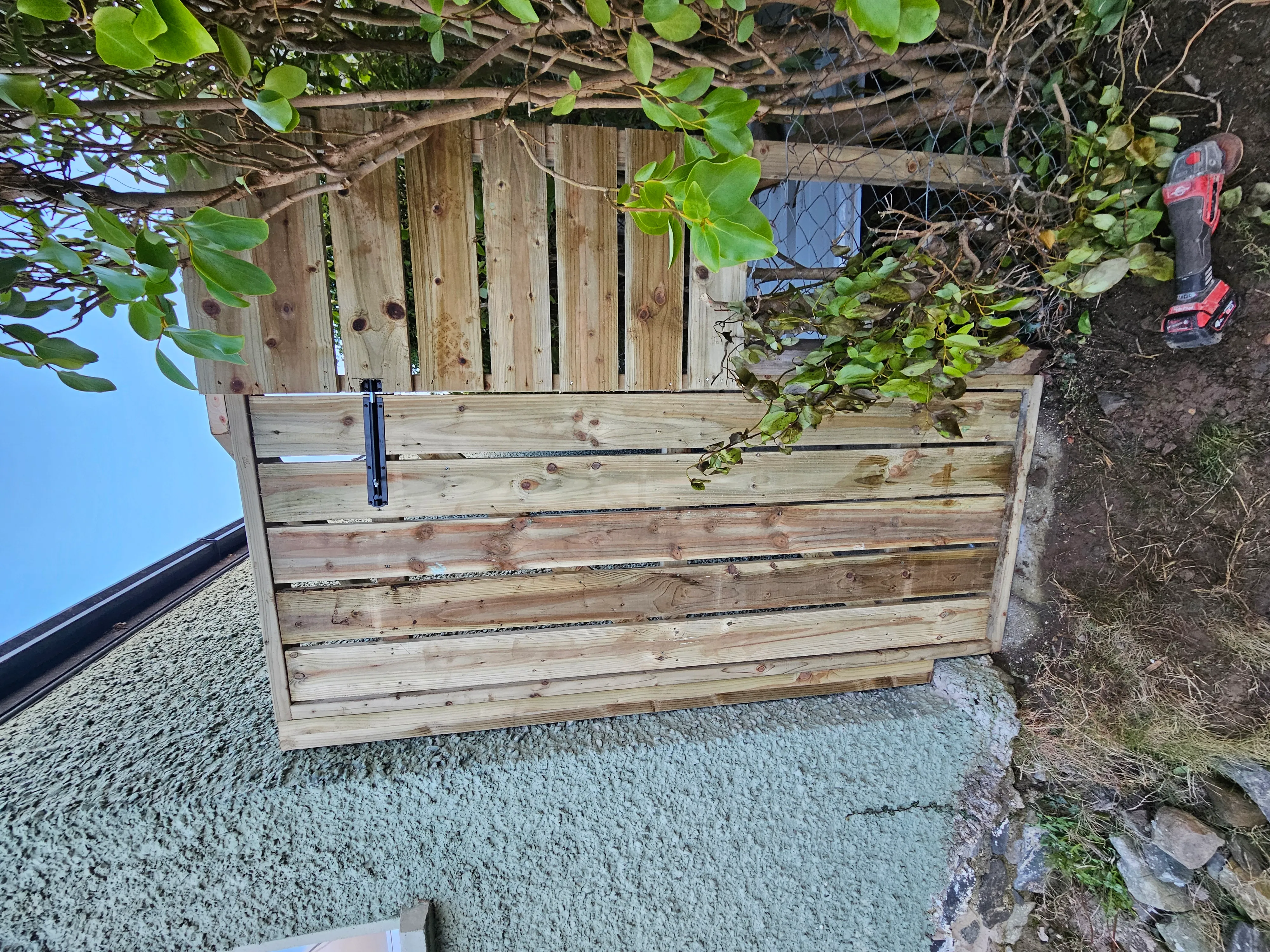
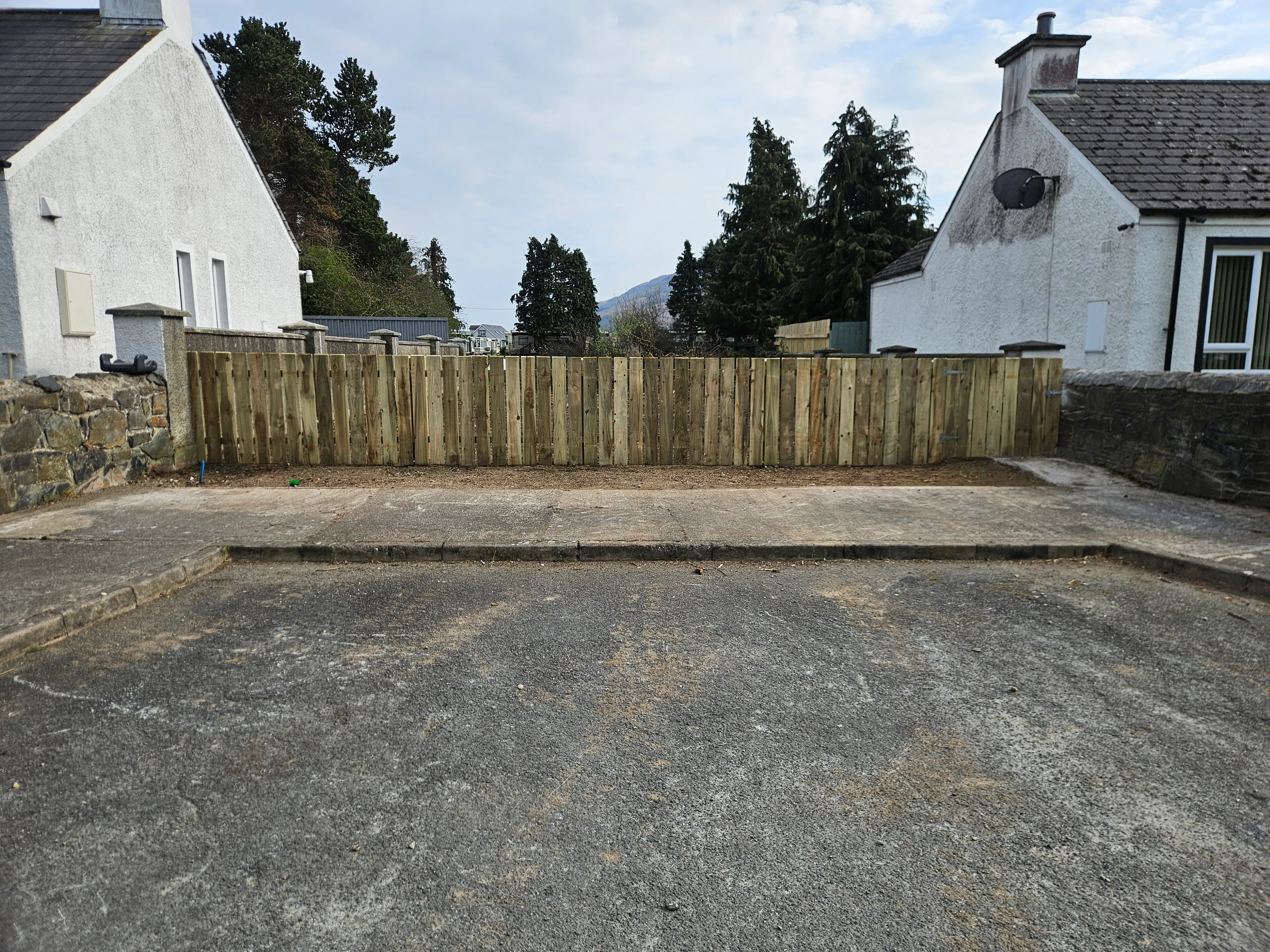
Closeboard Gate
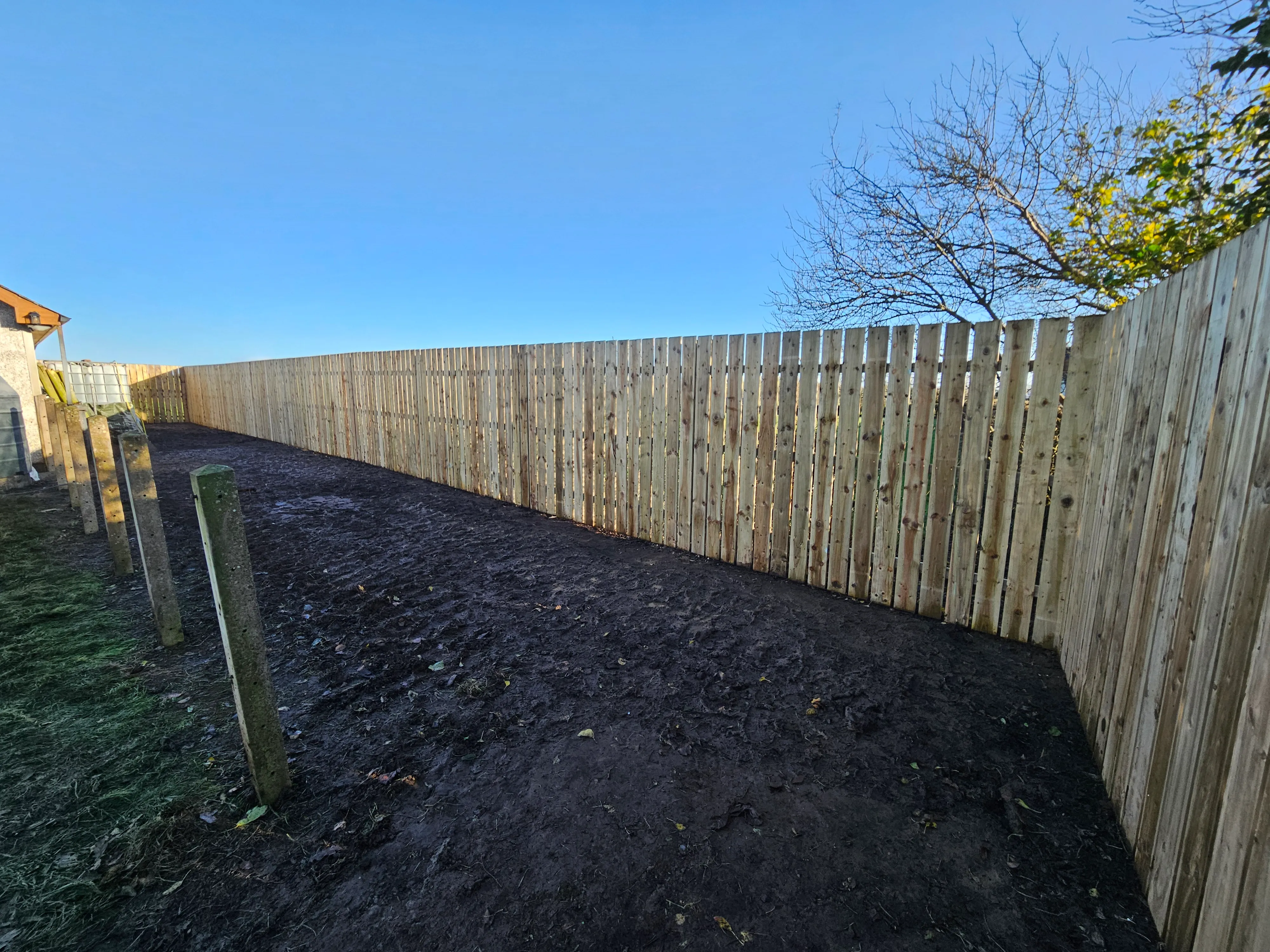
A closeboard gate matches closeboard fencing — vertical featheredge boards on a sturdy frame with a diagonal brace. This is one of the most popular choices for side and rear garden gates because it gives excellent privacy and security, and it matches the fence seamlessly.
- Best for: Side gates, rear access, matching closeboard fencing
- Privacy: Excellent
- Security: Good
- Typical cost: EUR 80 - 200 depending on size and quality
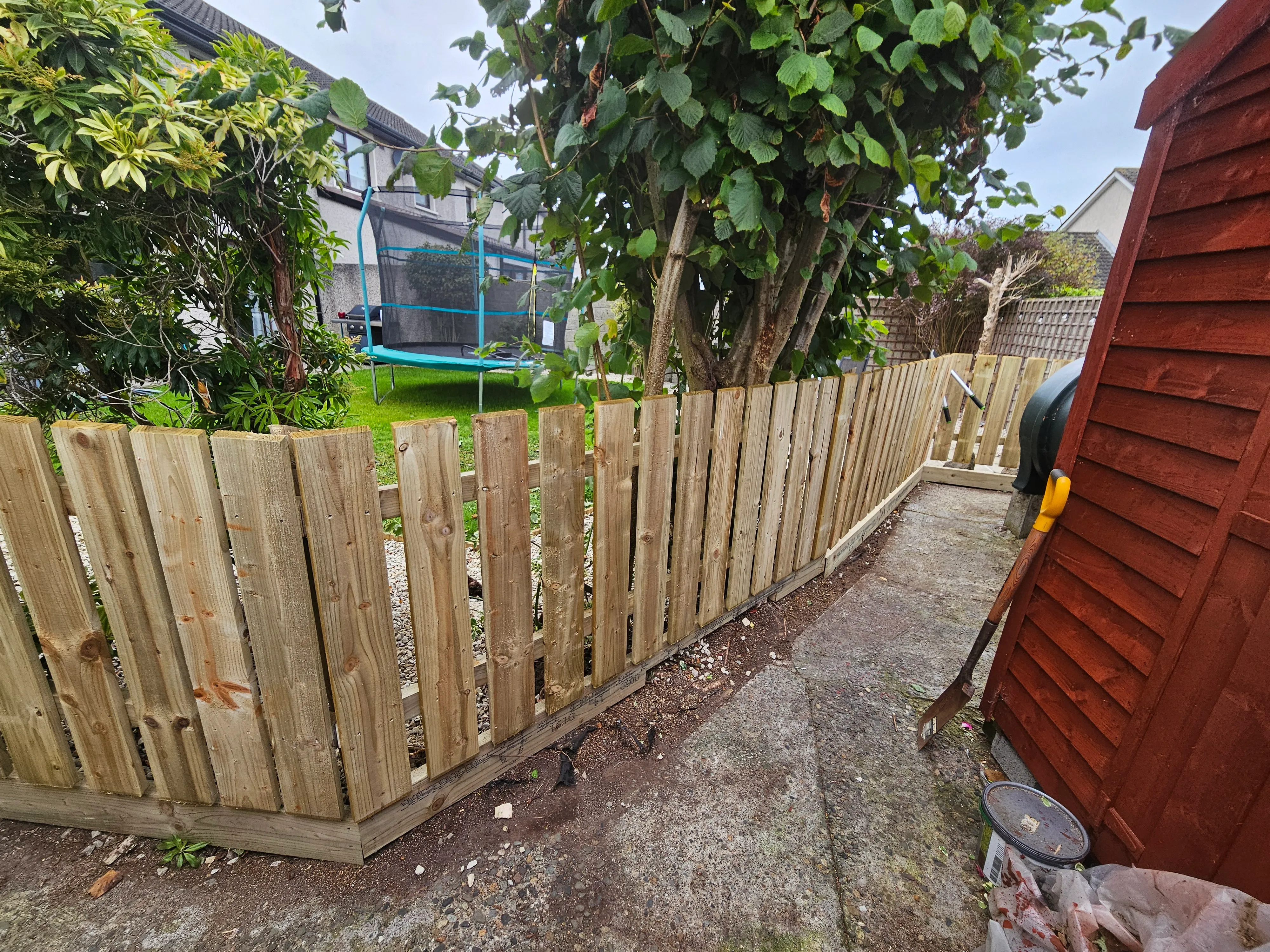
Picket Gate
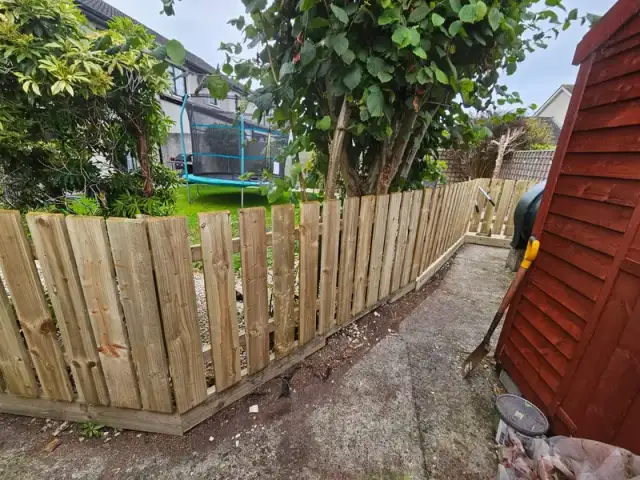
A picket gate features evenly spaced vertical slats on a frame, matching a picket fence. It is a classic choice for front gardens, particularly on period homes and cottage-style properties. Picket gates are typically lower (3 to 4 feet) and are more decorative than secure.
- Best for: Front garden entrances, cottage-style properties
- Privacy: Low — there are gaps between the slats
- Security: Basic perimeter marking
- Typical cost: EUR 60 - 150
Ledge and Brace Gate
This is a traditional design using horizontal ledges and a diagonal brace on the back, with vertical boards on the front. It is a strong, simple design that works well for both front and side gates. The diagonal brace is essential — without it, the gate will sag over time.
- Best for: All-round use, traditional properties
- Privacy: Good to excellent depending on board spacing
- Security: Good
- Typical cost: EUR 70 - 180
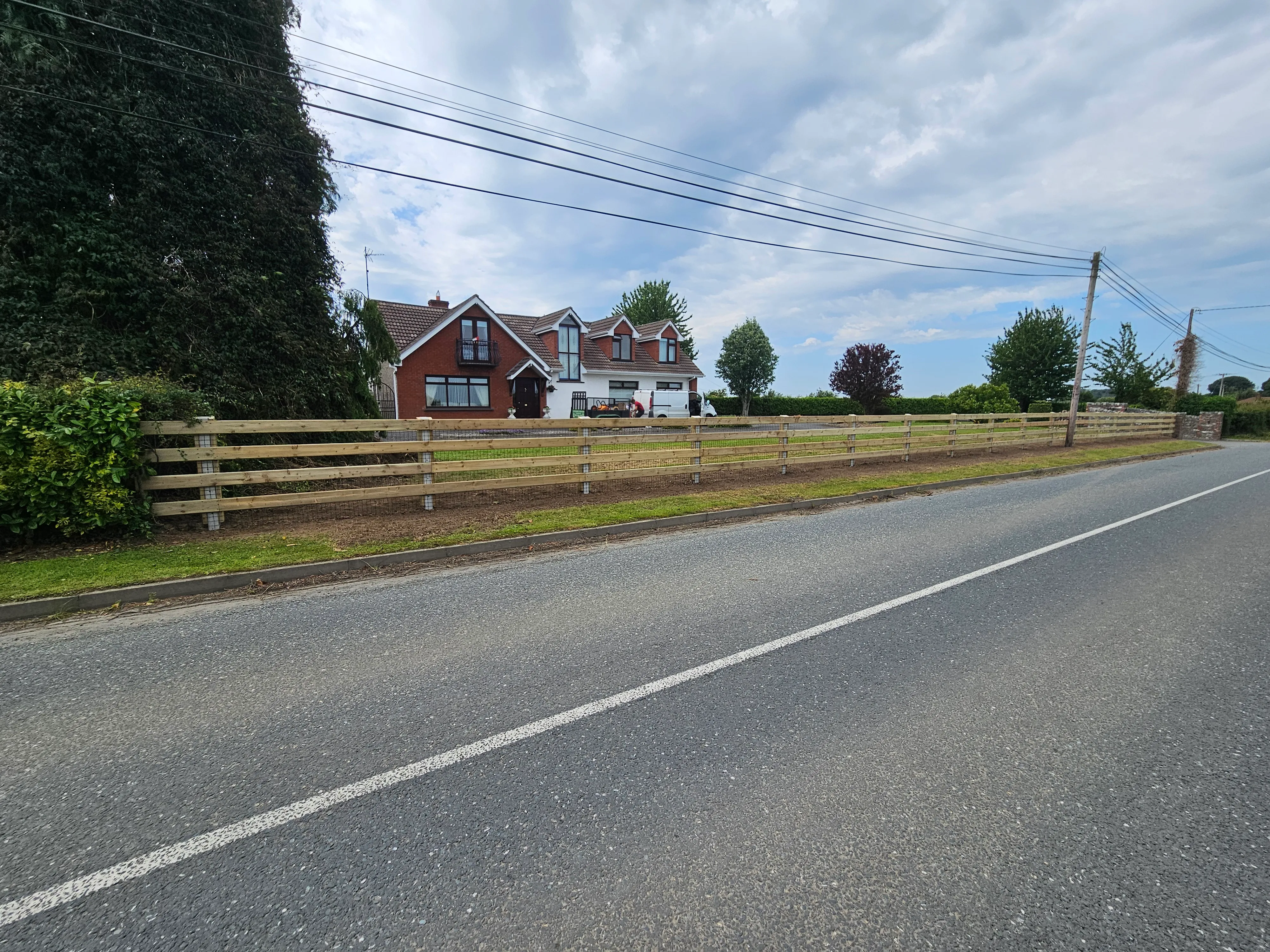
Five-Bar Gate
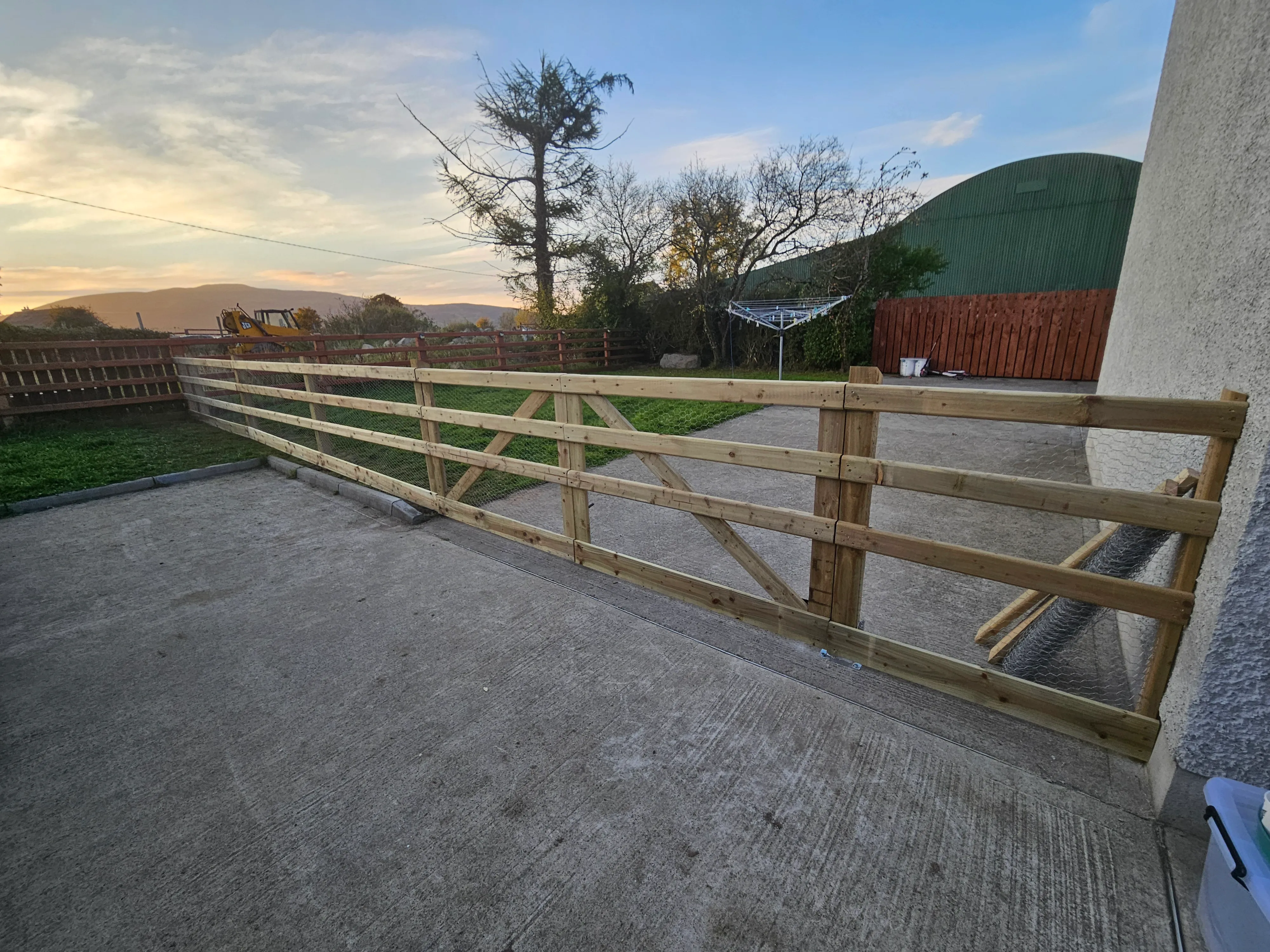
The five-bar gate is the classic agricultural gate, made from horizontal bars on a diagonal frame. It is traditionally used for field entrances and driveways, but smaller versions work well for rural front gardens. They look particularly well on country properties.
- Best for: Rural properties, driveway entrances, farmhouse-style gardens
- Privacy: None — it is completely open
- Security: Good for containing livestock and vehicles
- Typical cost: EUR 100 - 300 depending on size
Metal Gate
Metal gates come in a huge range of styles, from simple wrought-iron designs to ornate scrollwork. They are popular for front garden entrances where you want something that looks smart and lasts well. Modern metal gates are usually galvanised and powder-coated for weather resistance.
- Best for: Front garden entrances, driveways, period properties
- Privacy: Varies — from open railings to solid sheet designs
- Security: Excellent
- Typical cost: EUR 150 - 500+ depending on design and size
Choosing the Right Material
Pressure-Treated Softwood
This is the most common material for garden gates in Ireland. It is affordable, widely available, and can be stained or painted to suit your taste. Pressure-treated softwood will last 10 to 15 years with regular maintenance. Look for timber that has been properly pressure-treated rather than just dip-treated.
Hardwood
Hardwood gates (oak, iroko, or similar) are more expensive but significantly more durable. A well-made hardwood gate can last 25 years or more with minimal maintenance. Oak weathers to an attractive silver-grey colour if left untreated, or it can be oiled to maintain its natural warm tone.
Metal (Steel or Wrought Iron)
Metal gates are the most durable option, provided they are properly finished. Galvanised steel with a powder coating will resist rust for decades. They require very little maintenance beyond an occasional wipe down and checking the hinges. The main drawback is cost — a good metal gate is typically more expensive than a timber one.
Composite Materials
Composite gates are a relatively new option in the Irish market. They are made from a blend of wood fibres and plastic, and they offer good weather resistance with very low maintenance. They do not rot, warp, or need painting. The trade-off is that they can look less natural than real timber and the upfront cost is higher.
Installation Considerations
Getting the gate itself right is only half the job. How it is installed makes all the difference to how well it works and how long it lasts.
Gate Posts
Gate posts take more strain than fence posts because of the constant opening and closing. They need to be heavier and set deeper than standard fence posts.
- For a timber gate, use at least 5x5 inch (125mm) posts, set a minimum of 2 feet into the ground with postcrete or concrete
- Concrete posts work well for side and rear gates but may not suit the look of a front entrance
- Metal gates often come with their own steel posts or are fitted to brick or stone pillars
Hinges and Hardware
Good-quality hinges are essential. Cheap hinges are one of the most common reasons gates start to sag and drag on the ground within a couple of years.
- T-hinges (tee hinges) are the standard choice for most timber garden gates. Use heavy-duty galvanised versions for anything over 4 feet tall.
- Hook and band hinges are stronger and better for larger or heavier gates. They distribute the weight across a wider area of the post.
- Self-closing hinges are useful for gates that need to shut automatically, particularly side gates for pet security.
- Always use stainless steel or galvanised fixings. Standard steel screws and bolts will rust quickly in Irish conditions.
The Latch
The latch needs to be easy to use but secure enough for its purpose. Common options include:
- Ring latch — a simple, traditional design that works well for front and rear gates
- Suffolk latch — a classic thumb-operated latch that suits period and cottage-style properties
- Slide bolt — adds extra security, especially useful for side gates
- Key-lockable latch — for gates where security is a priority, such as side access to the back garden
Getting the Gap Right
A gate needs a small gap between the bottom of the gate and the ground — typically around 50mm. This allows the gate to swing freely without dragging, even when the ground is wet and slightly swollen. Too little gap and the gate will stick in winter. Too much gap and it looks untidy and lets small animals through.
Allowing for Ground Slope
If your gateway is on a slope, the gate needs to be hung so it clears the ground at all points of its swing. This sometimes means the gate opens in only one direction, or that the bottom of the gate is cut at an angle to follow the slope. An experienced fitter will account for this during installation.
A Gate Should Match Your Fence
One thing that makes a big difference to the overall appearance of your garden perimeter is having the gate match the fence. A closeboard gate with a closeboard fence looks cohesive and professional. A picket gate that matches your picket fence ties the whole front garden together. If your gate looks like an afterthought, it detracts from the whole perimeter.
When we install a new fence, we always discuss the gate at the same time so everything is built from the same timber, finished to the same standard, and fits together as one piece of work.
Let Us Help You Choose the Right Gate
Whether you need a simple side gate to improve security or a feature entrance gate that makes a great first impression, Seamus and Pete can help. We have been fitting gates across Dundalk, Drogheda, and County Louth for over 35 years, and we will help you find the right style, material, and hardware for your property.
Give us a call on 085 168 5170 for a free, no-obligation quote. We are always happy to pop out, take a look at your gateway, and talk you through the options. See our fencing and gate installation service for full details on what we offer across Dundalk and County Louth.