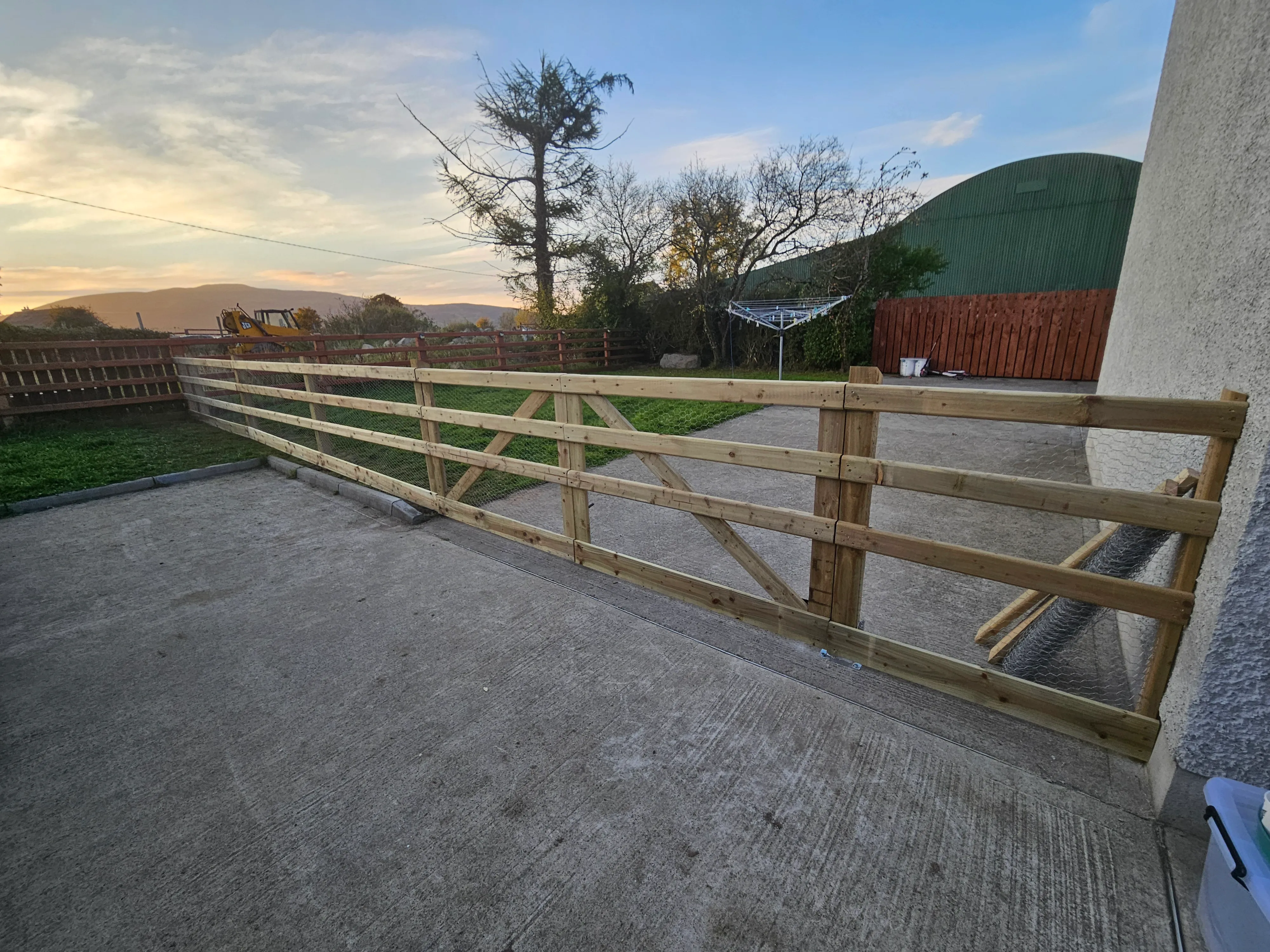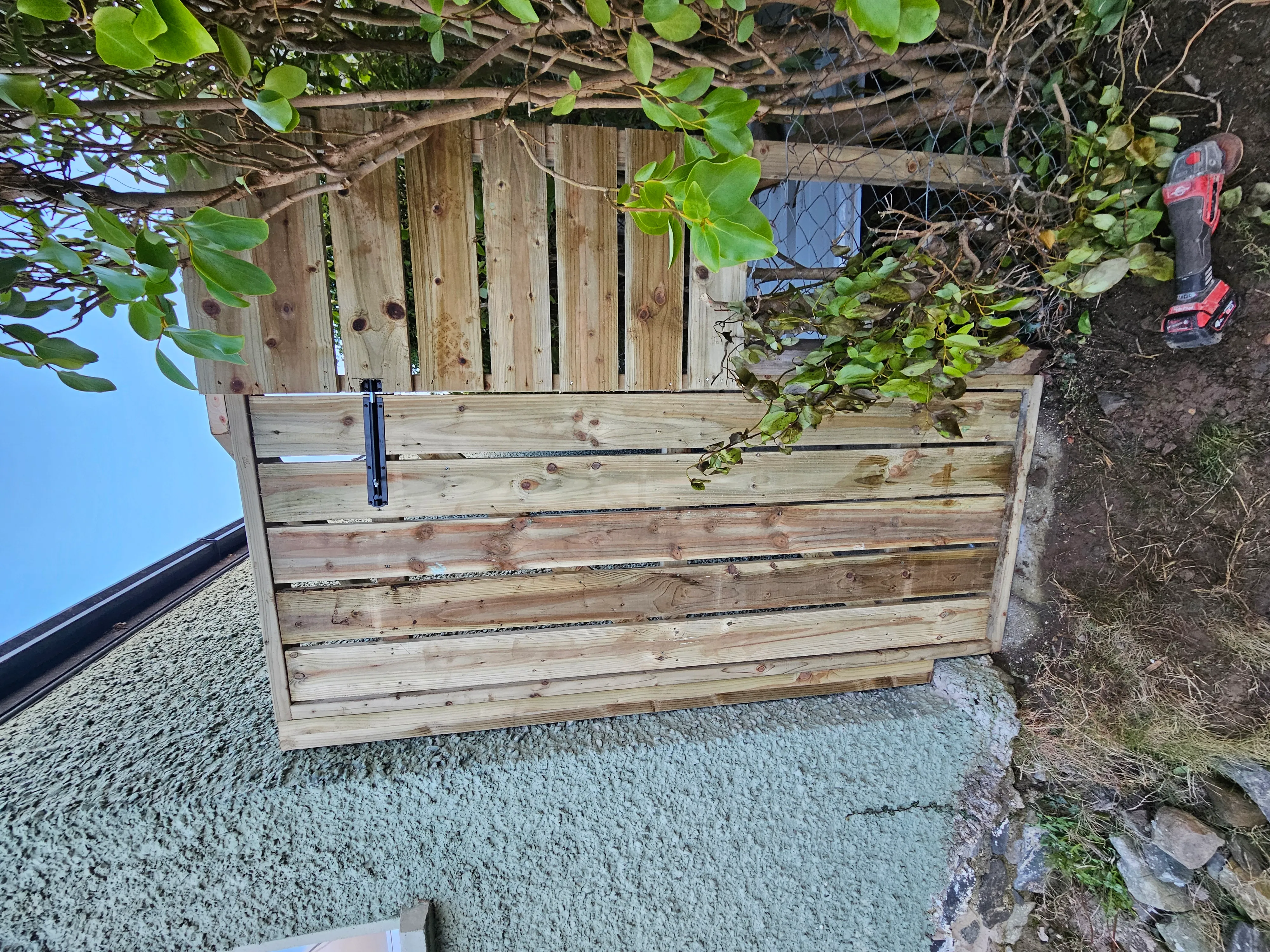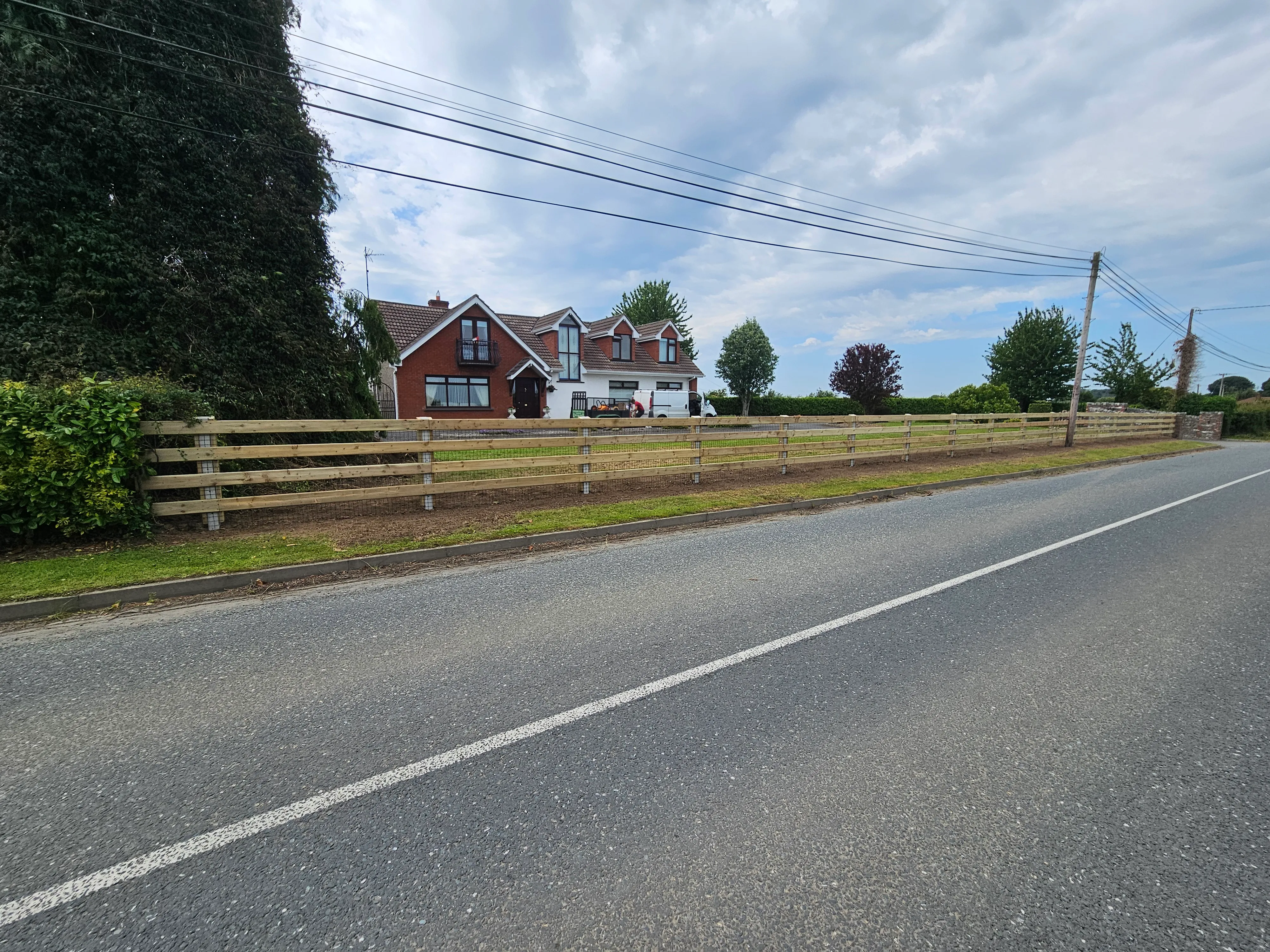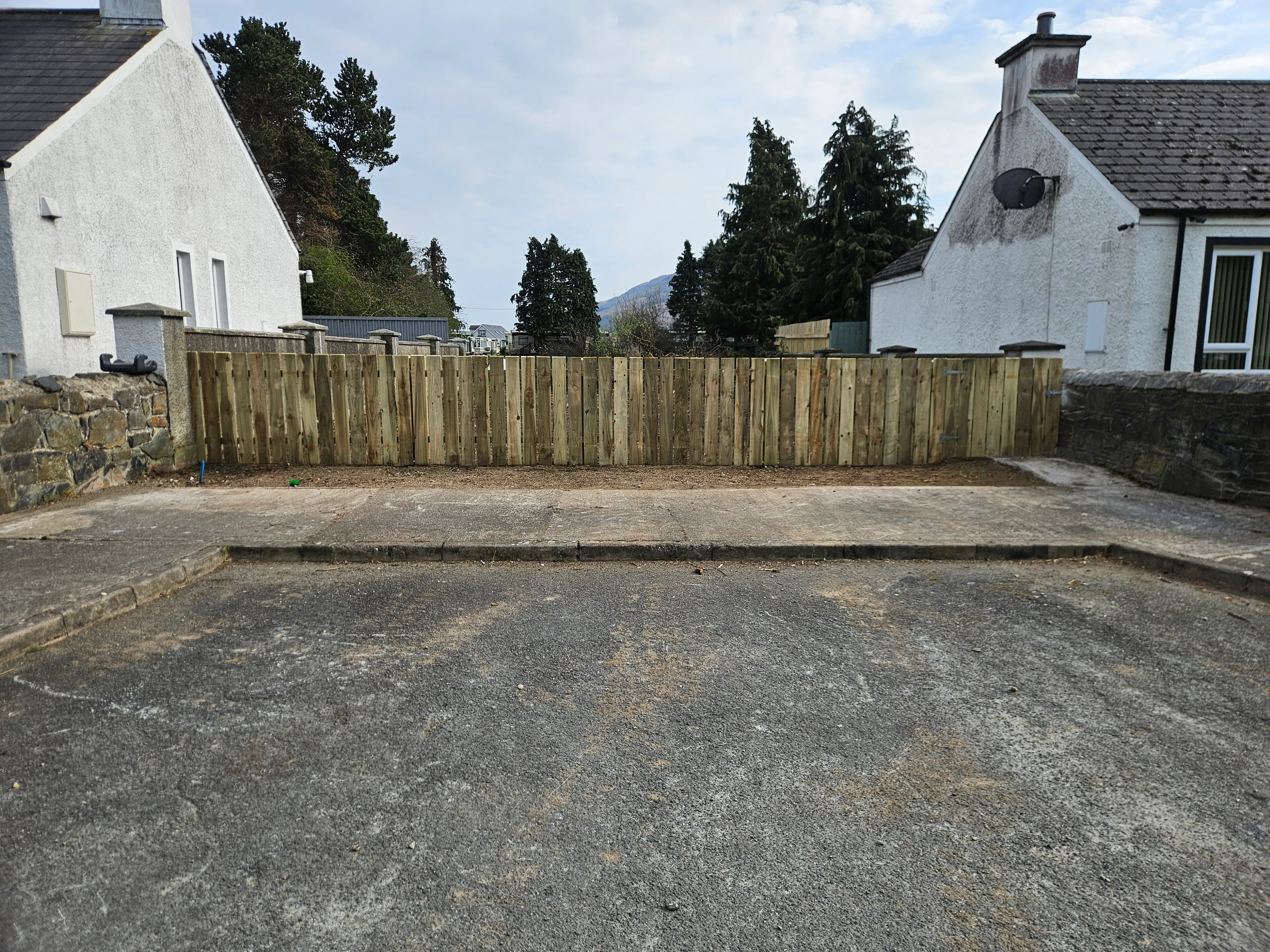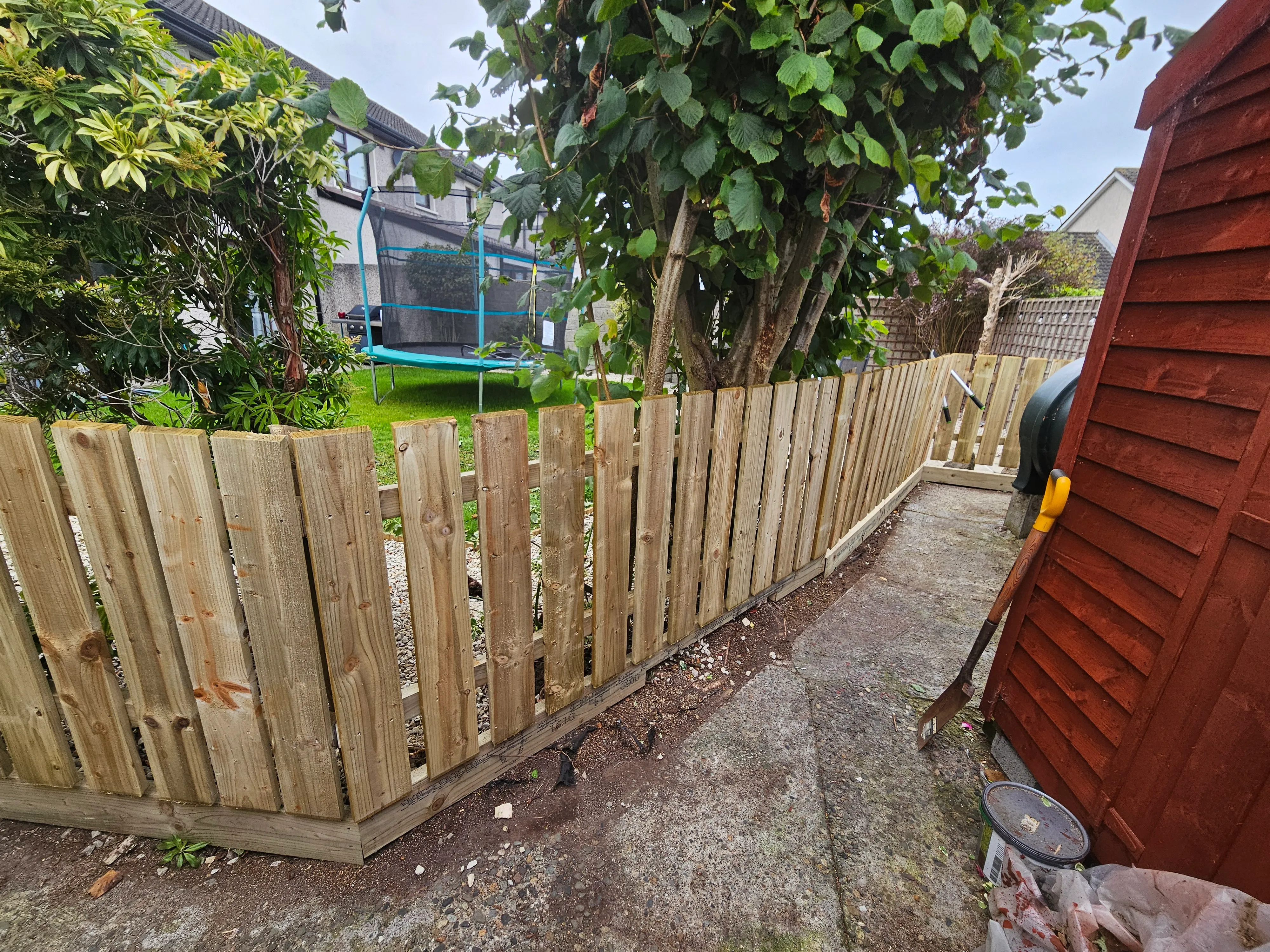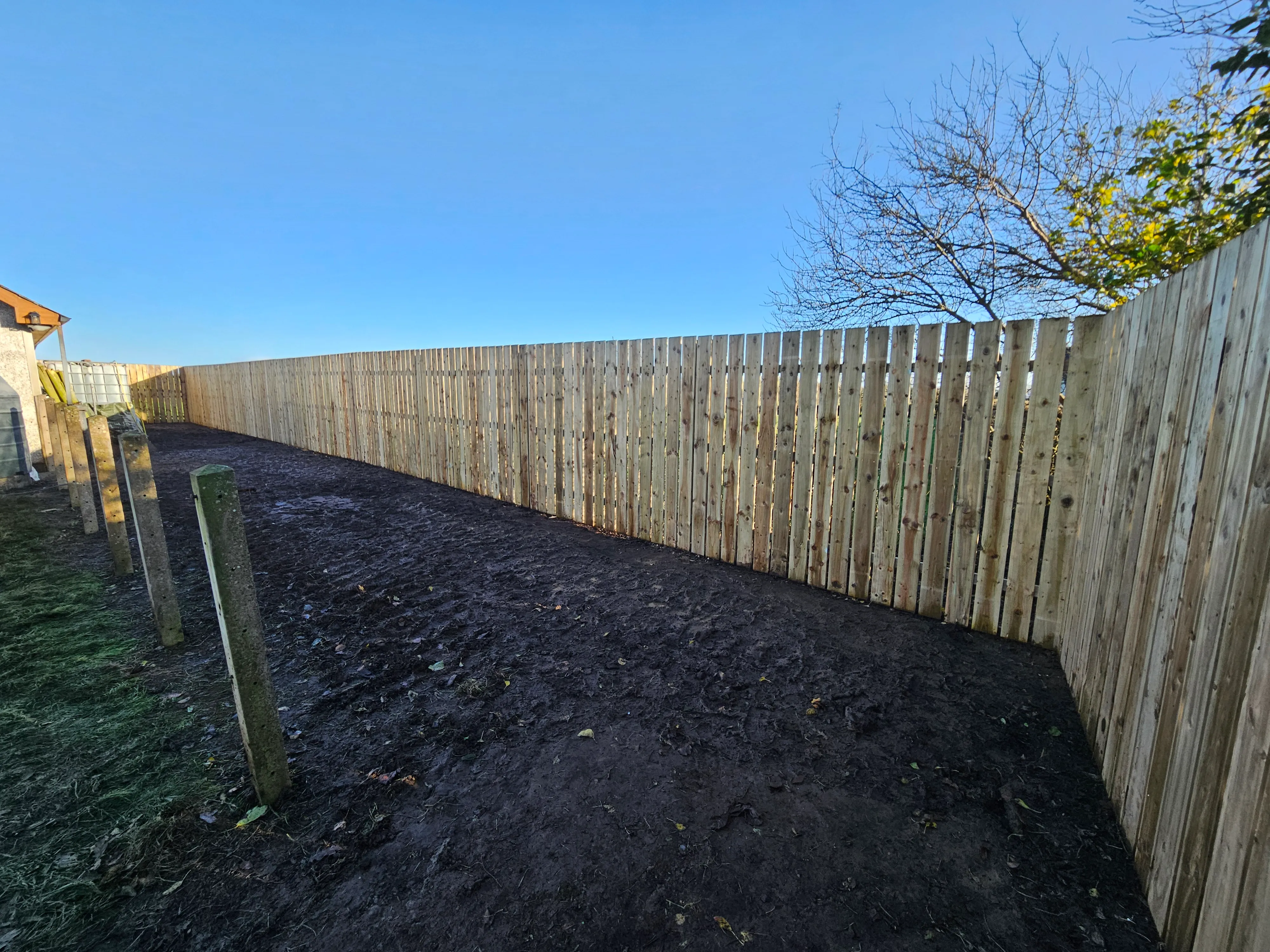
Whether you are replacing a blown-down fence after a storm, putting up a new boundary, or adding privacy to a garden, understanding what fencing costs before you call for quotes puts you in a much better position. Prices vary widely depending on the type of fence, the material, and the specific conditions on site.
This guide covers realistic fencing costs for residential gardens in Ireland, broken down by fence type, with an honest look at what drives the price up or down.
Fencing Costs Per Metre in Ireland
Garden fencing in Ireland is typically priced per linear metre of completed fence, including posts, panels or boards, and installation. Supply-and-fit prices in 2025 typically run as follows:
| Fence type | Price per metre (supply and install) |
|---|---|
| Basic timber overlap panels | €40-€70 |
| Featheredge / close-board timber | €60-€90 |
| Treated timber with concrete posts | €70-€100 |
| Slatted timber (horizontal) | €80-€120 |
| Composite panel fencing | €100-€160 |
| PVC / uPVC fencing | €100-€180 |
| Metal railing or wrought iron style | €120-€200+ |
For a typical boundary of 20 linear metres on a Dundalk residential property:
- Basic treated timber: €800 to €2,000
- Mid-range close-board with concrete posts: €1,400 to €2,000
- Composite or premium timber: €2,000 to €3,200
These are indicative prices. The specific conditions on your site will affect the final quote.
What Affects the Cost?
Post type. Concrete posts last longer than timber posts and are standard for most residential fencing in Ireland. The cost difference is moderate but concrete posts add durability, particularly in the wet Irish climate where timber posts rot at ground level over time.
Ground conditions. Rocky or very hard ground makes post-hole digging slower and more difficult. Soft or waterlogged ground may need deeper posts or concrete footings. Sloped gardens require more careful installation to step the fence properly.
Access. Fencing in a back garden with no side access, requiring panels and posts to be carried through a house, takes longer and usually costs more.
Removing old fencing. If there are existing posts to remove and dispose of, this adds to the cost. Concrete post removal in particular can be time-consuming.
Gates. A timber or composite garden gate adds €200 to €500 depending on size and style, plus the hardware and hinge installation.
Height. Taller fencing requires longer posts, more material, and more labour per metre. Most residential fencing runs to 1.5m or 1.8m. Anything above 1.8m may require planning permission (see below).
Planning Permission in Ireland
Under Irish planning law, you can generally erect:
- A fence or wall up to 2 metres at the rear or sides of a residential property without planning permission
- A fence or wall up to 1.2 metres at the front of a property (forward of the building line) without permission
These exemptions apply to most standard residential properties in County Louth. Exceptions include protected structures, properties with specific planning conditions, and some older estates with deed restrictions on fencing types. If you are unsure, check your property documentation or contact Louth County Council before starting work.
Timber vs. Composite: Which Is Worth the Money?
The most common debate for residential fencing is between treated timber and composite materials.
Treated timber is the standard choice in Ireland. Pressure-treated timber is resistant to rot and insect damage and, with proper posts and correct installation, should last 15 to 25 years. It requires occasional treatment (painting or staining) to maintain appearance and extend life. The initial cost is lower.
Composite fencing uses a mix of wood fibre and plastic. It requires virtually no maintenance, does not rot, warp, or need treating, and is available in a range of colours and profiles. It costs significantly more upfront but the long-term maintenance saving is real, particularly for fences that are difficult to access for annual treatment.
For most straightforward residential gardens in County Louth, treated timber with concrete posts remains the best value option. Composite is worth considering for awkward-to-reach boundaries, rental properties, or where a clean modern look is a priority.
Boundary Disputes and Responsibilities
Before installing fencing, confirm whose responsibility the boundary is. In Ireland, property deeds specify which boundaries each owner is responsible for. If you are unsure, check your Land Registry folio or the property map on your deeds.
Installing a fence on your neighbour’s side of the boundary line, even by a small amount, can create legal problems. If there is any doubt, agree the boundary line with your neighbour before work starts.
Getting a Fair Quote
A proper fencing quote should include:
- Supply and installation of posts, panels or boards
- Post footings and concrete where required
- Removal and disposal of any old fencing
- Gate supply and installation if required
Ask specifically whether removal of old posts is included. It sometimes is not, particularly for concrete posts embedded in the ground.
For a free quote on fencing installation in Dundalk, Blackrock, Ardee, Carlingford, or anywhere across County Louth, get in touch here.
For more on fencing options and planning rules, see our garden privacy fencing ideas guide and our garden screening options post.
Visit our fencing service page for full details on the fencing and boundary work we carry out across the county.