A well-maintained deck can be the centrepiece of your garden for decades. Leave it neglected, and even the best materials will deteriorate surprisingly quickly in Irish conditions. The good news is that decking maintenance does not need to be complicated or time-consuming. With a straightforward seasonal routine, you can keep your deck looking great and structurally sound year after year.
This guide covers everything you need to know about maintaining both timber and composite decking through the Irish seasons. Whether your deck is brand new or showing its age, these practical tips will help you get the most from your outdoor space.
Why Maintenance Matters in the Irish Climate
Ireland’s combination of frequent rainfall, high humidity, mild temperatures and limited winter sunshine creates the perfect conditions for algae, moss and mould to thrive on outdoor surfaces. A deck that might need minimal attention in a drier climate demands a more proactive approach here in County Louth.
Regular maintenance is not just about appearance. It is about safety too. Algae and moss growth on timber decking can make the surface dangerously slippery, particularly in autumn and winter. Staying on top of your maintenance routine helps prevent slips and falls while also extending the life of your investment.
Spring: The Big Clean and Inspection
Spring is the most important time of year for decking maintenance. After months of wet and cold weather, your deck needs a thorough clean and careful inspection before the outdoor living season begins.
Step 1: Clear the Deck
Start by removing all furniture, planters, pots and any other items from the deck surface. This allows you to inspect and clean the entire area without obstruction. Move items onto the lawn or patio while you work.
Step 2: Sweep and Clear Debris
Use a stiff outdoor broom to sweep the entire deck surface, paying particular attention to gaps between boards where leaves, dirt and organic matter tend to accumulate. A putty knife or a thin flat-head screwdriver works well for clearing packed debris from between boards. This step is important because trapped organic material holds moisture against the timber and accelerates rot.
Step 3: Inspect for Damage
With the deck cleared, take the time to inspect it thoroughly:
- Check for soft or spongy boards by pressing firmly with your foot or a screwdriver. Soft spots may indicate rot beneath the surface.
- Look for raised nails or screws that could cause a tripping hazard or catch bare feet.
- Examine the subframe where possible. The joists and bearers supporting your deck are structural elements, and any signs of rot here should be addressed promptly.
- Test railings and balustrades for stability by applying firm pressure. Loose fixings should be tightened or replaced.
- Check for warped, cracked or split boards that may need replacing.
Step 4: Deep Clean the Surface
For timber decking, a thorough clean in spring makes a real difference. You have several options:
- Pressure washing: Effective but requires care. Use a fan nozzle rather than a pencil jet, keep the pressure below 1,500 PSI, and maintain a consistent distance of 30 to 40 centimetres from the surface. Always work along the grain of the timber, not across it. Too much pressure or holding the jet too close can damage the wood fibres and leave permanent marks.
- Decking cleaner and scrub brush: A dedicated decking cleaner (available from most hardware shops in Ireland) combined with a stiff-bristled brush is a gentler alternative that works well for routine annual cleaning. Apply the cleaner, leave it for the recommended time, then scrub and rinse.
- Oxygen bleach solution: A mixture of oxygen bleach (sodium percarbonate) and warm water is effective at killing algae and moss without harsh chemicals. It is safer for surrounding plants than chlorine-based bleach.
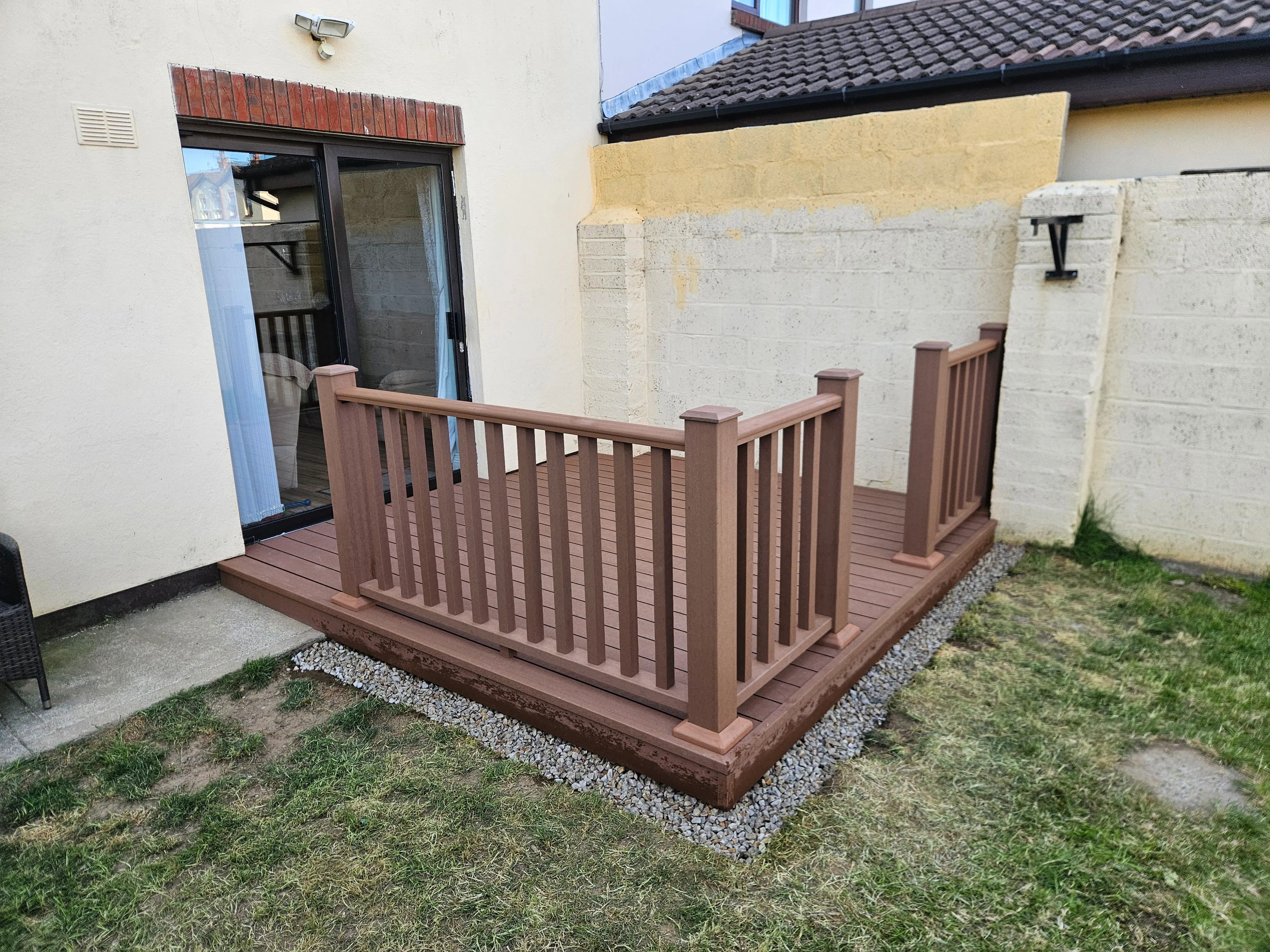
For composite decking, cleaning is simpler. Most composite boards can be cleaned with warm soapy water and a soft brush. Avoid pressure washing composite decking at high settings, as this can damage the surface finish. Check your manufacturer’s care instructions for specific recommendations.
Step 5: Treat and Protect (Timber Only)
Once your timber deck is clean and fully dry, which may take two to three dry days in Irish spring conditions, it is time to apply a protective treatment:
- Decking oil penetrates the timber to nourish and protect it from within. It enhances the natural grain and colour of the wood. Reapply annually or as needed.
- Decking stain adds colour while providing a protective layer. Available in transparent, semi-transparent and solid finishes.
- Decking sealant creates a surface barrier against moisture. Useful for particularly exposed decks.
Always apply treatments on a dry day when rain is not forecast for at least 24 hours. Follow the manufacturer’s drying times and apply the recommended number of coats.
Summer: Enjoy and Maintain
Summer is when your deck works hardest, hosting barbecues, family gatherings and lazy afternoons in the sunshine. A few simple habits will keep it in top condition through the busy months.
Regular Sweeping
A quick sweep once a week prevents dirt and grime from building up. This is especially important if your deck sits beneath or near trees, as sap, pollen and bird droppings can stain the surface if left in place.
Deal with Spills Promptly
Food and drink spills at summer barbecues should be cleaned up as soon as possible. On timber decking, oily or acidic substances like cooking grease, wine or fruit juice can leave permanent stains if not addressed quickly. A damp cloth and a mild cleaning solution will handle most spills.
Composite decking is more forgiving of spills, but prompt cleaning is still advisable to avoid any chance of staining.
Move Furniture Periodically
If furniture sits in the same position all summer, you may notice colour differences on the deck surface beneath. UV exposure will weather exposed areas differently from shaded spots. Moving your furniture slightly every few weeks helps ensure even weathering across the whole deck.
Check for Algae in Shaded Areas
Even in summer, shaded sections of your deck can develop algae growth during prolonged damp spells. Keep an eye on north-facing edges, areas beneath overhanging plants and corners that do not get much airflow. A quick scrub with a deck cleaner will sort this before it becomes a bigger problem.
Autumn: Prepare for Winter
Autumn is your opportunity to prepare the deck for the toughest months of the year. A bit of effort now prevents bigger problems down the line.
Clear Fallen Leaves Regularly
This is the single most important autumn task. Fallen leaves trap moisture against the deck surface and create the ideal environment for mould, algae and rot. In a sheltered garden with mature trees, you may need to sweep your deck every few days during October and November.
Pay particular attention to the gaps between boards. Wet leaves packed into these channels block drainage and hold water against the timber or composite subframe.
Trim Back Overhanging Plants
Cut back any shrubs, climbers or overhanging branches that are encroaching on your deck. Good airflow across the surface helps it dry out between rain showers and reduces the conditions that promote moss and algae growth. Climbing plants growing through or beneath the deck structure should be redirected, as their roots and stems can interfere with fixings and subframe timbers over time.
Apply an Anti-Algae Treatment
Before the wet season sets in, consider applying a proprietary anti-algae or anti-slip treatment to your timber deck. These products create a barrier that inhibits algae growth through the winter months. They are available from most Irish hardware stores and are straightforward to apply with a garden sprayer or roller.
Check Drainage
Ensure that the ground beneath your deck has adequate drainage. Water pooling under the deck structure during winter can cause problems with the subframe and even affect the stability of your foundations. Clear any blocked drainage channels and check that the ground slopes away from your house.
Winter: Protect and Monitor
Winter is not a season for major decking work in Ireland, but a few precautions will help your deck survive until spring in good shape.
Keep It Clear
Continue to sweep off leaves, debris and standing water when you can. Even a quick five-minute sweep after a stormy night makes a difference. The less organic material sitting on the surface, the healthier your deck will be.
Avoid Using Salt or Grit
While it may be tempting to scatter rock salt on a frosty deck, this can cause damage to both timber and composite surfaces. Salt accelerates corrosion of metal fixings and can damage the surface of composite boards. Instead, use a rubber-edged snow shovel to clear frost or light snow, and simply wait for icy patches to thaw naturally.
Be Mindful of Heavy Loads
If you use your deck for storing heavy items over winter, such as large planters or equipment, be aware that the additional weight combined with prolonged dampness can stress the subframe. Spread heavy loads across multiple joists rather than concentrating weight in one area.
Watch for Structural Issues
After severe storms or prolonged heavy rain, take a moment to visually check your deck for any signs of movement, lifted boards or damage. Catching structural issues early prevents them from becoming major repair jobs.
Maintenance Checklist at a Glance
Here is a quick reference you can return to throughout the year:
Weekly (all year):
- Sweep the deck surface to remove loose debris
Monthly:
- Check for algae or moss growth, especially in shaded areas
- Inspect for loose screws, nails or fixings
Spring (March to April):
- Full deep clean of the entire deck surface
- Detailed structural inspection
- Apply oil, stain or sealant to timber decking
- Apply anti-slip treatment if needed
Summer (ongoing):
- Clean up spills promptly
- Move furniture periodically for even weathering
Autumn (October to November):
- Clear fallen leaves regularly, including from between boards
- Trim back overhanging vegetation
- Apply anti-algae treatment
- Check drainage beneath the deck
Winter (ongoing):
- Clear debris after storms
- Avoid salt and chemical de-icers
- Monitor for structural damage
When to Call in a Professional
Some maintenance tasks are best left to experienced hands. If you notice any of the following, it is time to get a professional assessment:
- Boards that feel soft or spongy when walked on
- Visible rot in the subframe or supporting joists
- The deck feels unstable, bouncy or uneven
- Multiple boards are cracked, warped or raised
- Railings or balustrades are loose or wobbly
- You are unsure about the structural integrity of the deck
A professional can assess whether repairs, partial replacement or a full rebuild is the most sensible and cost-effective option.
Keep Your Deck in Top Shape with Gardening Services Dundalk
Seamus and Pete at Gardening Services Dundalk have been building, repairing and maintaining garden decking across County Louth for over 35 years. Whether you need a one-off deep clean and treatment, a seasonal maintenance visit, or advice on repairing an ageing deck, we are happy to help.
We work with both timber and composite decking and can advise on the best maintenance approach for your specific setup. If your deck has seen better days, we can also discuss renovation options to bring it back to life.
Visit our decking installation and repair service page for full details, or call us on 085 168 5170 for friendly, no-obligation advice. We are always happy to have a look and give you an honest assessment of what your deck needs.