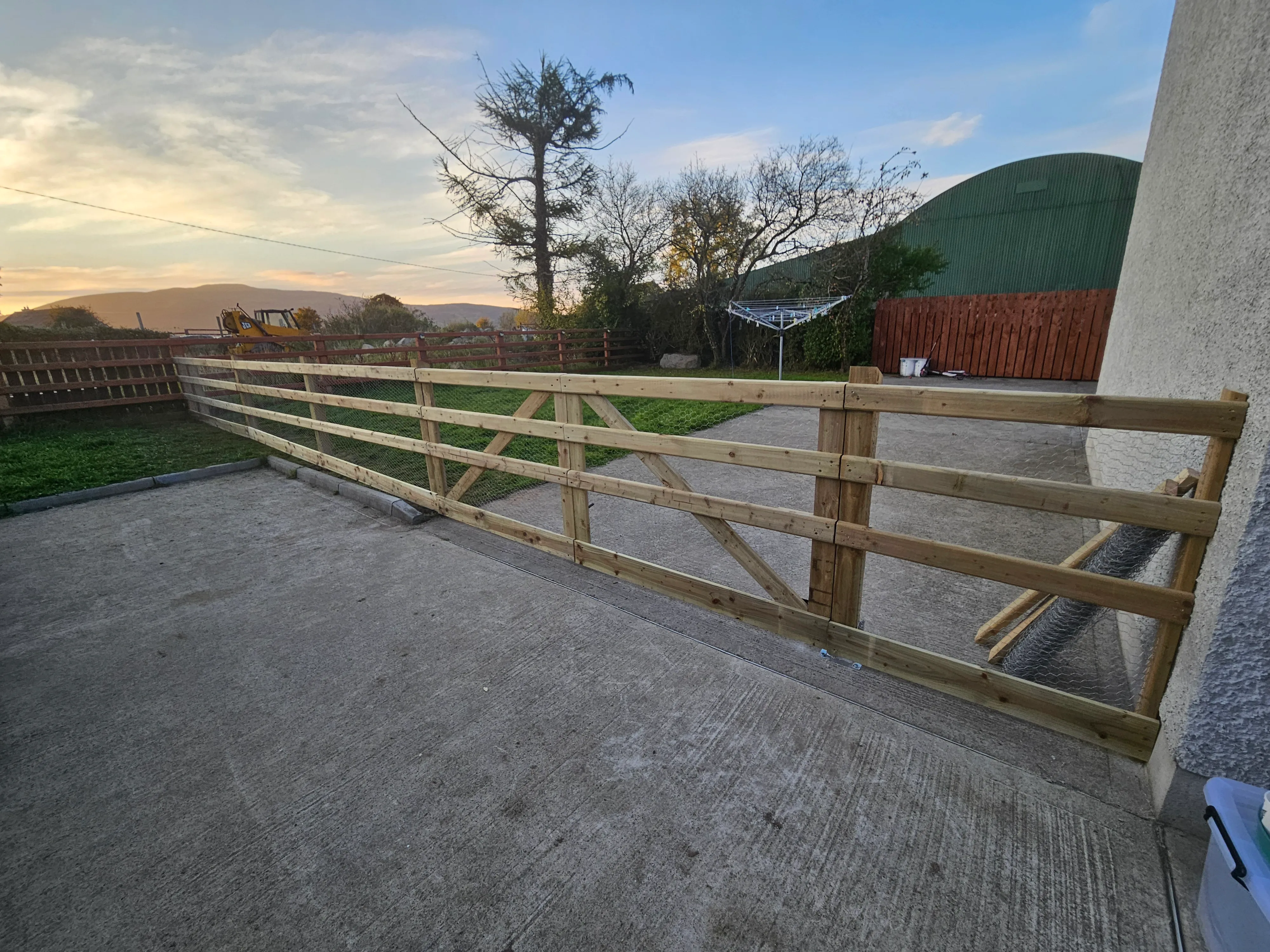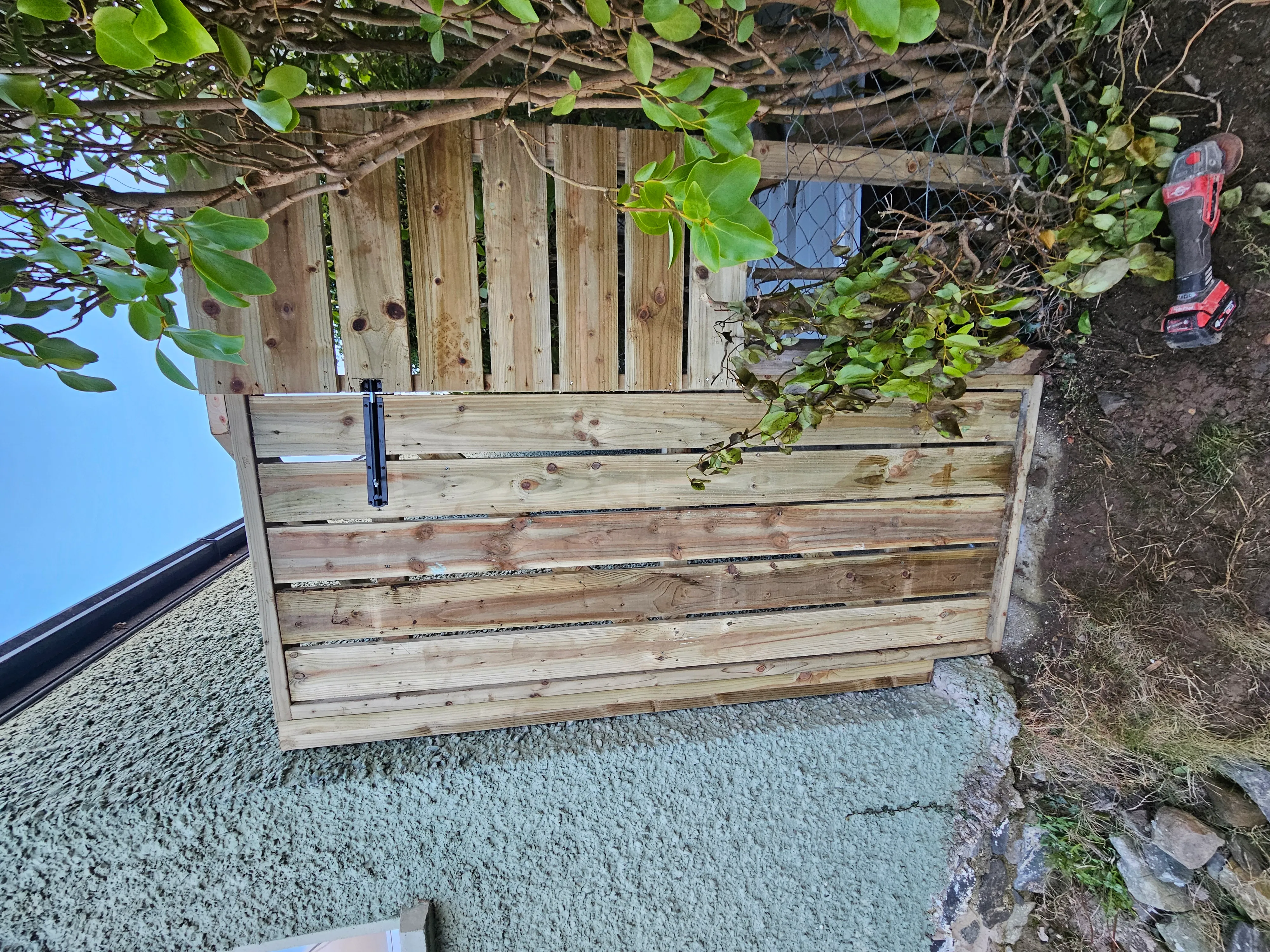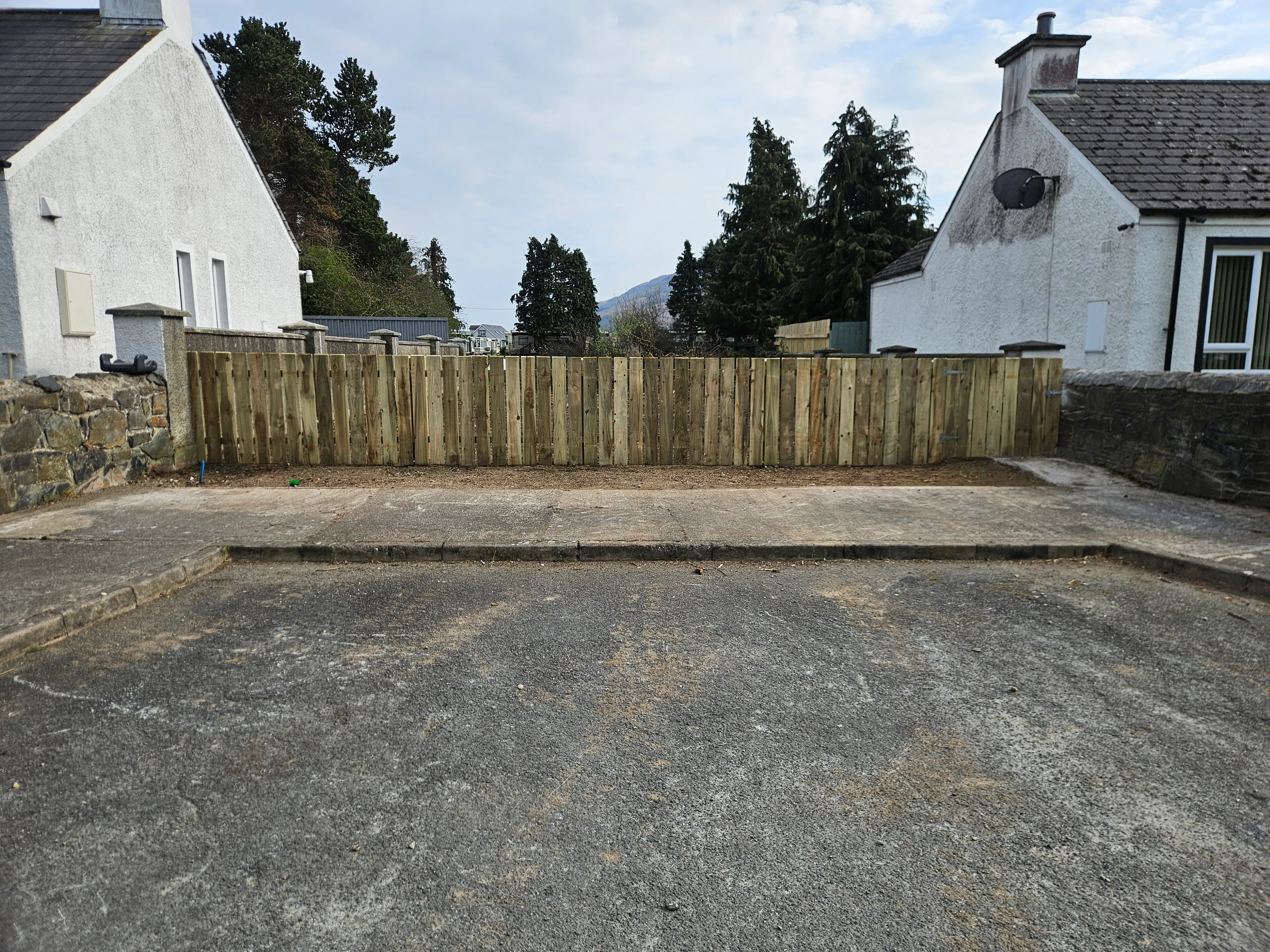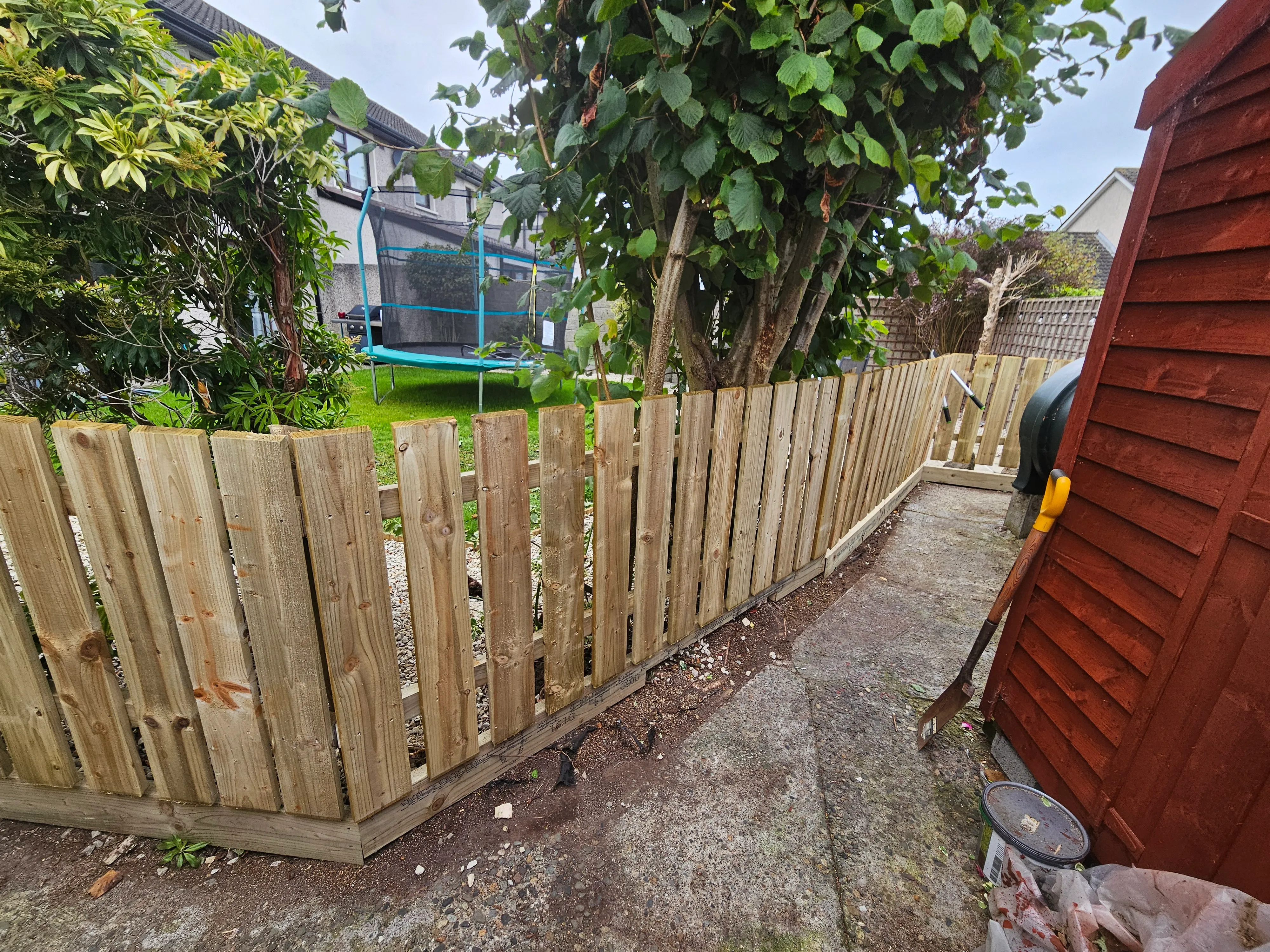
A garden fence is one of those things most people do not think about until something goes wrong. It sits there quietly doing its job — giving you privacy, keeping the garden secure, marking your perimeter — and it is easy to take it for granted. But like anything exposed to the Irish weather year-round, a fence benefits from a bit of regular attention.
The good news is that fence maintenance does not take much time or cost much money. A few simple tasks spread across the year can add years to your fence’s life and help you avoid the expense of a full replacement down the line.
We have been building and maintaining fences around Dundalk and County Louth for over 35 years. Here is our practical guide to keeping your garden fence in good shape throughout the year.
Why Bother Maintaining Your Fence?
It is a fair question. The main reasons are:
- Extending the lifespan — a well-maintained fence can last 5 to 10 years longer than a neglected one
- Avoiding costly repairs — small problems caught early are cheap to fix, but left alone they can bring down entire sections
- Keeping your garden looking well — a tired, green-tinged fence drags down the appearance of the whole garden
- Maintaining security and privacy — gaps, loose boards, and leaning sections compromise what the fence is there to do
Most fence maintenance is straightforward and does not require any specialist skills or tools. A couple of hours a few times a year is all it takes.
Spring — Clean and Treat
Spring is the best time to give your fence its annual once-over. The worst of the winter weather has passed, and you have dry days ahead for any treatment to soak in and cure properly.
Clean the Fence
Over winter, fences tend to pick up a layer of green algae, moss, and general grime. This is not just an appearance issue — algae and moss hold moisture against the timber, which speeds up rot.
- Use a stiff brush to scrub off any algae or moss. Work from top to bottom.
- For a more thorough clean, a garden sprayer with a fence cleaning solution works well. Apply it, leave it for the recommended time, then brush or rinse it off.
- If you have a pressure washer, you can use it on a low setting, but be careful. Too much pressure can damage softwood and strip away the treatment. Keep the nozzle at least 30cm from the surface and use a fan spray rather than a pinpoint jet.
Inspect for Damage
While you are cleaning, check the fence carefully for any problems:
- Loose or missing boards — these are usually easy to re-fix or replace
- Cracked or split panels — minor cracks can be left, but large splits weaken the panel
- Wobbly posts — push each post firmly to check it is solid. A wobbly post means the base has rotted or the post has come loose in the ground
- Rotting gravel boards — check along the bottom of the fence where it meets the ground. This is where rot usually starts
- Rusted or missing fixings — nails and screws can corrode over time, especially near the coast
Apply Fence Treatment
Once the fence is clean and dry, apply a good-quality fence treatment or wood preserver. This protects the timber from moisture, UV damage, and fungal growth.
- Choose a treatment that is designed for exterior use on fences — there are plenty of options at any hardware shop
- Apply with a brush, roller, or garden sprayer. A sprayer is fastest, but a brush works the treatment into the grain better
- Pay particular attention to end grain (the cut ends of boards) and any joints or overlaps where water can get trapped
- Two coats give better protection than one, especially if the fence has not been treated in a few years
- Only apply treatment to dry timber. If it has been raining, wait for a couple of dry days before you start
Summer — Keep Vegetation in Check
Summer is when gardens are at their most lush, and that can be a problem for fences.
Clear Plants Away from the Fence
Climbing plants, shrubs, and overgrown borders that press against the fence trap moisture and block airflow. This creates the perfect conditions for rot.
- Cut back any shrubs, hedging, or climbing plants that are growing tight against the fence. Leave a gap of at least 10 to 15cm between the plants and the timber.
- If you have climbing plants growing on the fence (such as ivy or clematis), keep them under control. A light covering is usually fine, but thick, heavy growth adds weight and traps moisture.
Check for Insect Activity
While less common in Ireland than in warmer countries, wood-boring insects can occasionally affect fence timber. Look for small round holes in the wood, fine sawdust around the base of posts, or soft areas in the timber. If you spot any signs, treating the affected area with a wood preservative is usually enough.
Autumn — Prepare for Winter
Autumn is about getting your fence ready for the toughest months of the year. The storms, heavy rain, and persistent damp of an Irish winter are when most fence damage happens.
Tighten and Secure
- Check all fixings and tighten any that have worked loose over the summer
- Re-nail or screw any boards that are starting to lift
- If you have panel fencing, make sure the panels are sitting securely in their slots or clips. A panel that is not properly secured is much more likely to blow out in a storm.
Clear the Base
- Remove any fallen leaves, soil build-up, or garden debris from the base of the fence. Material piled against the bottom of the fence holds moisture and encourages rot.
- Make sure concrete gravel boards are clear and visible. If soil has built up over them, scrape it back so the gravel board can do its job of keeping the timber off the damp ground.
Trim Overhanging Branches
Trees or large shrubs that overhang the fence can cause damage if branches come down in a storm. Trim back anything that could fall onto the fence, and remove any dead branches that are hanging over the perimeter.
Winter — Monitor and React
Winter is not the time for major fence work — the ground is wet, conditions are poor, and treatments will not dry properly. But it is important to keep an eye on things.
After Storms
Get into the habit of checking your fence after any significant storm or high wind event. Look for:
- Panels that have shifted or blown out
- Posts that have started to lean
- Boards that have come loose
- Any sections where the fence has moved off the gravel boards
If you spot damage, it is worth getting it repaired quickly. A fence section that is partially down is more vulnerable to further damage in the next storm.
Avoid Walking on Waterlogged Ground Near Posts
If your garden gets very wet in winter, try to avoid heavy foot traffic right next to the fence posts. Compacting waterlogged soil around the base of a post can force water into contact with the timber and speed up rot.
A Simple Annual Checklist
To make it easy, here is a quick summary you can follow each year:
- Spring: Clean the fence, inspect for damage, apply treatment
- Summer: Clear vegetation away from the base and sides
- Autumn: Tighten fixings, clear debris from the base, trim overhanging branches
- Winter: Check after storms, carry out urgent repairs promptly
That is really all there is to it. A few hours across the year, and your fence will reward you with years of extra service.
Need a Hand with Your Fence?
If your fence needs more than basic maintenance — whether it is a repair job, a few replacement panels, or a complete new fence — Seamus and Pete are here to help. We have been looking after gardens and fences across Dundalk, Drogheda, and County Louth for over 35 years, and no job is too small.
Take a look at our professional fencing services in Dundalk and County Louth for full details, or call us on 085 168 5170 for a free, no-obligation quote. We will give you honest advice on whether a repair will do or if it is time for something new.