Privacy in the garden is one of those things you don’t think about much until you don’t have it. Whether it’s a new housing estate where the gardens back onto each other, a rear patio overlooked by a neighbouring upstairs window, or simply a desire to create a more enclosed, sheltered feel in your outdoor space — screening is one of the most transformative things you can add to a garden.
The challenge in Ireland is that not every solution that works in a UK gardening magazine translates directly to our climate, our planning rules, or the specific character of properties here in County Louth. Here’s what actually works.
Know Your Limit Before You Start
In Ireland, you can generally erect fencing or screening up to 2 metres in height at the rear of a property without planning permission, provided you’re not in a protected structure area and the fence isn’t forward of the front building line. Most county councils apply this standard under the general exemptions in the Planning and Development Regulations.
If you’re in a housing estate, check your deeds for any covenants — some older estates have restrictions on fence types or heights in rear gardens. For Dundalk and Louth county properties, Louth County Council’s planning department can clarify any site-specific restrictions.
Also worth a conversation with your neighbour before work starts, particularly if the screening will affect their light or view. Most people are fine with it; the surprise is what causes problems.
Fencing — The Most Reliable Solution
A well-built fence is still the most effective and durable screening option for most Irish gardens. For full privacy, you want a minimum of 1.8 metres — lower than that and a seated neighbour at an upstairs window can still see over it.
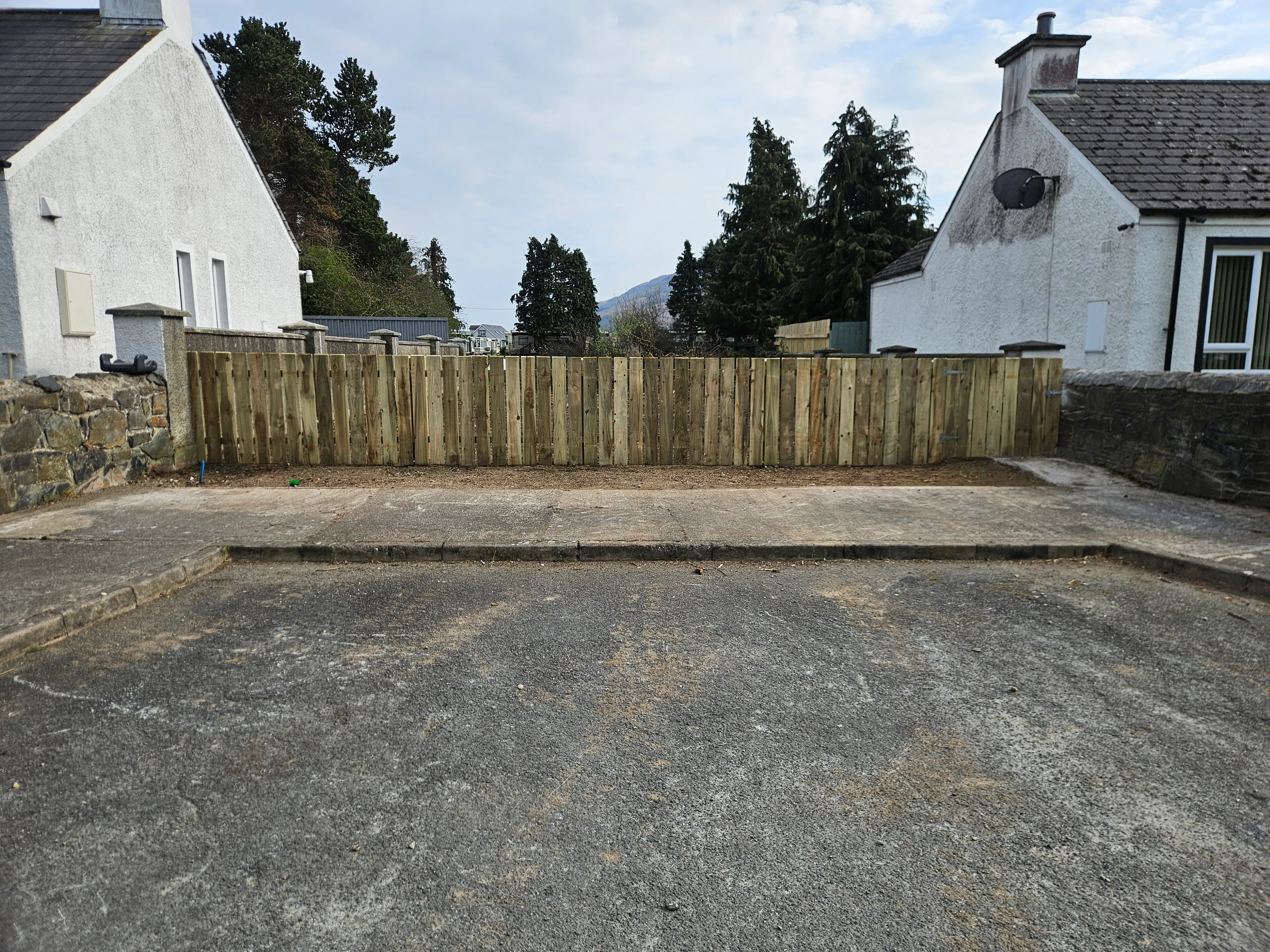
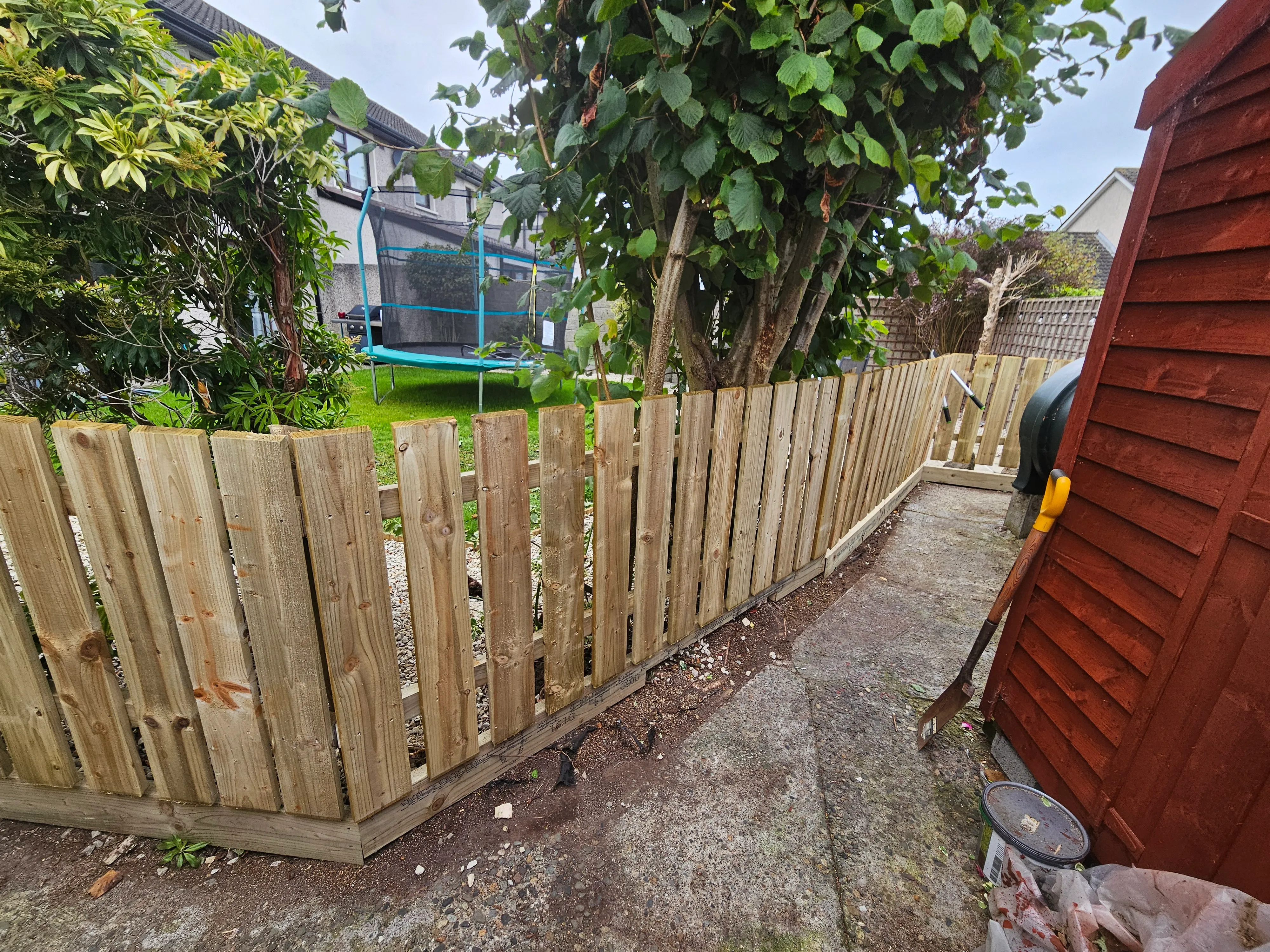
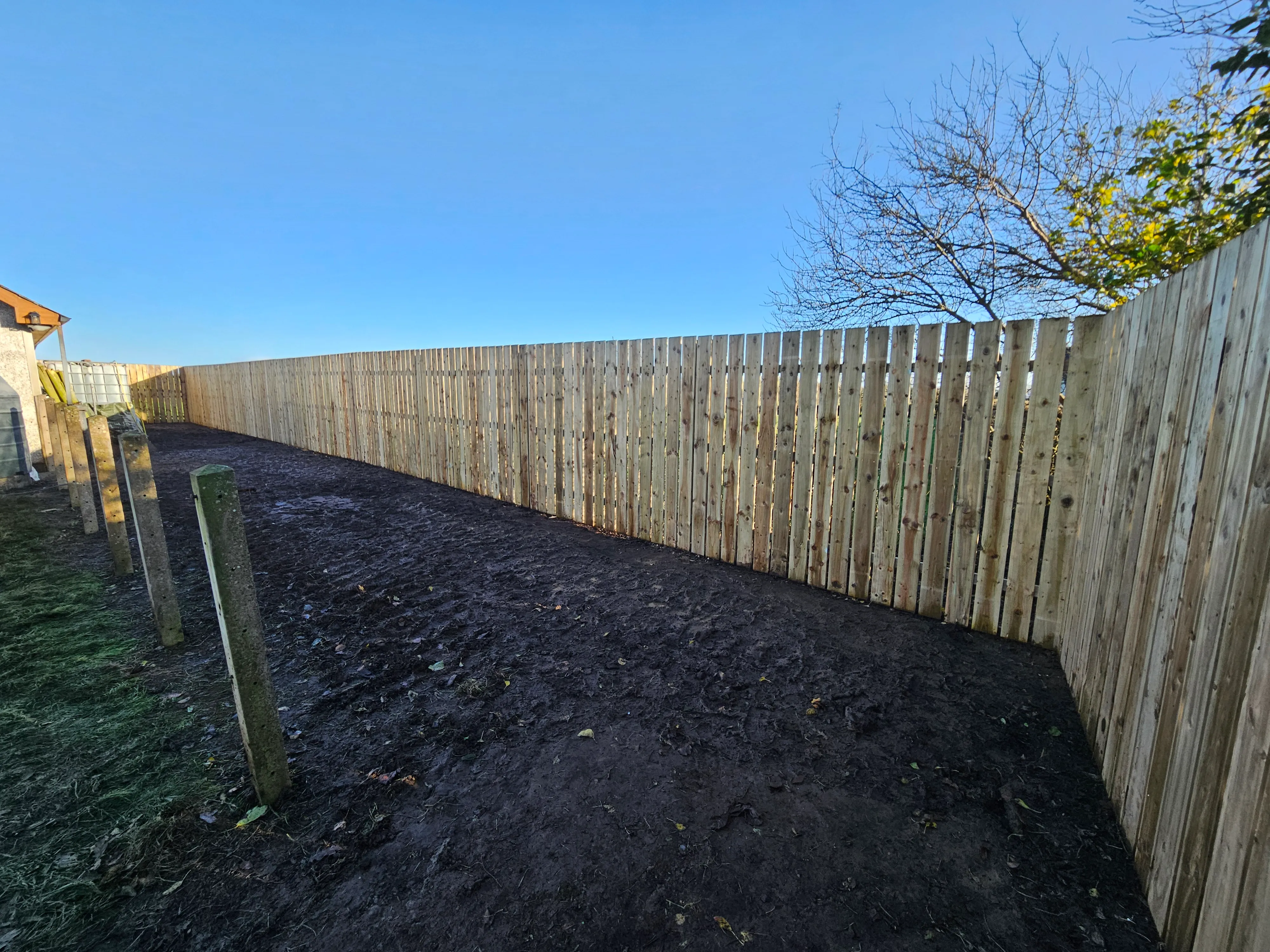
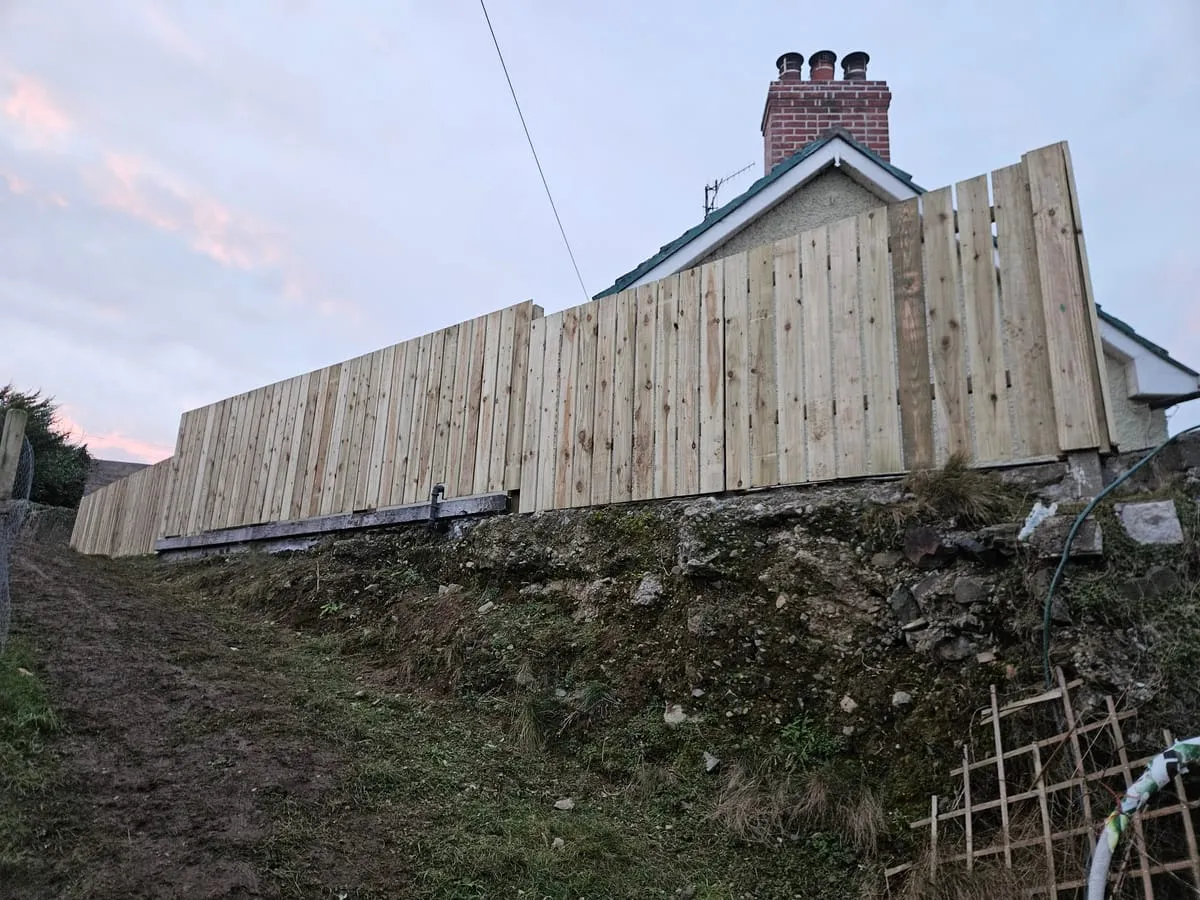
Closeboard fencing (feather-edge boards overlapping vertically) is the standard choice for privacy: solid, windproof, long-lasting when built correctly with concrete posts. The concrete posts matter — timber posts in Irish soil conditions rot out at ground level within 8–12 years. Concrete posts eliminate that problem entirely.
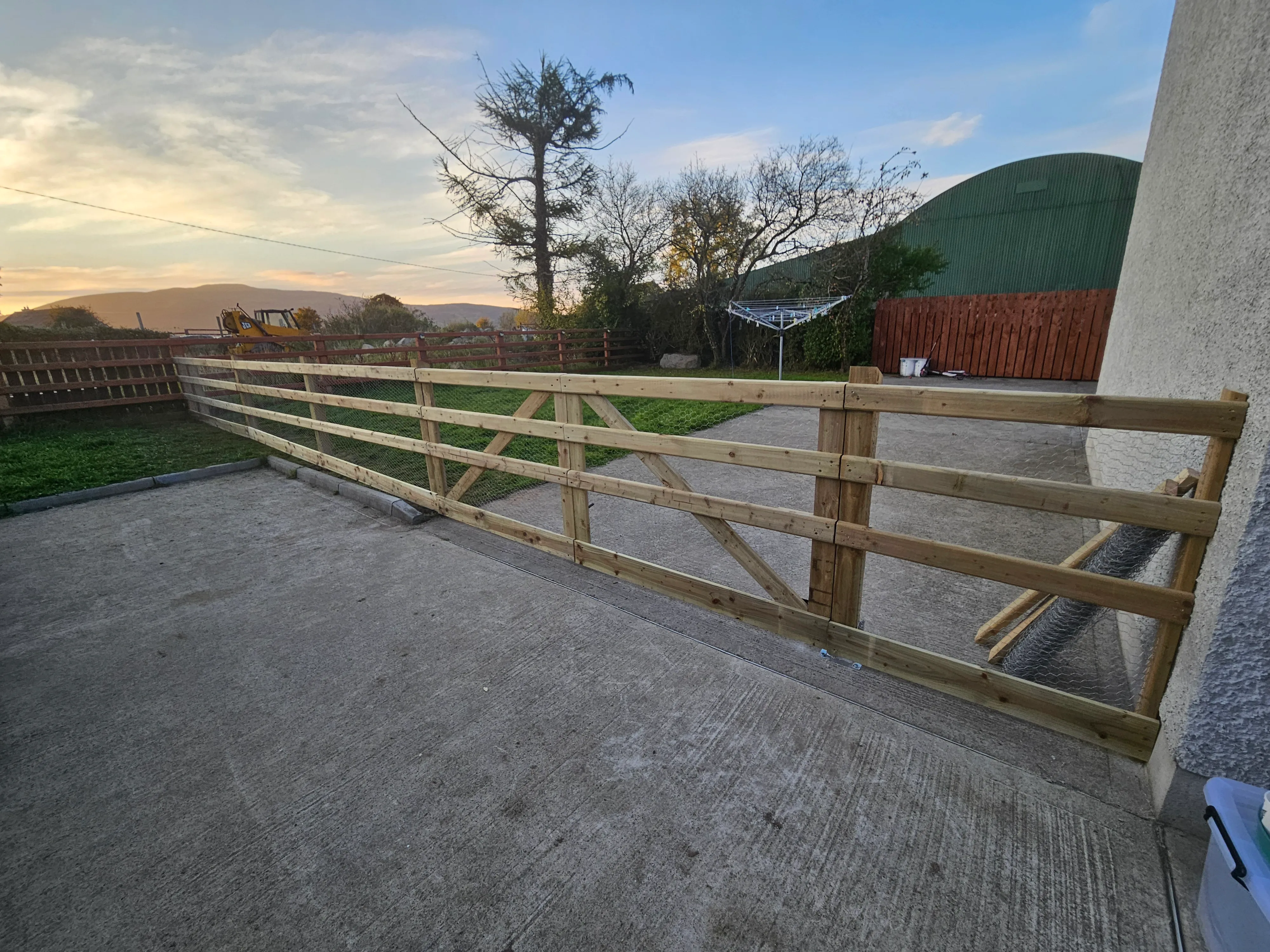
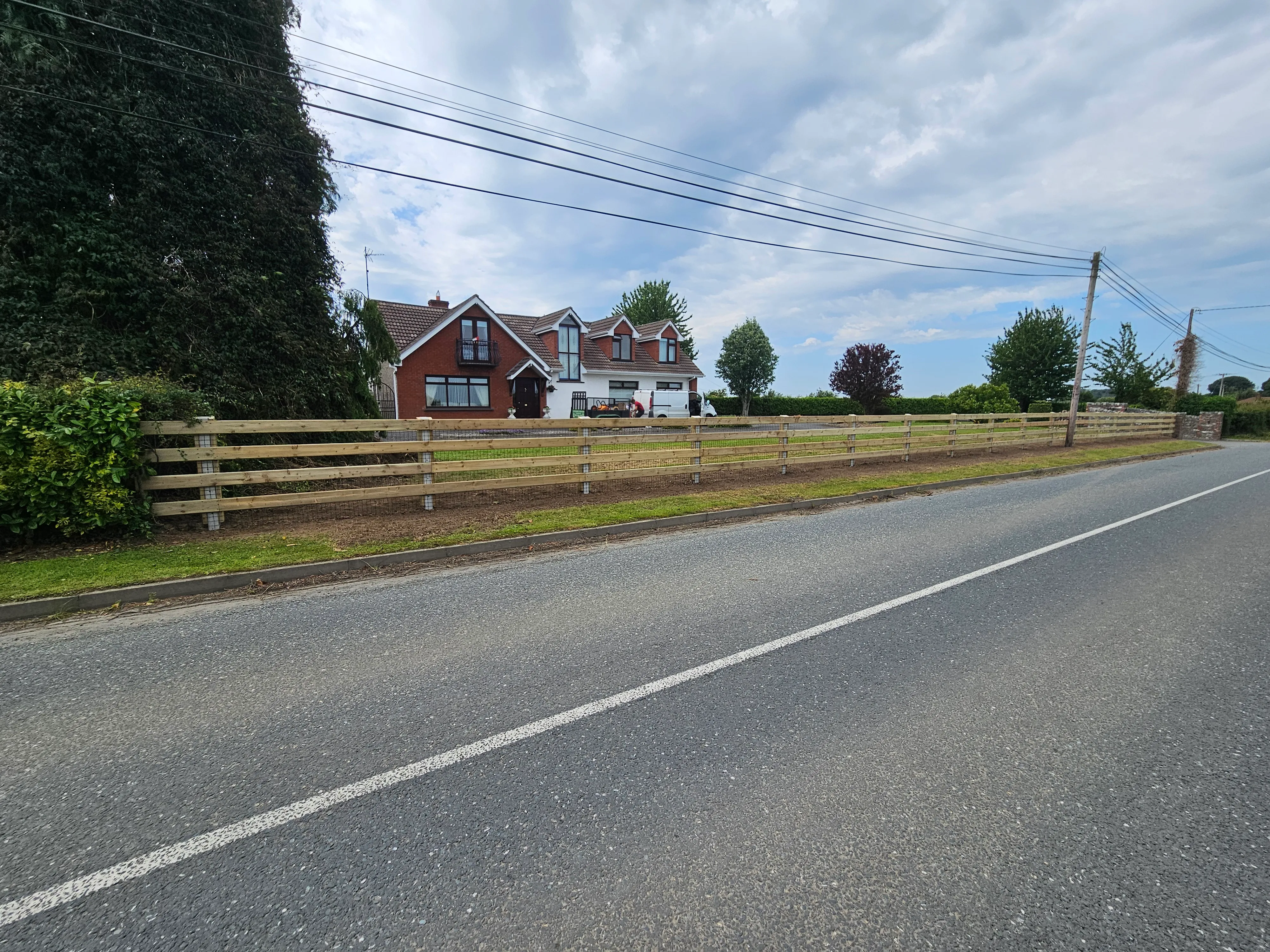
Horizontal slatted panels have become very popular over the last few years, and they look excellent. The slatted design also handles wind better than a solid panel fence because some air passes through, which reduces the leverage on posts during storms. Worth considering if your garden is exposed.
Trellis toppers are a good option when you already have a 1.2–1.5 metre wall or fence and want to add height without the cost or look of a full fence replacement. Fix a trellis panel on top, plant a clematis or climbing rose, and within two seasons you have effective coverage with a softer appearance.
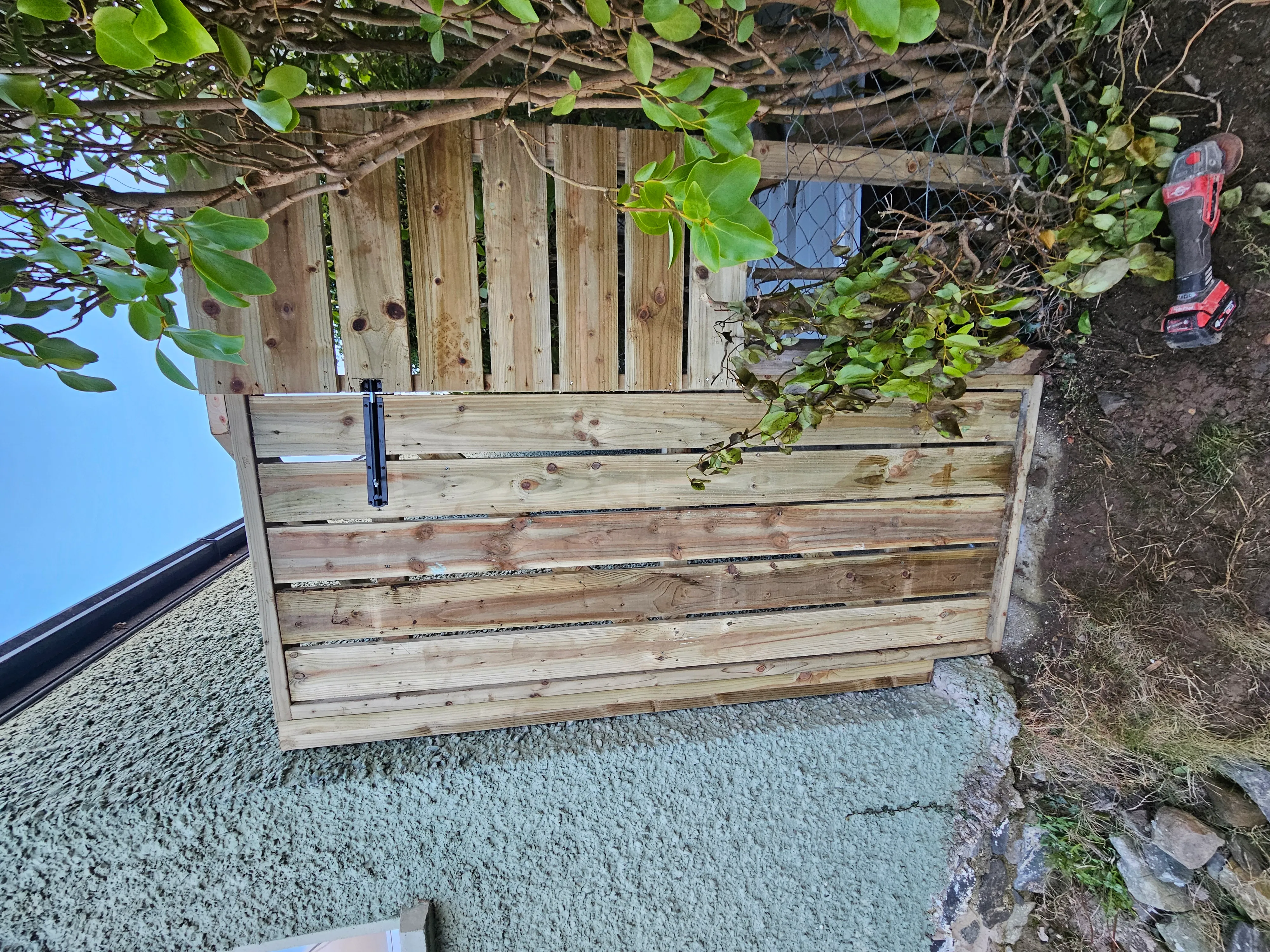
We install fencing across Dundalk, Blackrock, Omeath, Carlingford, and all of County Louth — you can see examples of our fencing work here.
Hedging — The Living Alternative
Hedging is the traditional Irish solution for garden boundaries, and for good reason: a well-established hedge is effective, attractive, and improves with age in a way a fence never does. The downside is time — most hedges take three to five years to provide meaningful screening from a young plant.
Laurel (cherry laurel) is the most popular screening hedge in County Louth gardens right now. It grows fast — 40 to 60 centimetres per year — and provides dense, year-round evergreen coverage. The leaves are large and glossy, it tolerates shade, and it’s not fussy about soil. The trade-off is that it needs cutting at least once a year to keep it from becoming a tree. If you buy a semi-mature laurel at 1.5 metres, you’ll have effective privacy within one to two seasons.
Privet is a slower, tidier option that suits more formal gardens and holds its shape well with two cuts a year. Not fully evergreen in hard winters, but generally holds most of its leaves in Louth’s relatively mild coastal climate.
Leylandii is effective and fast but has earned its reputation for trouble. It doesn’t stop growing, it casts heavy shade, and it can quickly become a relationship-ending dispute with neighbours. We don’t recommend it unless you’re screening a very large boundary far from any neighbouring property.
Native hedgerow mixes — hawthorn, blackthorn, hazel, holly — are excellent for rural properties and boundary planting on larger sites. Wildlife-friendly, resilient, and genuinely beautiful. Not suitable as a formal privacy screen for a small estate garden.
Our hedge trimming service covers all hedge types across the county.
Trellis with Climbing Plants
Trellis alone provides almost no privacy — it’s mainly a support structure. But trellis combined with the right climbing plant can create a green, living screen within one to two seasons that looks far more attractive than bare fencing.
Clematis is the most popular choice: fast growing, flowers prolifically from spring through autumn depending on variety, and relatively low maintenance. Montana types are vigorous and will cover a large trellis in a few years. Jackmanii and other group 3 cultivars are cut back hard in late winter and reliably resprout.
Ivy gives the fastest, densest coverage but needs managing — it will eventually take over fencing, mortar, and anything else it attaches to. Good for covering an ugly wall or old fence rather than as a free-standing screen.
Roses on a trellis or fence topper are beautiful and provide reasonable coverage, but they’re deciduous — bare through winter and less useful as privacy screening during the months when you have windows open and neighbours in their gardens most.
Budget-Friendly Screening Options
Not every garden needs a full closeboard fence or semi-mature hedge to achieve reasonable privacy. If you’re working to a tight budget, there are some practical options that still deliver results.
Willow or hazel hurdle panels are one of the most affordable screening options available. They look attractive in a cottage-style garden, can be fixed to existing posts, and cost significantly less than timber panels. The trade-off is lifespan: expect three to five years before they start to deteriorate. They work well as a temporary screen while a hedge behind them establishes.
Pallet wood screens, built from reclaimed timber, are another low-cost option if you’re handy with basic tools. Sanded and treated with a garden wood oil, they can look surprisingly good. They won’t last as long as purpose-built fencing, but they cost almost nothing beyond time and preservative.
Planting your own bare-root hedging in winter is far cheaper than buying pot-grown or semi-mature plants. Bare-root griselinia, laurel, or privet can be purchased for a fraction of the cost of container-grown stock. The trade-off is patience: you will wait two to three years for effective coverage rather than one.
Screening Plants That Thrive in Irish Conditions
Beyond the hedging species covered above, there are some excellent screening plants that suit the Irish climate particularly well.
Griselinia littoralis is increasingly popular across County Louth. It’s evergreen, tolerates salt spray in coastal gardens around Carlingford and Blackrock, and produces a dense screen of bright green foliage. It grows steadily at around 30cm per year and responds well to clipping. It’s one of the best choices for exposed or coastal sites.
Bamboo (Phyllostachys or Fargesia varieties) creates a striking contemporary screen. Fargesia types are clump-forming and won’t spread aggressively, making them the safer choice for smaller gardens. They provide year-round coverage, handle Irish winters well, and add a distinctive look. Plant in a contained bed or use a root barrier to prevent spreading varieties from becoming invasive.
Photinia (Red Robin) offers dense screening with the bonus of bright red new growth in spring. It’s evergreen, grows reasonably fast, and tolerates most soil types found in Louth. It needs pruning once or twice a year to keep it thick and at the right height.
For any of these options, our hedge trimming service can keep established screens in shape year-round.
Free-Standing Screening vs Living Screens
The choice between a free-standing screen (fence, panel, or trellis) and a living screen (hedge or planted barrier) comes down to three things: how quickly you need privacy, how much ongoing maintenance you’re prepared for, and how long you want it to last.
Free-standing panels and fences give immediate results. They go up in a day and you have full privacy that evening. But they have a fixed lifespan, they can look stark, and they’re vulnerable to storm damage in exposed locations. Horizontal slatted screens are a good middle ground here, as they handle wind better than solid panels and have a more modern appearance.
Living screens take longer to establish but improve year on year. A well-maintained laurel or griselinia hedge at maturity provides better wind protection, sound dampening, and visual softness than any fence. The ongoing cost is an annual or twice-yearly trim rather than eventual replacement.
For many gardens in Louth, the best approach is both: install a fence for immediate privacy, then plant a hedge inside it. Once the hedge is established in three to four years, the fence becomes a secondary structure and can be removed or left in place as a support.
Screening for Windy Irish Gardens
Wind is one of the biggest challenges for garden screening in Ireland, especially in exposed locations along the Cooley Peninsula, the coast, and elevated sites inland. Solid fences act like a wall and create turbulence on the downwind side, which can actually make conditions worse in the garden. In severe storms, solid panels catch the full force of the wind and are more likely to blow down.
Slatted or hit-and-miss fencing allows some wind to pass through while still providing reasonable visual screening. This dramatically reduces wind loading on the posts and makes the whole structure far more resilient.
Dense hedging is the best long-term windbreak because it filters wind rather than blocking it. A hedge reduces wind speed for a distance of roughly ten times its height, compared to about three times for a solid fence. Griselinia, escallonia, and olearia are all good choices for windswept coastal gardens in Louth.
Bamboo Screening Panels
Pre-made bamboo roll fencing has become widely available in garden centres and DIY shops, and it’s a cheap, quick way to add coverage to an existing fence. It works, but it has a limited lifespan — most bamboo roll will start looking tatty within four to five years in Irish weather conditions. Fine as a temporary solution or for low-visibility areas; less suitable as a long-term primary screen.
The Overlooked Garden — Overhead Solutions
If the privacy issue is an upstairs window looking down into your patio or seating area rather than a side-on view, a horizontal fence won’t solve it. The options here are a pergola with a canopy, a sail shade, or strategic planting of a small tree to break the sightline. A well-positioned ornamental tree like a fastigiate hornbeam or a standard bay can block an overlooking window while taking up minimal ground space.
What We Recommend for Most Louth Gardens
For the majority of standard semi-detached or detached gardens in Dundalk, Blackrock, Ardee, and similar towns: closeboard fencing with concrete posts at 1.8 metres, combined with a climbing plant on the fence face. This gives you immediate full privacy, durability of 25+ years, and a softened look once the planting establishes.
If you want a more natural result and have patience, add a laurel hedge inside the fence line and remove the fence once the hedge is established.
For more detail on garden privacy fencing options specifically, or if you’re considering leylandii, read our guide on leylandii rules in Ireland before committing.
Get in touch for a free quote — we’ll survey the garden and give you an honest recommendation based on your specific situation.
Frequently Asked Questions
How high can a garden fence be in Ireland without planning permission?
In most cases, you can erect a fence up to 2 metres in height at the rear of a residential property without planning permission under the general exemptions in the Planning and Development Regulations. Restrictions may apply in protected structure areas, front gardens, or under specific estate covenants. Check with Louth County Council or your solicitor if you’re unsure.
What is the fastest growing hedge for privacy in Ireland?
Cherry laurel is the fastest-growing evergreen hedge widely available in Ireland, typically adding 40–60cm per year in reasonable conditions. It provides dense, year-round coverage and tolerates the damp, mild climate of County Louth well. Leylandii grows faster but is difficult to control and can cause neighbour disputes.
Does trellis count as a fence for planning purposes?
Generally yes — a trellis used as a boundary structure is treated the same as fencing for planning purposes. If it’s being added to the top of an existing wall or fence, the combined height is what counts for the 2-metre exemption threshold.
What screening works for an overlooked patio?
If the overlooking is from an upstairs window directly above or at a steep angle, a vertical fence won’t help much. A pergola or shade sail provides the most direct solution. A strategically placed small tree can also work well — a fastigiate or upright variety takes up little ground space while blocking a specific sightline. We can advise on the best approach during a free site visit.
What is the cheapest way to screen a garden in Ireland?
Bare-root hedging planted in winter is the most affordable long-term solution. Griselinia, privet, or laurel bare-root plants cost a fraction of pot-grown stock. For immediate but temporary screening, willow hurdle panels or reclaimed pallet wood screens are the cheapest options. Combining a budget fence with bare-root hedging behind it gives you instant privacy while the hedge grows in.
What screening plants work best in windy Irish gardens?
Griselinia, escallonia, and olearia are all excellent choices for exposed or coastal gardens in Ireland. These species tolerate wind and salt spray, remain evergreen through winter, and produce dense growth that filters wind effectively. Avoid solid panel fencing in very windy locations as it catches the wind and is more likely to blow down in storms.
How long does it take for a laurel hedge to provide privacy?
Starting from a bare-root or pot-grown plant at 60–90cm, a laurel hedge typically reaches 1.5 metres within two to three years in good conditions. Starting from semi-mature plants at 1.2–1.5 metres, you can have effective screening within one to two growing seasons. The investment in larger plants upfront is usually worth it for privacy screening purposes.