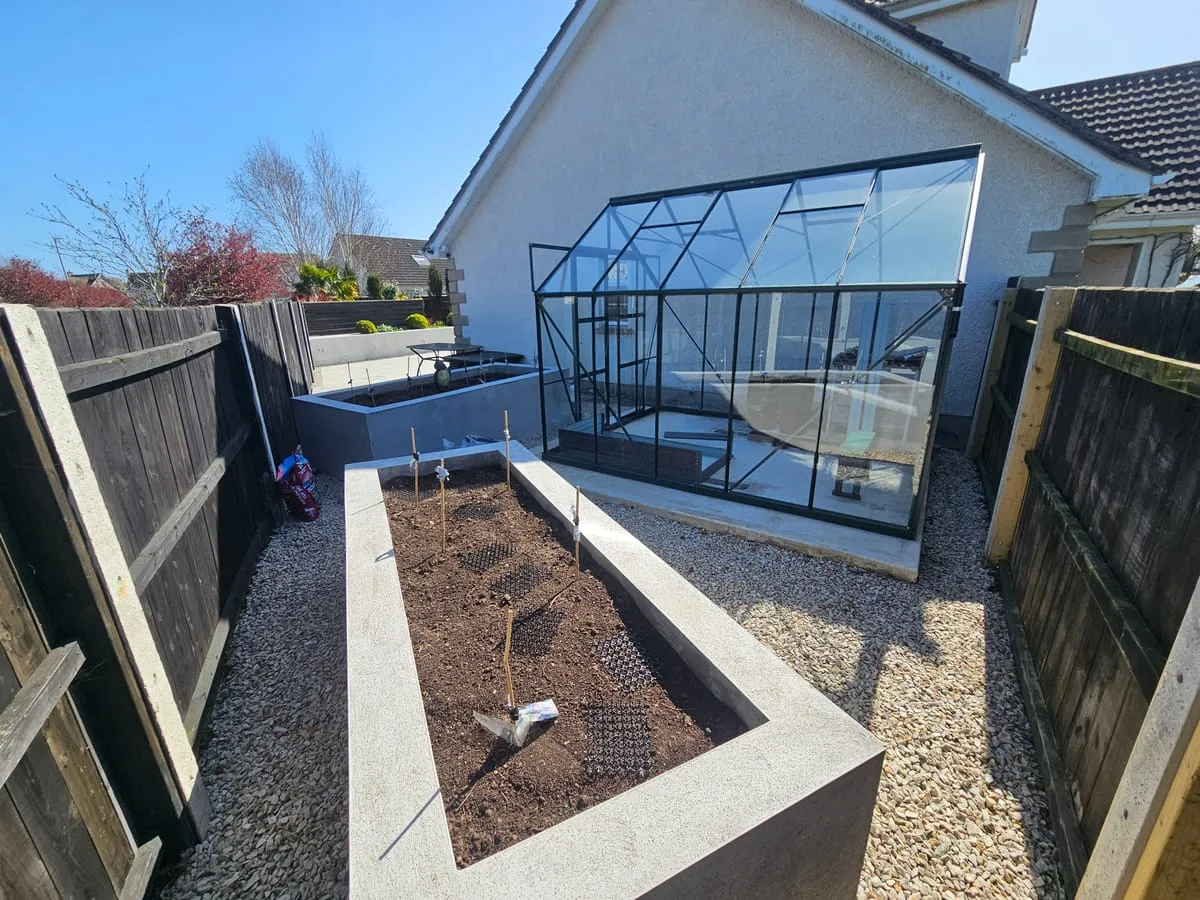
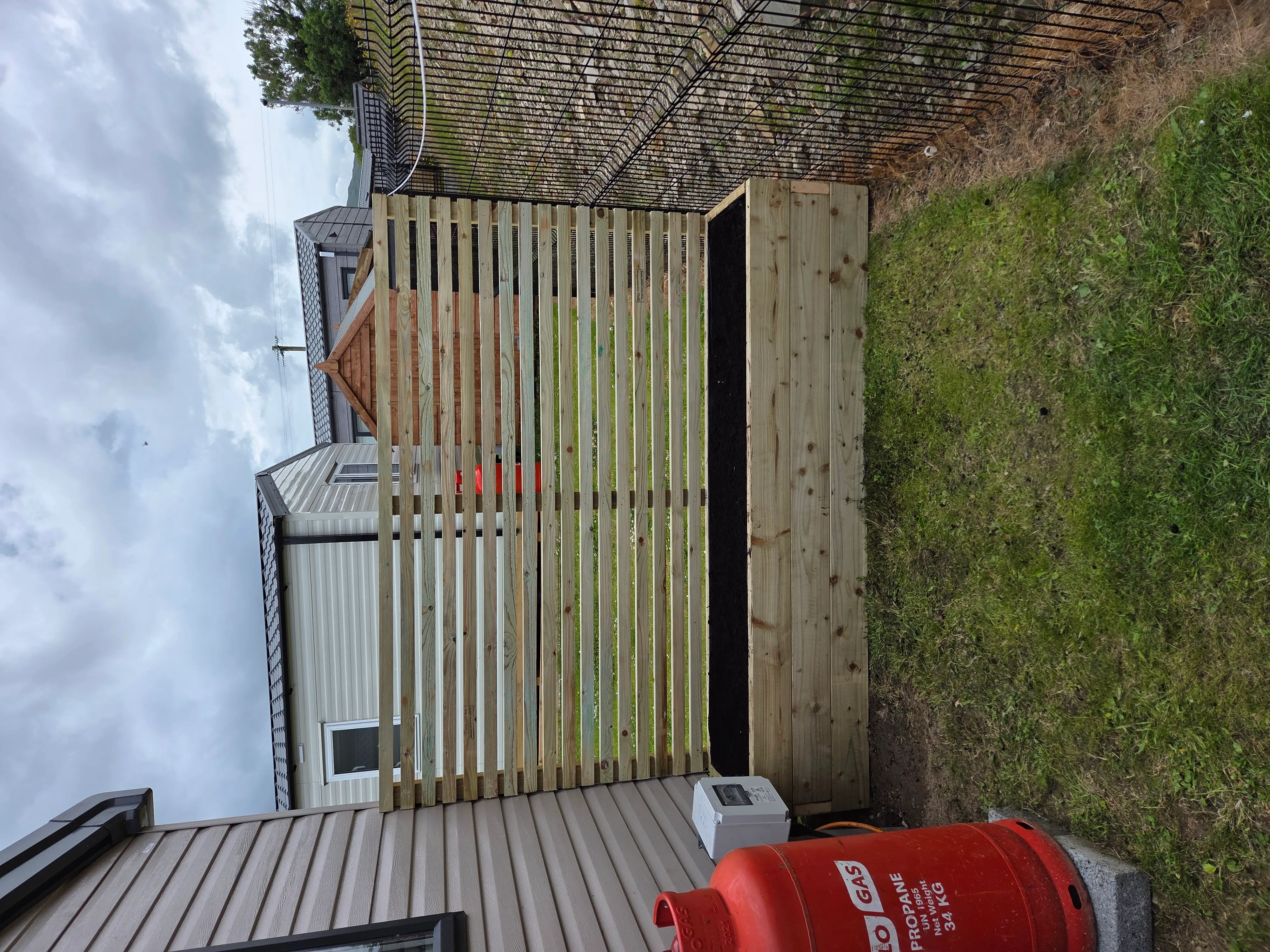
Not every garden in Ireland is flat. In fact, many properties across Dundalk and County Louth sit on gently sloping or uneven ground, and some have quite dramatic changes in level from the back door to the end of the garden. While a slope might seem like a challenge, it is actually an opportunity. Raised and multi-level decking can transform an awkward gradient into one of the most attractive and usable outdoor spaces imaginable.
In this guide we will explore the benefits of raised decking, share design ideas that work particularly well in Irish gardens, and walk through the practical considerations you need to keep in mind when planning a raised deck.
Why Raised Decking Works So Well for Sloped Gardens
A sloped garden that might otherwise be difficult to use can become a genuinely functional outdoor living space with the right decking design. Here is why raised decking is such an effective solution.
It Creates Usable Flat Space
The most obvious benefit is that a raised deck gives you a level platform on ground that would otherwise slope away. Instead of a garden you can only look at, you get a space where you can place a table and chairs, set up a barbecue area, or simply sit and enjoy the view. For families with young children, a flat, safe surface for outdoor play is invaluable.
It Works With the Land, Not Against It
Unlike patio construction on a slope, which often requires significant excavation and retaining walls, a raised deck can be built above the existing ground level on a supporting framework. This means less disruption to the existing landscape, less earthmoving and often a quicker, less costly installation. The natural contour of the garden is preserved beneath the deck rather than being bulldozed flat.
It Adds Visual Interest and Character
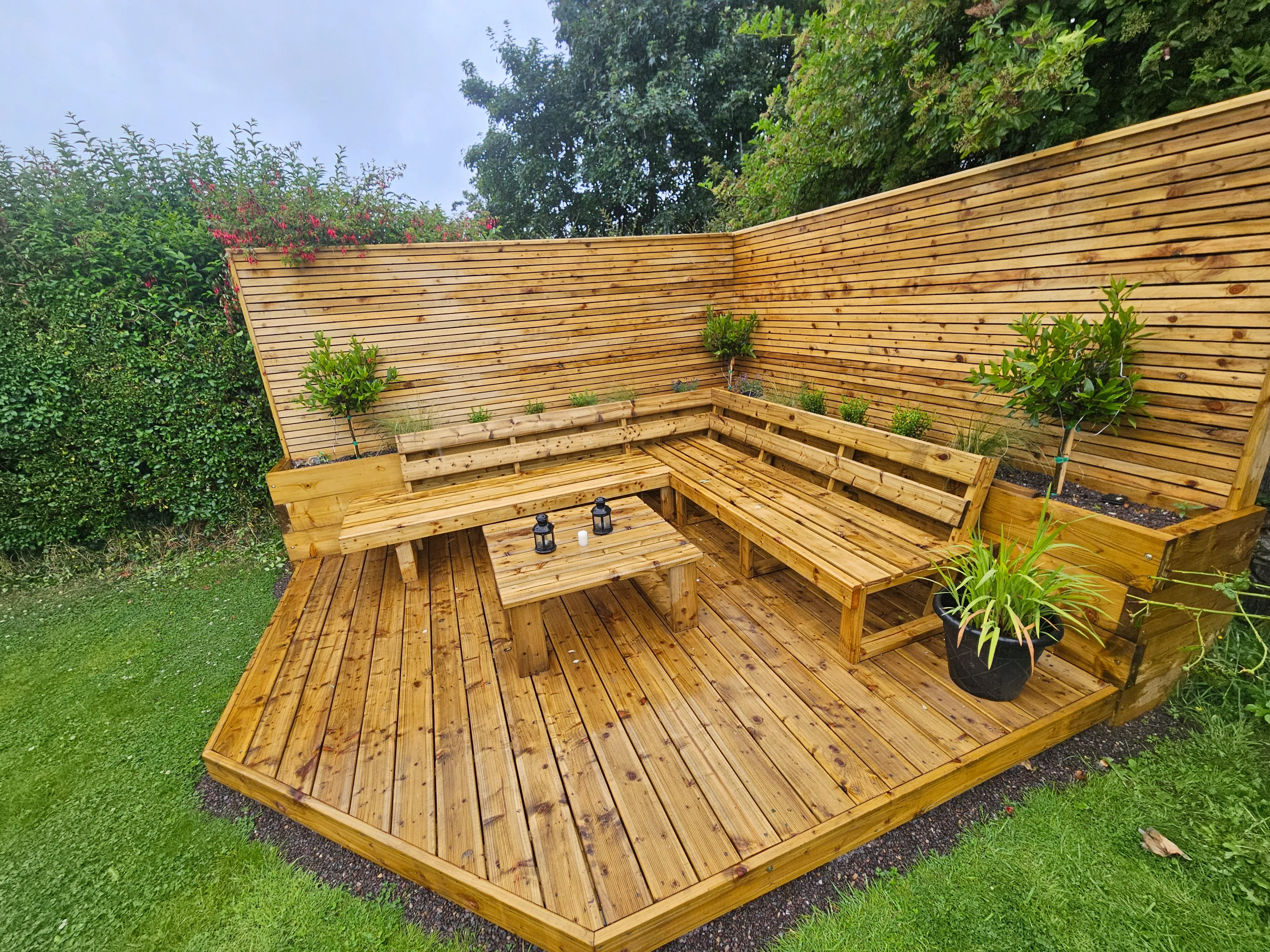
A single flat deck is functional, but a multi-level design adds real architectural interest to your garden. Changes in level create natural zones for different activities, draw the eye through the space and give even a modest garden a sense of depth and scale. A well-designed raised deck becomes a feature in its own right, not just a functional platform.
It Can Improve Your View
Raising the deck level even by 60 to 90 centimetres can significantly change the perspective from your seating area. In many Dundalk gardens, a modest elevation gain is enough to see over perimeter fences and hedges, opening up views of the Cooley Mountains, Dundalk Bay or the surrounding countryside that you would never enjoy from ground level.
Design Ideas for Raised and Multi-Level Decks
Here are some of the most effective raised decking designs we have built in gardens across County Louth. Each can be adapted to suit your garden’s specific slope, size and orientation.
The Tiered Terrace
This classic multi-level design uses two or three deck platforms at different heights, connected by steps. Each tier can serve a different purpose: perhaps a dining area at the top near the house, a lounging space on the middle tier, and a sun deck or play area at the lowest level.
The beauty of this design is that it follows the natural slope of the garden in gentle steps rather than fighting it. Each tier feels like a distinct room within the garden, and the transitions between levels create natural opportunities for planting, lighting and other design features.
Works best for: Gardens with a steady, moderate slope. Ideal where you want to create multiple distinct outdoor zones.
The Elevated Platform
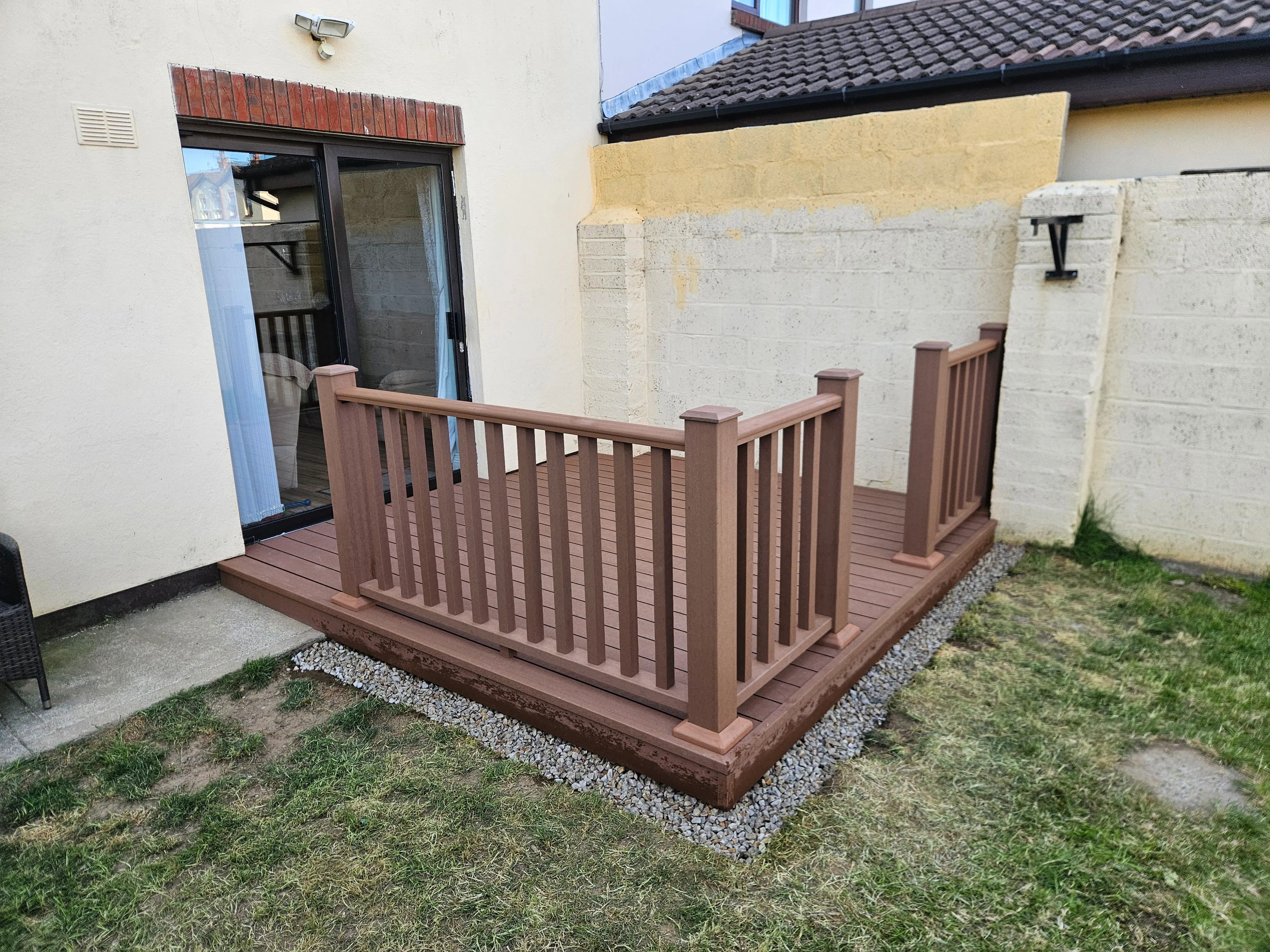
If your garden drops away steeply from the back of the house, an elevated platform deck can extend your living space outward from the back door at the same level as your indoor floor. The deck is supported on sturdy posts and a structural framework, with the ground falling away beneath.
This design creates a dramatic effect, almost like a balcony overlooking your garden. Railings are essential for safety, and the space beneath the deck can be screened with lattice panels or planting to keep it looking tidy.
Works best for: Gardens with a steep initial drop from the house. Properties where you want a seamless indoor-outdoor transition at the back door level.
The Wraparound Deck
A wraparound design extends the deck around two or more sides of the house, following the contour of the building and the slope of the land. Different sections can sit at different heights, connected by steps or gentle ramps. This creates a generous outdoor circulation space and gives you the option of choosing sun or shade throughout the day by moving to a different section.
Works best for: Corner or L-shaped properties. Gardens where the sun moves across different sides of the house throughout the day.
The Floating Island
For gardens with a gentler slope, a raised deck platform positioned away from the house can create a wonderful focal point. Connected to the house by a pathway or stepping stones, a floating island deck becomes a destination within the garden, a quiet retreat surrounded by planting where you can sit and take in the whole garden from a new perspective.
Works best for: Larger gardens with a gentle to moderate slope. Homeowners who want a sense of journey and discovery in their outdoor space.
The Split-Level Entertaining Space
This design combines a larger upper deck for dining and socialising with a smaller lower deck that can house a fire pit, hot tub surround or cosy seating nook. Wide, generous steps between the two levels can double as informal seating during gatherings, making the whole structure feel sociable and connected.
Works best for: Homeowners who enjoy entertaining outdoors. Gardens where you want a dedicated relaxation zone separate from the main social area.
Practical Considerations for Raised Decking in Ireland
Building a raised deck involves more planning and structural consideration than a simple ground-level platform. Here are the key factors to think about.
Planning Permission
In Ireland, a deck that is more than one metre above ground level may require planning permission from your local authority. Even below this threshold, there are rules around proximity to boundaries, overall site coverage and impact on neighbours. Before committing to a design, it is always wise to check with Louth County Council or consult with your installer about the current regulations. Getting this right at the outset avoids costly problems later.
Structural Engineering
A raised deck is a structural project. The framework of posts, bearers and joists must be correctly sized and spaced to safely carry the intended loads. The foundations, whether concrete pads, screw piles or post anchors, must be appropriate for the ground conditions on your site. In County Louth, soil types can vary significantly even within a single garden, so an on-site assessment is essential.
For decks more than a metre or so above ground, a structural engineer’s input may be required to sign off on the design. This is a normal part of the process for elevated structures and ensures your deck is safe and compliant.
Drainage and Ground Conditions
One advantage of a raised deck is that it allows water to drain naturally beneath the structure. However, it is important to ensure that this drainage works properly. Water should not pool under the deck, as this can undermine foundations and create damp conditions that accelerate rot in the subframe timbers.
On sloping ground, water naturally runs downhill, so the space beneath your deck will need clear drainage paths. In some cases, a simple gravel layer or French drain beneath the structure is advisable. Your installer should assess this as part of the site survey.
Wind Exposure
Raised decks are more exposed to wind than ground-level structures, which is a particular consideration in coastal and elevated areas of County Louth. The subframe must be designed to resist uplift forces, and any railings, screens or canopies need to be securely fixed to handle strong gusts. The prevailing wind direction should inform the positioning of any sheltered seating areas and windbreak planting.
Access and Safety
Railings are a legal requirement for any deck more than 600 millimetres above ground level. Beyond the legal minimum, good railing design enhances both the safety and the appearance of a raised deck. Options include timber balustrades, glass panels for unobstructed views, metal spindles for a contemporary look, or a combination of materials.
Steps should be a comfortable height (ideally 150 to 180 millimetres per riser) with consistent dimensions throughout. On multi-level decks, consider incorporating low-level lighting into the steps for safe use after dark. For households with elderly or less mobile family members, a gentle ramp alongside or instead of steps can make the deck accessible to everyone.
Material Choice
All of the common decking materials, including pressure-treated softwood, hardwood, thermally modified timber and composite, can be used for raised decking. However, the subframe is always best built from durable, pressure-treated structural timber or, in some high-specification projects, galvanised steel.
The subframe of a raised deck is harder to inspect and maintain than a ground-level structure, so investing in quality materials for the framework is particularly important. Stainless steel or coated fixings should be used throughout to prevent corrosion.
Making the Most of the Space Beneath
One frequently overlooked benefit of a raised deck is the space it creates underneath. While this area may not be suitable for regular use, it can be put to good purpose:
- Screened storage: Lattice panels or skirting boards around the base of the deck create a hidden storage area for garden tools, outdoor cushions or children’s toys.
- Planting opportunities: Shade-loving plants such as ferns, hostas and foxgloves can thrive beneath a raised deck, softening the structure and integrating it into the garden.
- Utility space: The area beneath a deck can house garden irrigation equipment, outdoor electrical junction boxes or other utility items that you would rather keep out of sight.
- Wildlife habitat: Leaving sections open and planting around the base can create sheltered spots for hedgehogs and other garden wildlife, particularly if you incorporate a small hedgehog entrance.
Lighting Your Raised Deck
Lighting is especially important for raised and multi-level decks, both for safety and atmosphere. Here are some effective approaches:
- Step lights: Recessed LED lights built into the risers of each step ensure safe navigation between levels after dark.
- Post cap lights: Solar or low-voltage LED lights fitted to the tops of railing posts provide gentle ambient lighting around the perimeter.
- Spotlights: Uplighters positioned beneath the deck or at ground level can illuminate the structure from below, creating a dramatic floating effect at night.
- Festoon lights: String lights draped overhead between posts or a pergola structure bring warmth and atmosphere to evening gatherings.
Low-voltage LED systems are the safest and most energy-efficient option for outdoor decking. A qualified electrician should install any mains-connected outdoor lighting.
Get Started With Your Raised Deck Project
A raised or multi-level deck can genuinely transform how you use your garden, turning an awkward slope into the best feature of your outdoor space. The key to a successful project is good planning, proper structural design and experienced installation.
Seamus and Pete at Gardening Services Dundalk have been designing and building raised decking across County Louth for over 35 years. We have worked on every type of slope and ground condition the area has to offer, and we know what works well in local conditions.
If you have a sloped garden and have been wondering what to do with it, we would love to come and have a look. We will talk through the options, share ideas that suit your space and give you an honest view on costs and timescales. There is no charge and no obligation.
Visit our decking installation service page for details on what we offer, or call us on 085 168 5170 to arrange a visit. Let us help you turn that tricky slope into something special.