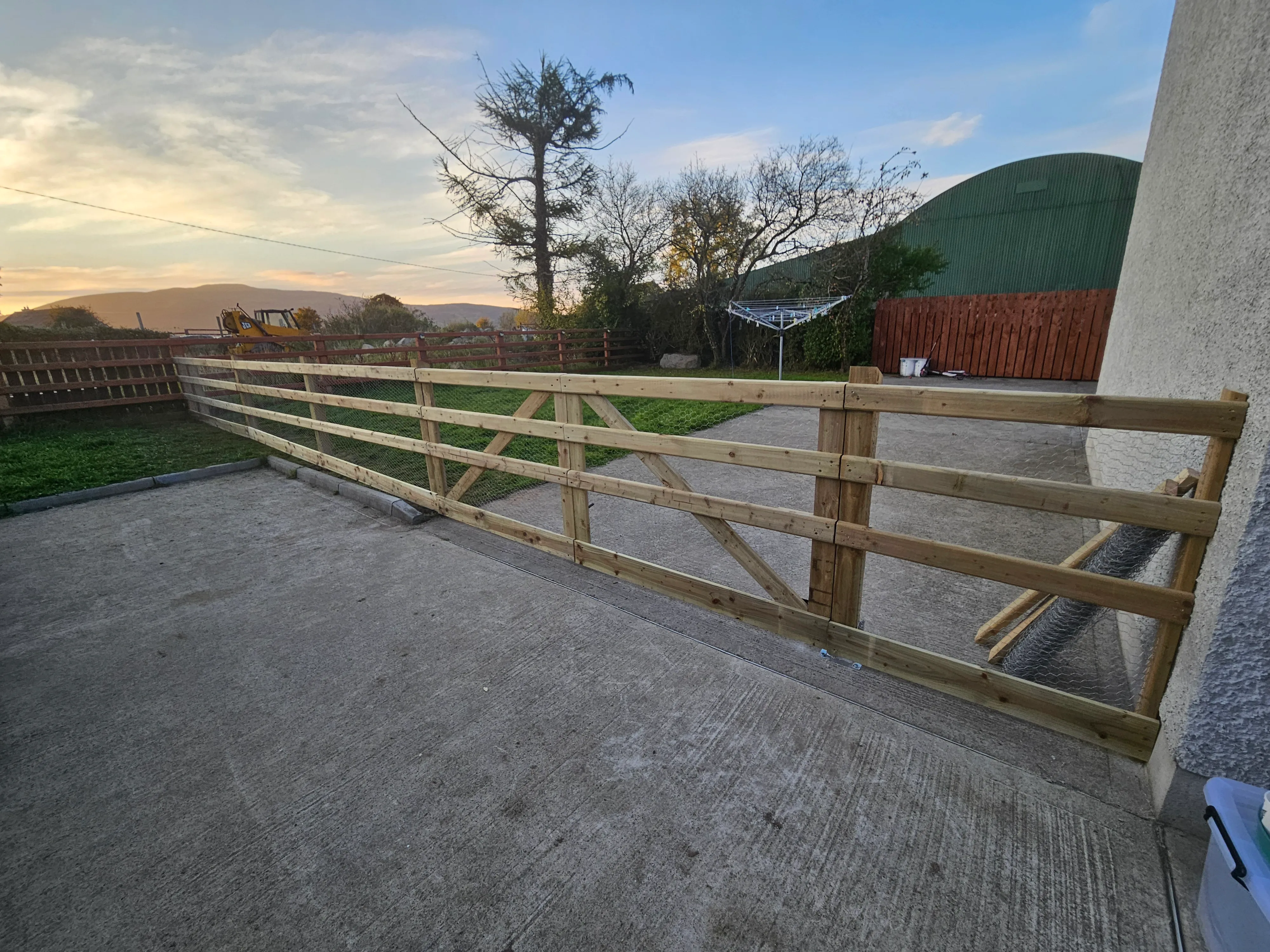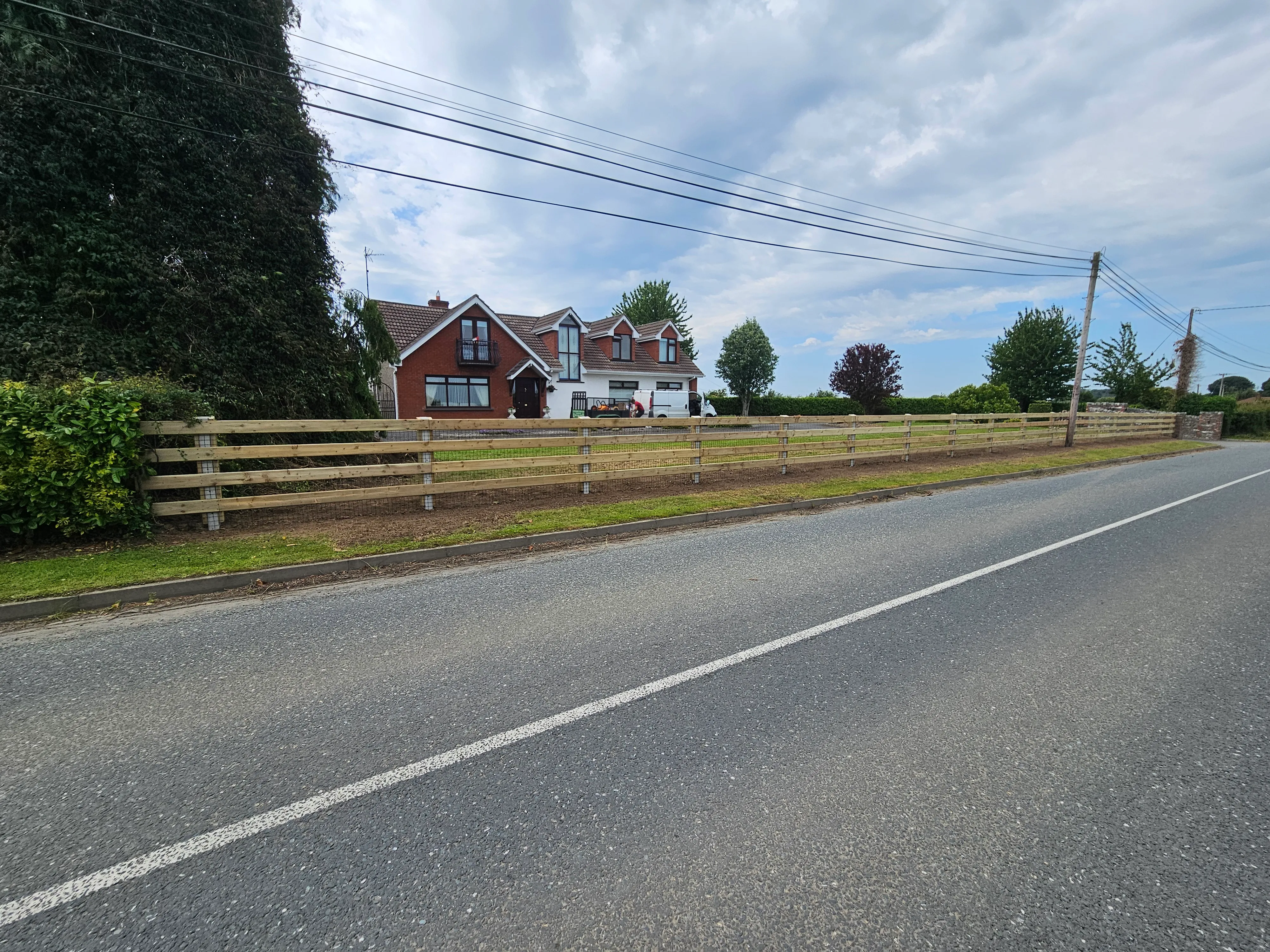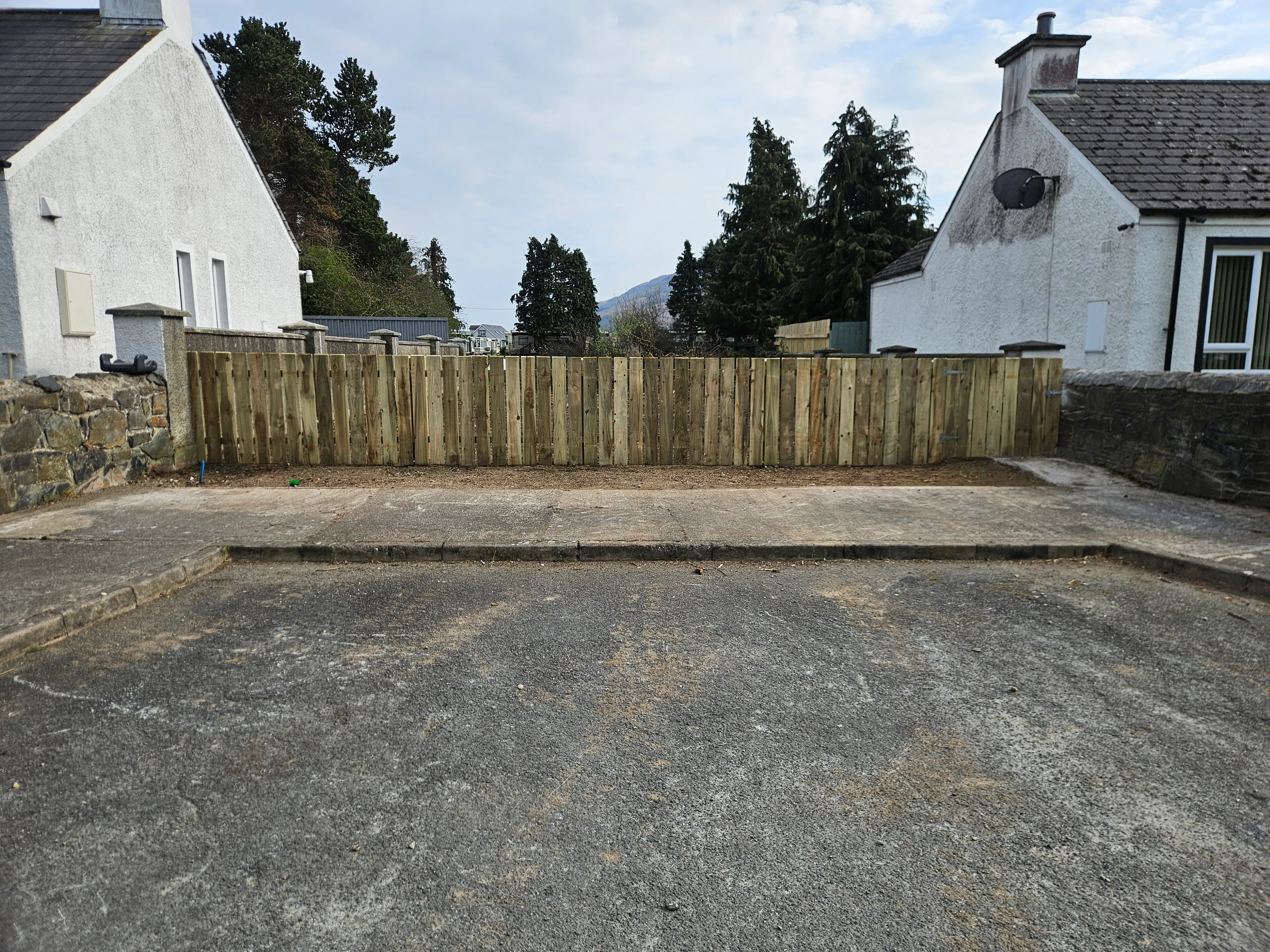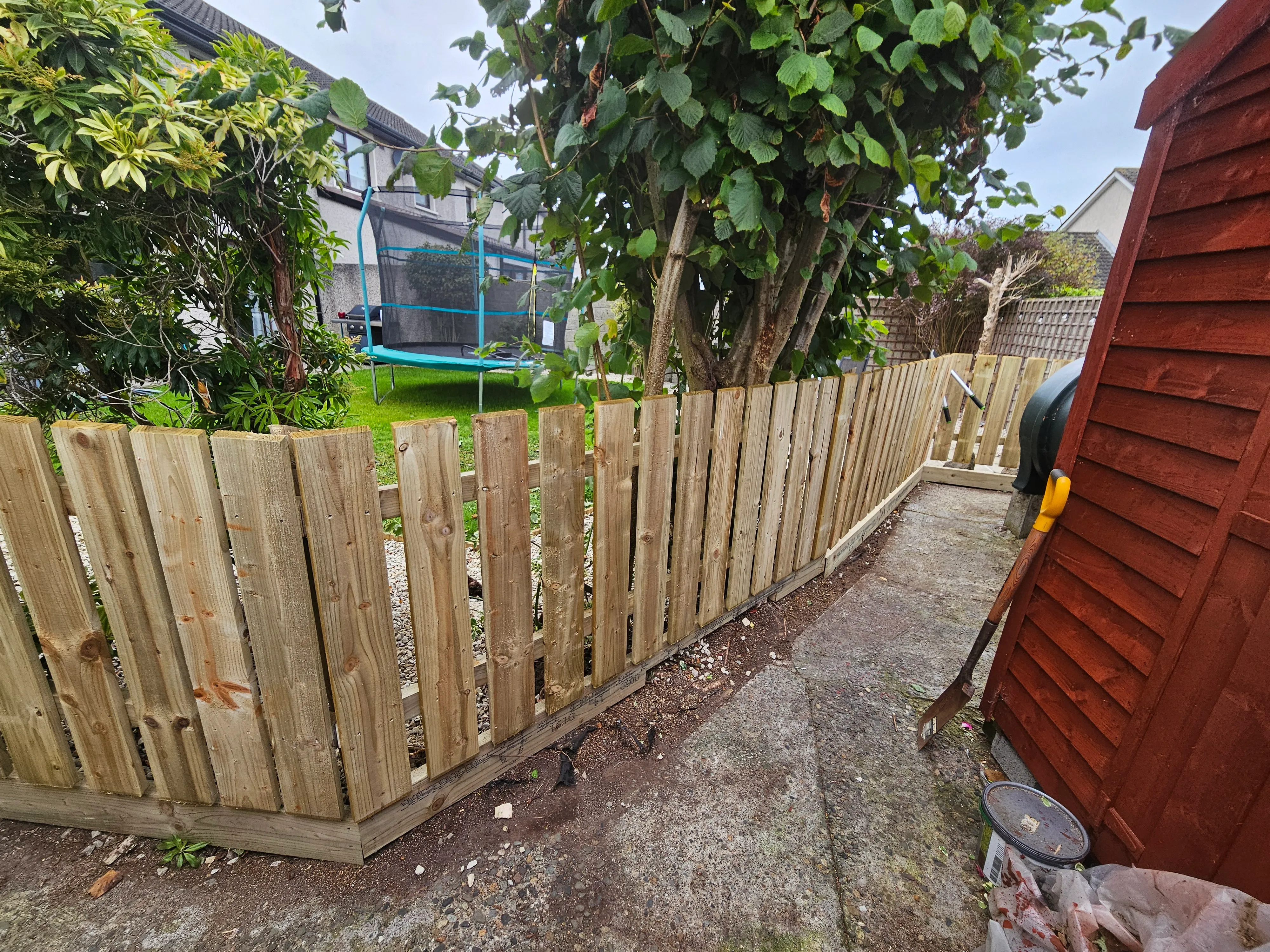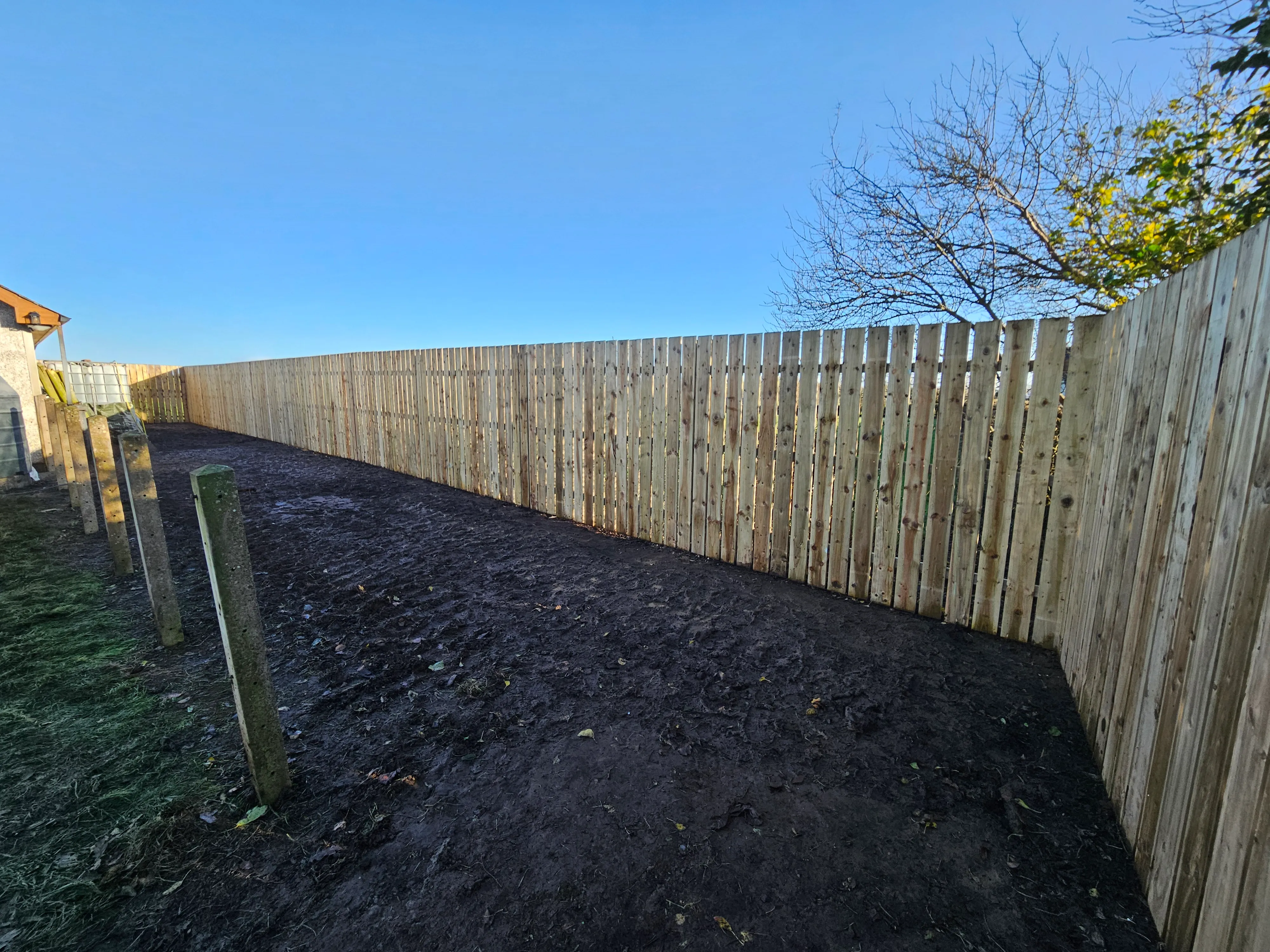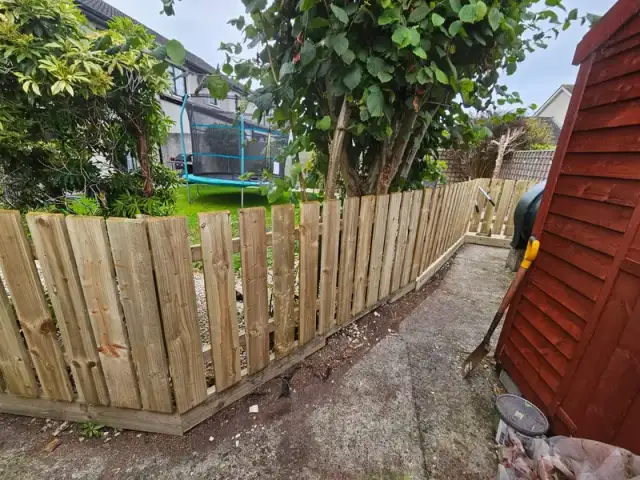
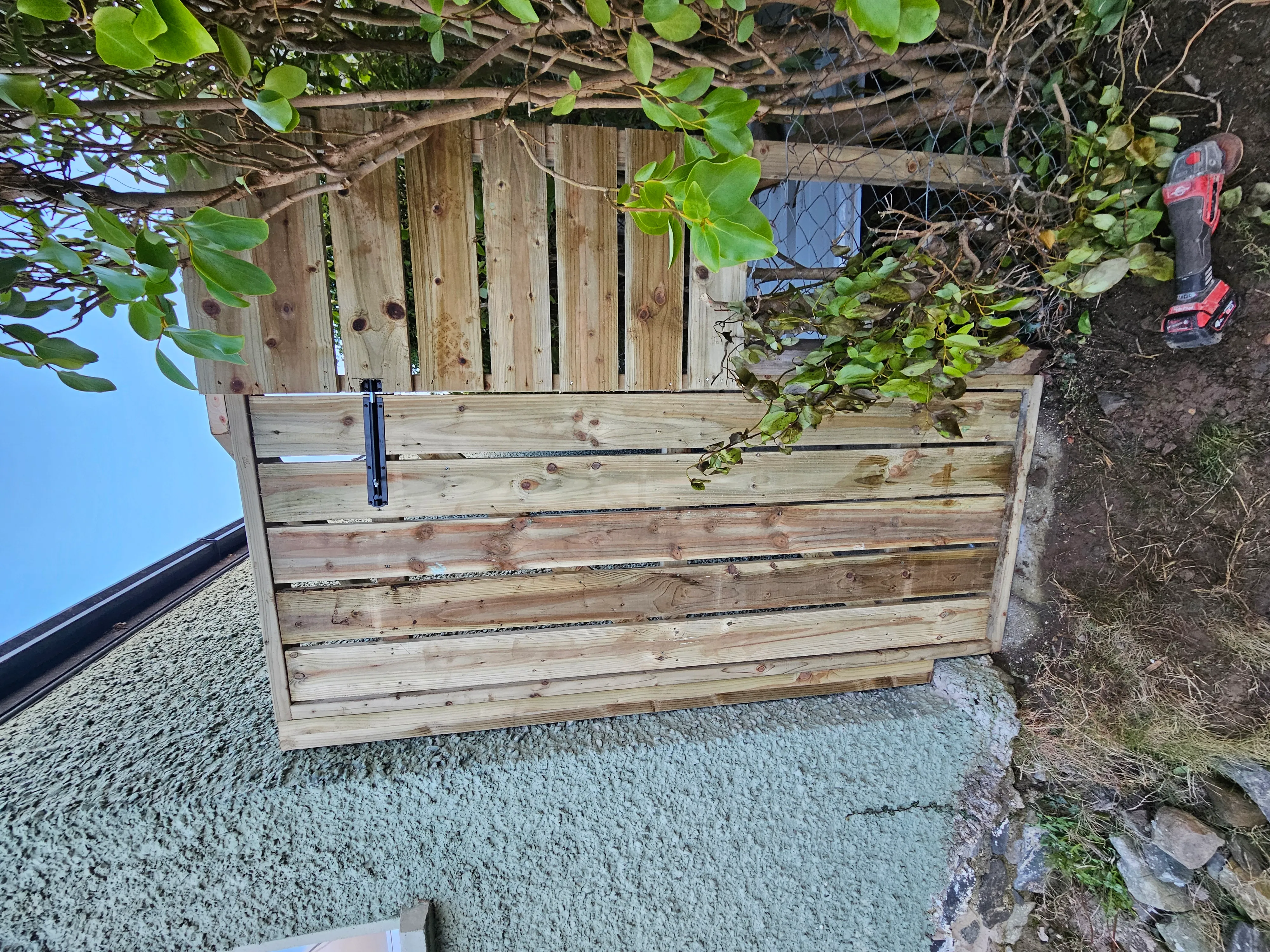
Every winter, storms batter Ireland’s east coast and inland areas alike. High winds, driving rain, and sudden gusts can bring down fences that seemed perfectly fine the day before. If you have woken up to a fence lying flat in your garden, you are not alone — storm damage to garden fences is one of the most common call-outs we deal with between October and March.
We have been repairing and replacing storm-damaged fences across Dundalk and County Louth for over 35 years. Here is our practical guide to what you should do when a storm takes down your fence, how to decide between repair and replacement, and what to know about insurance.
Step 1 — Assess the Situation Safely
Before you do anything, take a moment to check the area is safe.
- Look out for loose or hanging panels that could fall if the wind picks up again. Do not try to prop up a heavy section of fencing on your own — it can easily fall and cause injury.
- Check for damaged power lines or cables. If a fence has brought down a cable or fallen onto electrical infrastructure, stay well clear and call ESB Networks immediately.
- Watch for nails and screws sticking out of broken timber. Wear sturdy shoes and gloves if you need to move debris.
Once you are satisfied the area is safe, you can take a closer look at the damage.
Step 2 — Understand What Has Failed
The type of damage tells you a lot about what needs to happen next. Here are the most common scenarios:
Panels Blown Out, Posts Still Standing
This is the most straightforward situation. If the concrete or timber posts are still solid and upright, you usually just need new panels. This is a relatively quick and affordable repair.
Check that the posts have not shifted or started to lean. Push firmly against each one — it should not move. If the posts are solid, replacing the panels is all you need.
Posts Snapped or Leaning
If the posts themselves have failed, the repair is more involved. Timber posts usually fail at ground level where rot has weakened them over the years. A storm simply finishes the job that rot started.
Leaning concrete posts may have been loosened in the ground rather than broken. In some cases, they can be straightened and re-set. If a concrete post has cracked or snapped, it will need to be replaced.
Entire Sections Down
When multiple posts and panels have come down together, it is usually a sign that the fence was already weakened before the storm. The most common cause is a row of timber posts that have all rotted to a similar degree. One post fails, the strain transfers to the next, and the whole run goes down like dominoes.
The Fence Fell onto a Neighbour’s Property
This happens regularly. If your fence has fallen onto a neighbour’s garden, the first thing to do is talk to them. Most people are understanding — it is storm damage, not negligence. Agree between yourselves how and when the repair will happen, and whether the cost will be shared (more on that below).
Step 3 — Temporary Measures
If you cannot get the fence repaired straight away, there are a few things you can do to secure the area:
- Stand panels back up and prop them temporarily with stakes or heavy objects. This is not a permanent fix, but it can keep pets in and provide some privacy until the repair is done.
- Tie loose sections to the remaining posts with strong rope or cable ties to stop them blowing further.
- Clear any broken timber from pathways and areas where people walk, to avoid trips and injuries.
Do not try to carry out a permanent repair in the middle of stormy weather. Wait for the wind to die down and the ground to dry out enough to work safely.
Step 4 — Repair or Replace?
This is the big question, and the answer depends on the extent of the damage and the overall condition of the fence.
When Repair Makes Sense
A repair is usually the right call when:
- Only one or two panels have blown out and the posts are still solid
- A single post has failed but the rest of the fence is in good condition
- The fence is relatively new (under 10 years old) and was well built
- The overall structure of the fence is still sound
In these cases, replacing the damaged sections is straightforward and cost-effective. A good fencer can match new panels to the existing ones so the repair blends in well.
When Replacement Is the Better Option
Full replacement is usually better when:
- Multiple posts have rotted through and failed
- The remaining posts are soft or spongy when you push on them, suggesting they will fail soon too
- The fence is 15 years old or more and showing widespread signs of wear
- You have been carrying out repeated repairs to the same fence over the past few years
- The panels are warped, split, or crumbling in multiple places
If you find yourself in this situation, it can actually be more cost-effective to replace the entire fence rather than patching a section now and having to deal with another section failing in the next storm.
Step 5 — Talk to Your Insurer
Many homeowners do not realise that storm damage to garden fences can be covered by home insurance. It is worth checking your policy and making a claim if the damage is significant.
Tips for Insurance Claims
- Check your policy wording. Most standard home insurance policies cover storm damage to perimeter fences and walls, but there may be excesses, limits, or exclusions. Some policies only cover the fence if it is specifically listed.
- Take photos before you touch anything. Document the damage thoroughly with photos and video before you start any repairs or clear-up. Take wide shots of the full damage and close-ups of specific failures.
- Get a written quote for the repair or replacement. Your insurer will want to see a detailed quote from a professional fencer. We can provide this for you.
- Keep records of any temporary repairs you carry out and their costs, as these may also be claimable.
- Report the claim promptly. Most insurers have time limits for reporting storm damage. Do not wait weeks before contacting them.
- Check if your neighbour’s policy covers their side. In many cases, each homeowner is responsible for the perimeter on their own side. This varies depending on title deeds and local practice, so it is worth checking.
Who Pays for a perimeter Fence?
This is a common source of confusion. In Ireland, the responsibility for a perimeter fence is usually determined by the title deeds to the property. In many housing estates, the convention is that each homeowner is responsible for the fence on the left-hand side of their property (when viewed from the road), but this is not a hard legal rule.
If you are unsure, check your title deeds or talk to your solicitor. In practice, most neighbours in Dundalk and the surrounding area are happy to split the cost of a shared perimeter fence, especially when storm damage is involved.
Preventing Future Storm Damage
Once your fence is repaired or replaced, there are some steps you can take to reduce the risk of it happening again:
- Choose concrete posts for the replacement. They are stronger and more durable than timber, and they will not rot at ground level.
- Consider hit-and-miss fencing if your garden is exposed. Wind passes through the gaps rather than pushing against a solid surface.
- Fit concrete gravel boards to keep the base of the timber off the damp ground.
- Keep the fence well maintained. Regular treatment and prompt repairs to small problems help keep the fence strong enough to withstand storms.
- Trim overhanging trees that could fall onto the fence during high winds.
We Can Help Get Your Fence Back Up
Storm damage is stressful, but getting your fence repaired does not have to be. Seamus and Pete have been fixing storm-damaged fences across Dundalk, Drogheda, and County Louth for over 35 years. We respond quickly, carry out repairs to a high standard, and can provide detailed quotes for insurance claims.
If your fence has come down in a storm, give us a call on 085 168 5170. We will come out, assess the damage, and give you an honest recommendation on whether a repair or a full replacement is the right call. No hard sell — just practical advice and reliable workmanship. See our full fencing and storm damage repair services for more information.