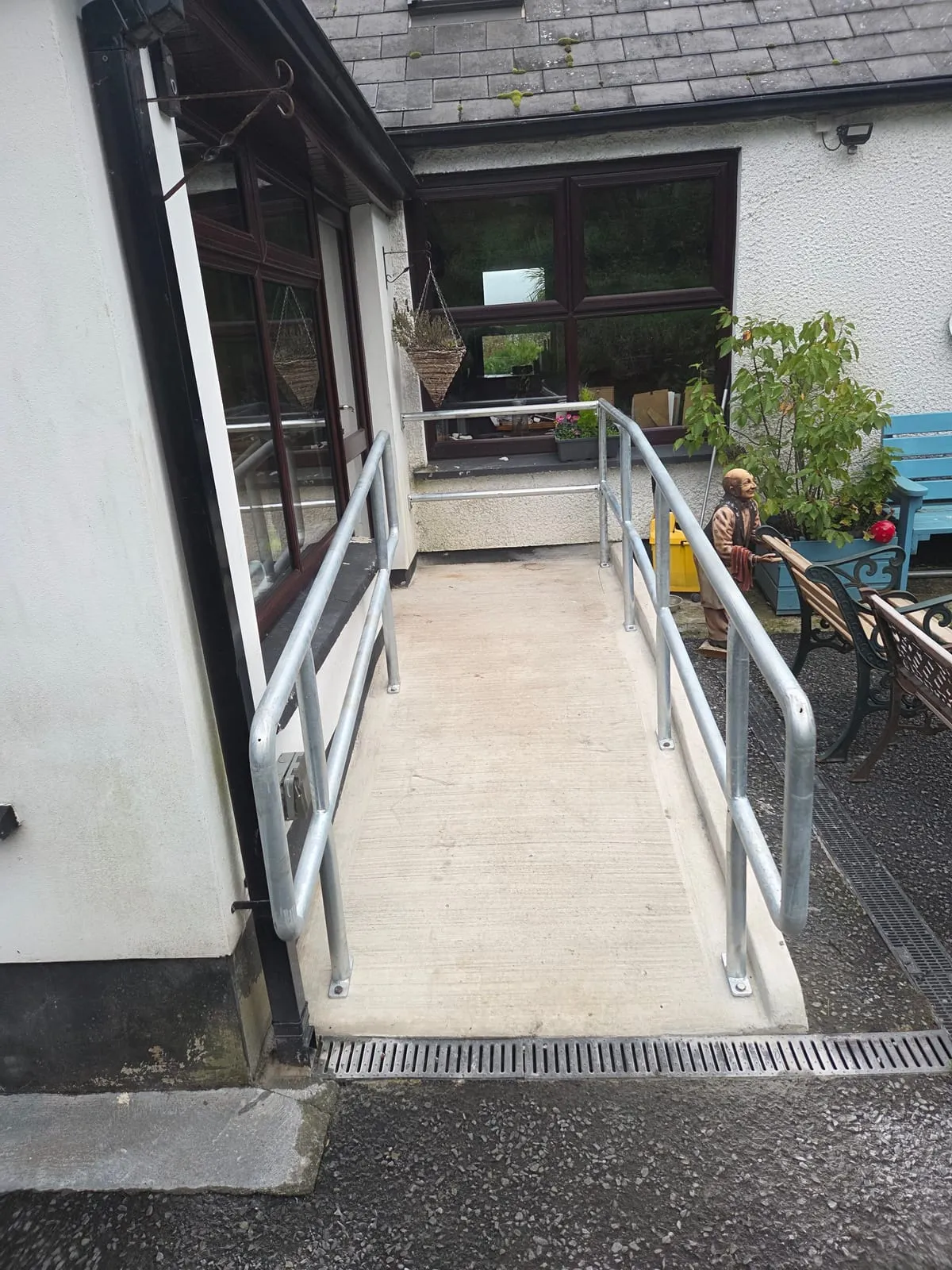
Concrete paths are one of those garden features that become invisible until they start looking bad. Once the green sets in — moss creeping in from the edges, algae creating a slippery film across the surface, dark stains building up over the years — it pulls the whole garden down with it. A path that runs from the gate to the front door is one of the first things people see, and it’s also one of the most straightforward things to restore.
In County Louth, the damp climate means concrete paths green up faster than they would in drier parts of the country. But the fixes are simple.
Why Concrete Paths Go Green So Quickly in Ireland
Concrete is porous, which means it absorbs moisture and holds onto it. Combine that with Ireland’s rainfall, the mild temperatures that let biological growth continue for most of the year, and the shade that comes from hedges, walls, and overhanging plants — and you have ideal conditions for moss and algae.
Algae is the slimy green film. Moss is the thicker, textured growth that takes root in cracks and edges. Both make surfaces dangerously slippery when wet and both cause a gradual deterioration of the concrete surface if left for years.
The good news is that concrete is tough. Unlike natural stone, it tolerates most standard cleaning products, higher pressure washing, and repeated treatments without risk of damage.
Method 1 — Scrub With Soapy Water (Regular Maintenance)
For a path that’s reasonably clean but has a general grey-green dullness and light surface growth, soapy water and a stiff broom does the job.
- Sweep the path to remove all loose debris
- Add washing-up liquid to a bucket of warm water — be generous
- Wet the path and scrub vigorously with a stiff outdoor broom
- Rinse thoroughly with a hosepipe
This is worth doing twice a year — spring and autumn — as a baseline maintenance routine. It won’t restore a heavily fouled path, but it stops the problem from escalating.
Method 2 — Bleach Solution (Most Effective for Moss and Algae)
For concrete paths with established moss and algae, diluted bleach is one of the most reliable treatments available.
Mix one part household bleach to five parts water. Apply to the path using a watering can, spreading it evenly. Leave it to work for 20–30 minutes — you’ll see the green begin to change colour as it dies off. Scrub with a stiff brush and rinse thoroughly.
A few practical points:
- Keep the bleach solution away from lawn edges and planted borders — it will kill plants it contacts
- Wear old clothes, and gloves if you have them
- Don’t do it in direct sun — UV light degrades the chlorine and reduces effectiveness
- Rinse very thoroughly — bleach residue left on the surface can attract further staining
This method works well on concrete because concrete is resistant to the mild acid in bleach at these concentrations. Don’t use bleach on natural stone surfaces.
Method 3 — Jeyes Fluid Path & Patio Cleaner
Jeyes is a tried-and-tested option for Irish homeowners dealing with stubborn outdoor growth. The path and patio formulation is widely available in Woodies, Tesco, and most hardware shops across Dundalk and Louth.
Dilute as directed on the bottle (typically 1 part to 5–10 parts water depending on the severity), apply with a watering can, leave for 20–30 minutes, then scrub and rinse. Like bleach, it kills the growth at root level rather than just washing it off the surface, which means it takes longer to return.
The smell is distinct and lingers for a day or two. Apply when you’re not expecting visitors.
Method 4 — Pressure Washer
A pressure washer is the most efficient option for a long path or a heavily fouled surface, and it produces the most visually dramatic result — the difference before and after is striking.
For concrete, you can use moderate to good pressure — it’s a resilient material. Maintain a consistent distance of 30–40cm from the surface and use a fan-tip nozzle rather than a pencil jet. Work in steady, overlapping strokes from one end to the other.
The key limitation is that pressure washing removes visible growth but doesn’t kill anything — moss and algae spores remain in the surface and regrowth is faster than you’d expect. For best results, apply a moss killer or Jeyes first, let it work, then pressure wash to remove the dead material. That sequence produces a noticeably longer-lasting result.
Dealing With Persistent Stains
Oil stains: Cover with cat litter or baking soda, leave for a few hours to absorb, sweep away, then treat with a degreaser or washing-up liquid paste scrubbed in with a brush.
Rust marks: Rust-specific cleaners are available in hardware shops. Avoid bleach on rust stains — it can make them worse.
Paint splashes: If the paint is old and fully cured, a pressure washer on a higher setting will often lift it. Fresh paint is easier to remove with a scraper before it cures fully.
Black spots on concrete: These are typically lichen, which is harder to shift than moss or algae. Stontex Black Spot Remover, available from Tile Merchant Ireland, is the most effective product available here. Apply, leave overnight, scrub, rinse.
How to Keep Concrete Paths Cleaner for Longer
The same principles from our guide on moss on tarmac driveways apply here — and cleaning patio slabs uses the same principles too. Reduce the conditions that allow growth to establish:
Improve drainage at any spots where water pools after rain — pooling water is the primary cause of rapid moss growth on paths.
Trim back overhanging growth. Hedges and shrubs that shade the path and drop organic material onto it feed the problem. A regularly trimmed hedge alongside the path is actually better than a large overgrown one from a cleanliness standpoint.
Apply a sealant. A concrete sealant applied after a thorough clean creates a surface that holds less moisture and is significantly less hospitable to moss spores. Reapply every two to three years.
Sweep regularly in autumn. Leaf debris decomposing on concrete is the food source that gets moss established. Ten minutes with a brush in October saves a full clean in March.
If your path is beyond surface treatment — cracked, settling, or structurally in poor condition — cleaning it won’t fix the underlying issues. Our patio and paving team installs and repairs paths and patios across Dundalk and County Louth, and we’re happy to take a look and give a free assessment.
Frequently Asked Questions
What kills moss on concrete paths quickly?
Diluted bleach (1 part to 5 parts water) and Jeyes Fluid are both effective and fast-acting on concrete. Apply, leave for 20–30 minutes, scrub, and rinse. Both kill the moss at root level rather than just washing it off, so regrowth is slower than with pressure washing alone.
Is it safe to use bleach on concrete?
Yes, diluted bleach is safe on concrete at the concentrations used for cleaning. Keep it away from plants and lawn edges, rinse thoroughly after use, and avoid application in direct sunlight. Do not use bleach on natural stone — it can cause permanent discolouration on sandstone, limestone, and similar materials.
Why does my concrete path go green so quickly?
Ireland’s damp climate, combined with the porosity of concrete and any shade from nearby planting or walls, creates ideal conditions for moss and algae. North-facing paths and those alongside hedges or walls are worst affected. Regular treatment and sealing significantly slows regrowth.
Can I pressure wash my concrete path?
Yes — concrete is resilient and handles pressure washing well. Use a fan-tip nozzle, maintain 30–40cm distance from the surface, and work in steady strokes. For best results, apply a moss killer first, let it work, then pressure wash to remove the dead growth.
How often should concrete paths be cleaned?
A thorough clean twice a year — spring and autumn — is sufficient as a maintenance routine for most Irish garden paths. If the path is in a heavily shaded area or has significant growth, treating it with a preventative moss killer in autumn buys you a longer clean period through winter.