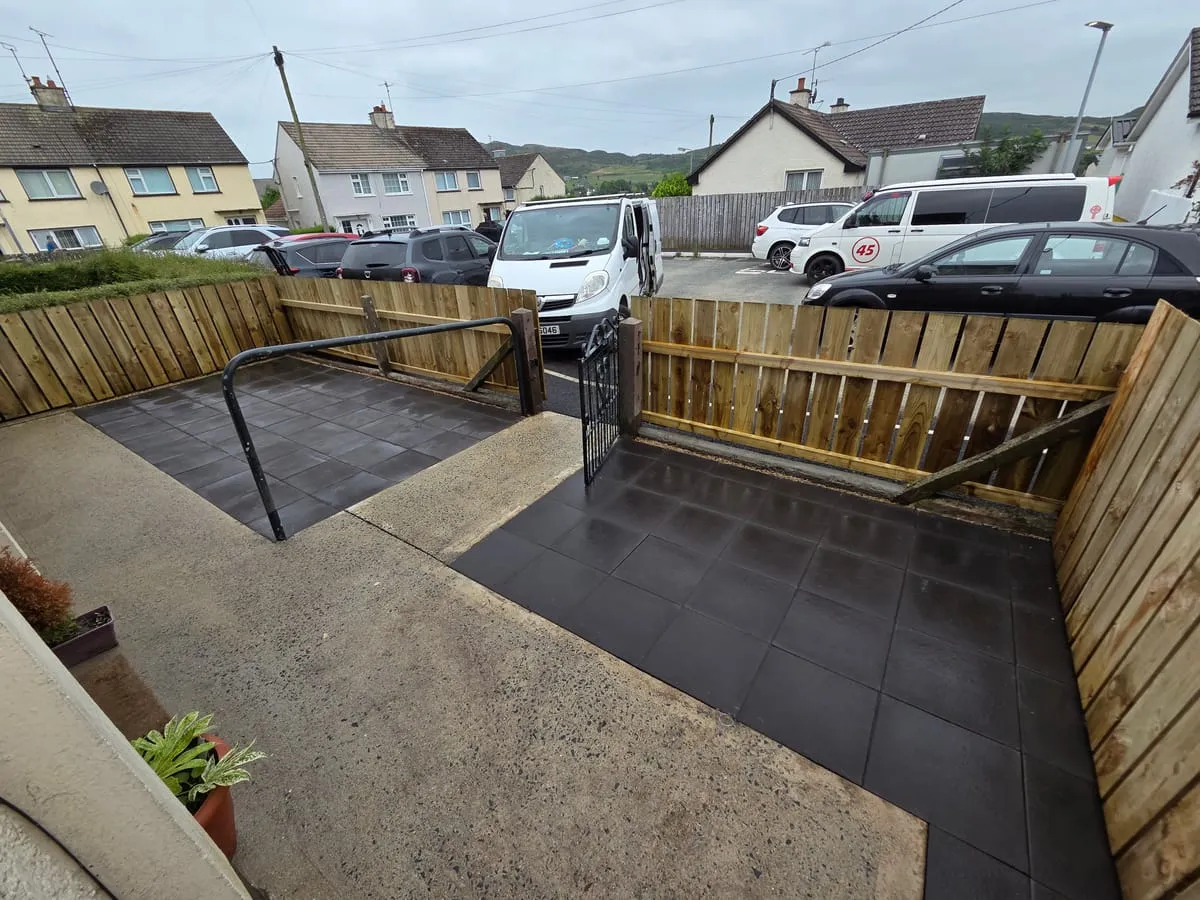
Patio slabs in Ireland take a harder beating than they do in most other climates. The combination of damp autumns, mild winters that rarely dry out, and shaded aspects on north and east-facing gardens creates ideal conditions for moss, algae, and lichen to establish themselves quickly. A patio that looked immaculate when it was laid can look green and neglected within a couple of seasons if it’s not maintained.
The good news is that cleaning patio slabs isn’t complicated — but the right method depends on what your slabs are made of and what you’re dealing with. This guide covers the options that actually work.
Before You Start — Know Your Slab Type
The cleaning method matters because using the wrong approach on the wrong material can cause damage that’s difficult or impossible to reverse.
Natural stone (sandstone, limestone, granite, slate) is porous and absorbent. Acidic cleaners including vinegar and bleach can etch the surface and strip colour from sandstone and limestone in particular. Always check before applying anything chemical to natural stone.
Porcelain is very dense, non-porous, and highly resistant. It can handle stronger cleaning products and higher pressure washing without damage. Porcelain is increasingly popular in Irish gardens precisely because it’s easier to maintain.
Concrete/reconstituted stone falls between the two — durable and not as sensitive as natural stone, but avoid strong acids. Bleach is generally fine on concrete at diluted concentrations.
When in doubt, test any cleaning product on a small, inconspicuous area first and wait 24 hours before proceeding.
Method 1 — Warm Soapy Water (Start Here)
For general dirt, surface grime, and light green tinge, washing-up liquid and warm water is your first port of call. It sounds basic, but it genuinely works for routine maintenance and won’t cause any material damage.
- Sweep the patio thoroughly to remove leaves, grit, and loose debris
- Mix a generous amount of washing-up liquid into a bucket of warm water
- Pour over the patio and leave for five minutes
- Scrub with a stiff-bristled brush — work in sections
- Rinse thoroughly with a hosepipe
For light maintenance twice a year, this is all most patios need. Do it in spring after the winter, and again in autumn before the moss season starts.
Method 2 — Jeyes Fluid or Commercial Patio Cleaner
For established moss, green algae, and more ingrained dirt, you need something with more bite. Jeyes Fluid is widely available in Irish hardware shops and garden centres, and it’s effective on most outdoor surfaces including concrete and natural stone when diluted correctly.
Dilute roughly 1 part Jeyes to 5 parts water, apply with a watering can, leave for 20–30 minutes, then scrub and rinse. The smell is strong but dissipates within a day or so. Keep it away from plants and lawn edges.
For natural stone specifically, Stontex All-in-One Outdoor Cleaner (available from Tile Merchant Ireland) is a better-targeted option that’s effective against moss, algae, and lichen without the risk of acid etching.
Method 3 — Pressure Washing
A pressure washer is the most effective tool for a thorough annual clean, but it needs to be used correctly or it can cause damage.
Key points:
- Keep the nozzle at least 30cm from the surface — closer than this on natural stone or softer concrete risks pitting or surface erosion
- Use a fan-tip nozzle, never a pencil jet
- Work in straight, even strokes — don’t dwell in one spot
- Avoid pressure washing block-paved driveways repeatedly, as it washes out the jointing sand over time
Pressure washing alone doesn’t kill moss or algae — it removes the visible growth but leaves spores behind. For longer-lasting results, apply a moss killer after pressure washing and before the surface gets re-established.
Method 4 — Bleach for Concrete and Porcelain
A diluted bleach solution (1 part bleach to 5 parts water) is highly effective for killing moss and algae on concrete and porcelain patios. Apply with a watering can, leave for 20 minutes, scrub, and rinse well.
Important: Keep bleach away from plants, grass, and any natural stone slabs. It will kill plants it contacts and can permanently discolour sandstone or limestone. Don’t use it on sunny days — UV breaks down the chlorine too quickly for it to work effectively.
Dealing with Black Spots
Black spots are typically lichen — a combination of fungus and algae that’s significantly harder to shift than regular moss. Standard cleaning methods often remove the surface appearance without killing the organism, so it returns quickly.
For persistent black spots, Stontex Black Spot Remover is the most effective product available in the Irish market. Apply, leave overnight, then brush and rinse. It may need more than one treatment on heavily affected areas.
Preventing Moss From Coming Back
Cleaning your patio removes the problem; prevention is what saves you the work next year.
Apply a sealant after a thorough clean. A good quality patio sealant creates a barrier on the surface that makes it significantly harder for moss spores to establish. Smartseal and similar products are available from Irish builder’s providers and DIY stores. Sealant needs to be reapplied every two to three years.
Improve drainage. A patio that holds water in low spots will always grow moss faster than one that drains freely. If your patio has significant pooling, it may be worth having the fall checked and adjusted. This is something we assess when installing new patios in County Louth and can advise on for existing surfaces.
Sweep regularly in autumn. Leaf litter decomposing on patio surfaces feeds moss and algae. A quick weekly sweep from September through November removes the food source before it becomes a problem.
Cleaning concrete paths nearby uses the same principles, and if you’re considering a full patio renovation, our guide on patio and garden renovation costs covers what to expect.
Frequently Asked Questions
What is the best way to clean patio slabs in Ireland?
For general maintenance, warm soapy water and a stiff brush twice a year is sufficient. For established moss and algae, a diluted Jeyes Fluid or specialist patio cleaner applied before scrubbing gives better results. A pressure washer combined with a moss-killer treatment is the most thorough approach for heavily soiled patios.
Can I use bleach on patio slabs?
Bleach works well on concrete and porcelain patio slabs. Dilute 1 part bleach to 5 parts water, apply, leave for 20 minutes, then scrub and rinse thoroughly. Do not use bleach on natural stone (sandstone, limestone, slate) as it can cause permanent discolouration.
Why do my patio slabs keep going green?
Green growth on patio slabs is caused by moss and algae thriving in damp, shaded conditions — exactly what much of Ireland provides for much of the year. North and east-facing patios, areas under trees, and surfaces with poor drainage are most affected. Cleaning removes the growth; improving drainage and applying a sealant is what prevents it from returning quickly.
How often should I clean my patio?
A thorough clean twice a year — spring and autumn — is the recommended routine for most Irish patios. Spring clears winter growth before the outdoor season; autumn removes summer build-up before the damp winter months set in. Regular sweeping in between keeps debris from accumulating.
Can I pressure wash all types of patio slabs?
Porcelain and most concrete slabs handle pressure washing well. Natural stone — particularly sandstone and limestone — is more sensitive and should be washed at lower pressure with the nozzle kept further from the surface. Very old or deteriorating stone can be damaged by pressure washing. If in any doubt, test a small area first or use the soapy water method instead.