
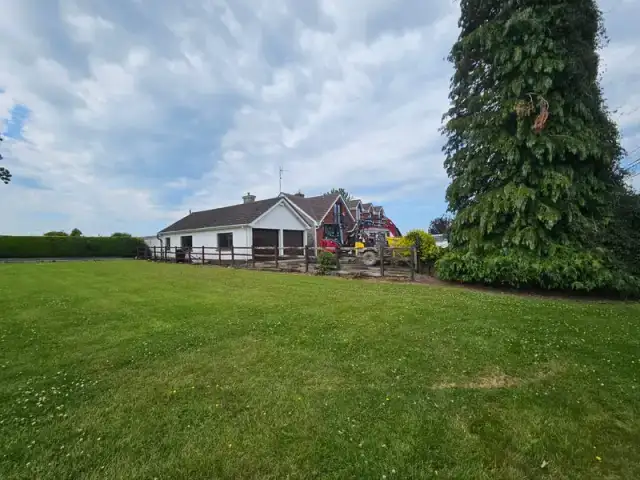
Privacy is one of the most common reasons people plant trees in Irish residential gardens. The challenge is choosing something that provides real screening without outgrowing the space, requiring constant management, or creating neighbour disputes within a few years.
This guide focuses on trees and tall shrubs that provide practical garden privacy in County Louth conditions, with honest assessments of growth rate, maintenance, and what you are actually committing to.
What You Are Actually Trying to Achieve
Before choosing a plant, be clear about what you need the screening to do:
- Immediate privacy from close neighbours: You need something dense and relatively fast-growing, or you accept that real privacy is two to five years away.
- Blocking an elevated viewpoint: You need height, not just density. A standard hedge will not screen a first-floor window on a neighbouring property that is on higher ground.
- Screening a specific line of sight: Targeted planting of one or two trees positioned precisely can be more effective than a hedge running the full length of a boundary.
- Year-round screening: Deciduous trees lose their leaves in winter. If year-round screening matters, you need evergreens or at least a mix.
Evergreen Trees and Large Shrubs for Screening
Griselinia littoralis One of the most widely used hedging and screening plants in County Louth. Fast-growing, dense, evergreen, and tolerates coastal exposure extremely well. Can be maintained as a clipped hedge from 1.5 to 5 metres, or grown as a loosely shaped shrub tree. Not reliably hardy in severe winters (below -10°C), but County Louth’s mild coastal climate suits it well.
Escallonia An evergreen flowering shrub that makes an excellent informal screen. Tolerates coastal exposure well. Grows to 2 to 3 metres without management, with red, pink, or white flowers in summer. Not formal enough for a clipped hedge but excellent as a mixed boundary planting.
Cherry Laurel (Prunus laurocerasus) Very dense, fast-growing evergreen with large glossy leaves. Provides excellent screening quickly. Reaches 3 to 5 metres if left unmanaged and can be clipped to a formal hedge. Well-suited to Irish conditions. Produces white flower spikes in spring and black berries in autumn. Can be invasive in woodland settings but is well-behaved in garden conditions.
Photinia x fraseri ‘Red Robin’ Dense evergreen with distinctive red new growth. Suitable for clipped hedges or loosely grown screens reaching 3 to 4 metres. Does not tolerate waterlogged ground. Good for sheltered urban gardens.
Bay Laurel (Laurus nobilis) Aromatic evergreen that can be grown as a large shrub or small multi-stem tree reaching 3 to 5 metres. Tolerates shaping well. Culinary use is a bonus. Not fully hardy in exposed sites but does well in sheltered County Louth gardens.
Deciduous Trees That Provide Good Summer Privacy
These lose their leaves in winter but provide dense screening through the main outdoor season from May to October.
Hornbeam (Carpinus betulus) Can be grown as a multi-stem tree or maintained as a formal hedge. Unusually for a deciduous plant, it retains its brown dead leaves through winter when clipped, giving a degree of year-round screening. Hardy, tolerates most soils including clay. An excellent structural tree for the garden.
Field Maple (Acer campestre) A native tree that makes a superb hedge or screening tree. Tolerates heavy soils and exposed sites. Good autumn colour. Can be clipped formally or left to grow loosely. Valuable for wildlife.
Hawthorn (Crataegus monogyna) The backbone of native Irish hedgerows. Thorny, extremely hardy, tolerates all conditions from coastal exposure to heavy clay. Provides dense physical and visual screening. White blossom in May is excellent for bees. Berries in autumn are critical winter bird food. The best choice where a native screen is wanted.
The Leylandii Question
Leyland cypress (x Cupressocyparis leylandii) is worth its own section because it is so commonly planted for privacy and so commonly problematic.
Leylandii grows fast, providing quick screening. This is its only advantage for residential gardens. It grows at up to 1 metre per year indefinitely if not managed, requiring expensive annual cutting to keep it at a manageable height. It casts very heavy shade. It is one of the most common causes of serious neighbour disputes in Ireland and the UK. If you plant leylandii today in a residential garden and do not actively manage it, it will be a problem within five years and a significant dispute within ten.
Our recommendation: do not plant leylandii in residential gardens. The alternatives above provide adequate screening with a fraction of the long-term cost and stress.
How Long Does Screening Take?
Realistic expectations for newly planted trees and hedging:
| Plant | Noticeable screening | Good screening |
|---|---|---|
| Griselinia | 1-2 years | 3-4 years |
| Cherry laurel | 2-3 years | 4-5 years |
| Hawthorn hedge | 3-4 years | 5-7 years |
| Hornbeam hedge | 3-4 years | 5-7 years |
| Escallonia | 2-3 years | 4-5 years |
If you need immediate privacy, you have three options: buy large specimen plants (significantly more expensive), install fencing first and plant trees as a longer-term complement, or accept a two to three year wait for planted screening to establish.
Combining Fencing and Planting
The most practical approach for many County Louth gardens is to install a fence to the permitted height (generally 2 metres at the rear boundary) immediately, and plant a screen in front of or alongside it for longer-term screening above that height and to soften the boundary aesthetically. This gives you privacy now while the planting develops.
For more on fencing as immediate privacy, see our garden privacy fencing ideas guide and garden screening ideas.
For tree planting services across Dundalk and County Louth, contact us here. See also: best trees for Irish gardens, tree removal costs, and our tree planting and removal service page.